Suzanne Vine's Old and New to Somerville etc.

  • Blog
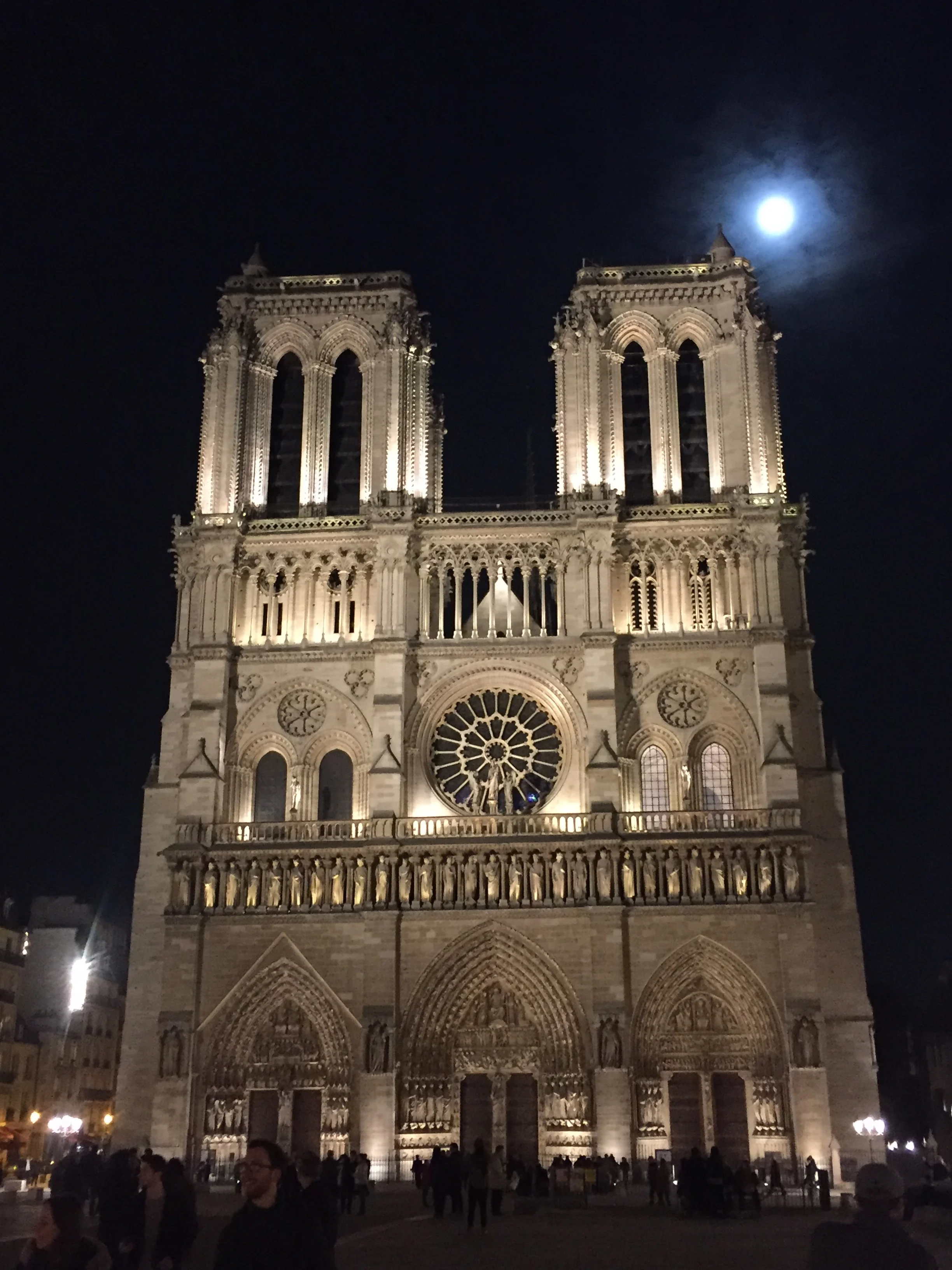
Notre-Dame with full moon. 

Notre-Dame with full moon. 

A Tale of Three Cities: Paris, London, and Edinburgh

April 21, 2017 by Suzanne Vine

I've said it before (and before and before): I'm so lucky to live within shouting distance of some of the most spectacular places on earth. It's almost embarrassing to say, "I'm going for the weekend to Paris, or London, or - fill in the blank-." But not embarrassing enough to stop us, and that's what we have been lucky enough to do since moving to Amsterdam. One joy of being able to visit and revisit places is that you don't feel the pressure to see everything in one fell swoop. Instead, you can wander around, enjoy some great dinners, and feel like you got to know a place just a bit more. With that in mind, I'm going to try to parse the different personalities of three cities I visited in the month of March. Yes, you heard that right. While we like to think we have taken full advantage of our Amsterdam address in order to launch ourselves throughout Europe, we don't usually have such a full travel dance card. That's just the way things shook out this year. We chose Paris because it was Peter's turn to celebrate a birthday in a special place, and it's only 3ish hours away by train. We chose London (or rather, it chose us) because Peter had a conference there. Edinburgh was the destination of choice for a gals' trip to celebrate my repatriated friend Darlene's vacation-return to the Amsterdam mother ship. This was my first trip to Edinburgh, but I've crossed paths with the other two quite a few times. That gives me license to weigh in on their personalities, right? Just like Lloyd Price croons, "So over (over and over) and over. Oh, I'll be a fool for you." I am a fool for London and Paris, and now I can add Edinburgh to that list. Because they all have personality.

Our trip to Paris began with a relaxing train ride, with treats from a terrific French bakery in Amsterdam to sustain us and get us in the mood. Planes may be faster, but it's just so nice not to have to deal with airports, and security lines and all the rest of it. And these days, I guess we have to add to the list that no one is dragging you out, down the aisle.
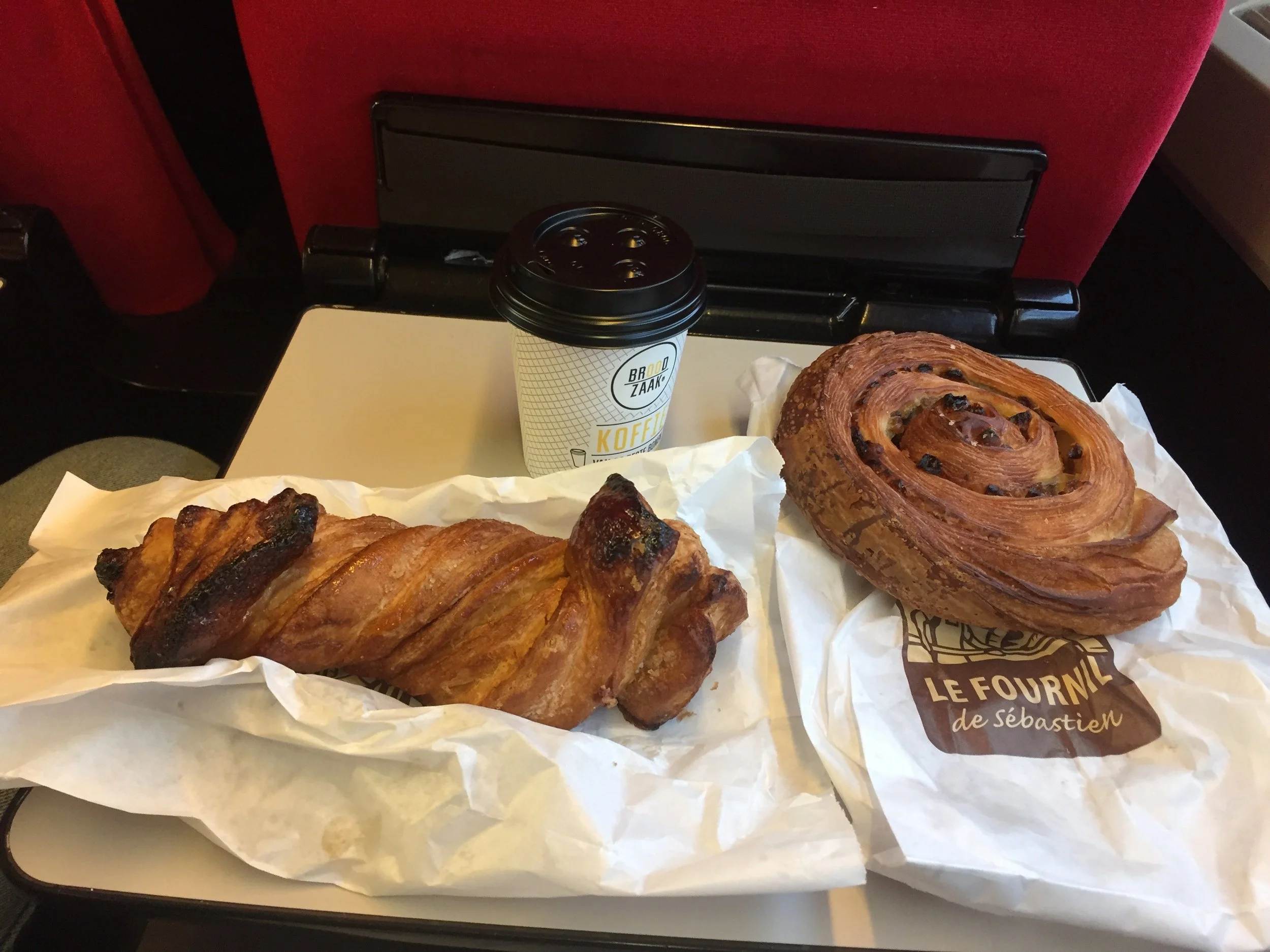
Another joy of living in a foreign country is chances are good no one you know will see you when you are covered in flaky crumbs after devouring your pastry breakfast.

Another joy of living in a foreign country is chances are good no one you know will see you when you are covered in flaky crumbs after devouring your pastry breakfast.

We spent the first afternoon walking, walking, and walking, and poking around in the many cooking stores that make Paris the stylish older sister in the family. I am always on the lookout for an apartment that will be my very own pied-รก-terre (or little getaway) in each and every place we visit. I found one that would do very nicely for me.
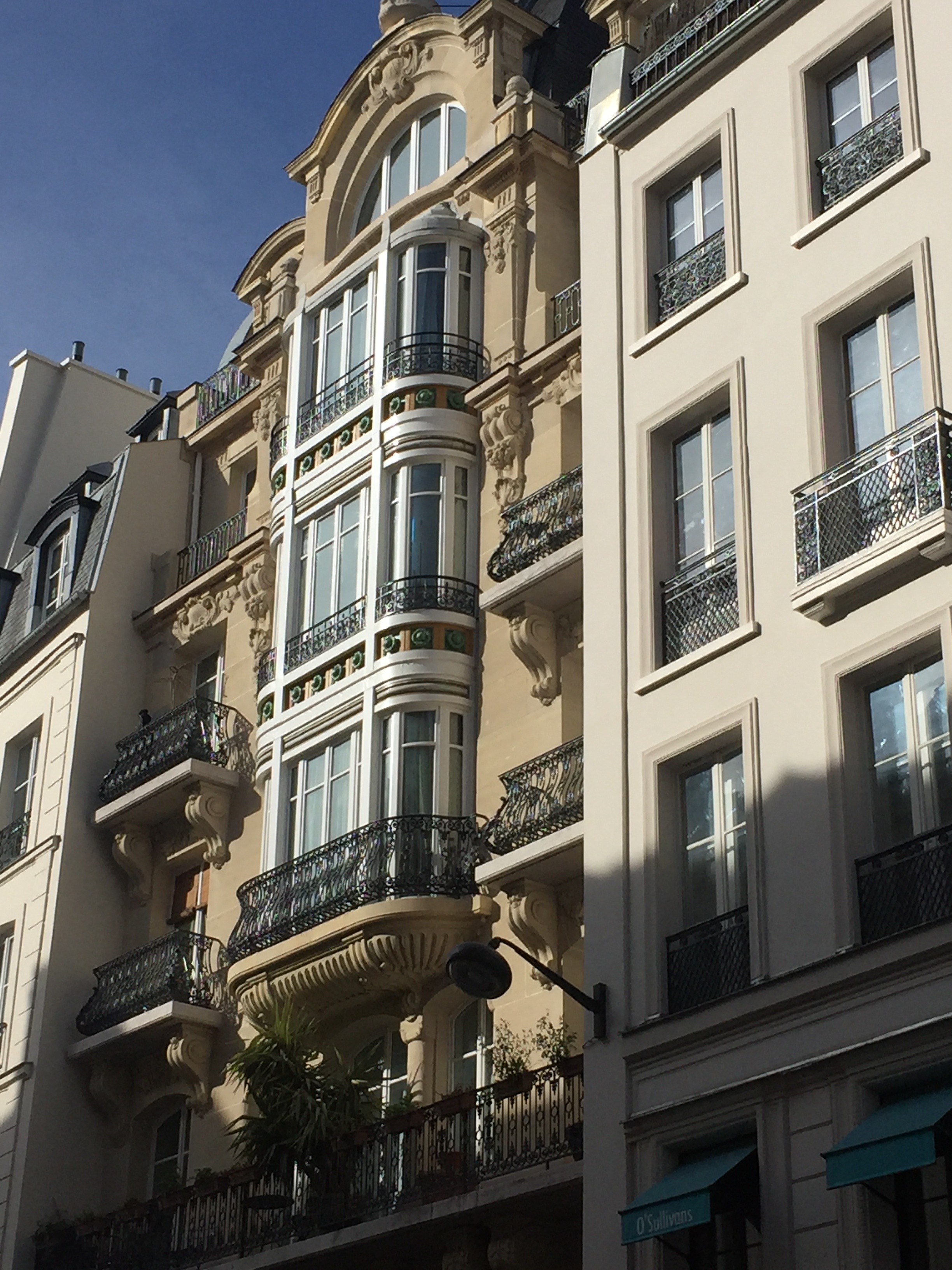
Notice the blue skies. My Parisian friend Linda dubs her city "Gray Paree". However, Paris was on her best behavior for us the weekend we visited. We basked in the sun each day.

Notice the blue skies. My Parisian friend Linda dubs her city "Gray Paree". However, Paris was on her best behavior for us the weekend we visited. We basked in the sun each day.

If there is any character trait that Paris is known for, it's her snobby disdain for visitors, especially Americans, and most especially Americans who don't speak perfect French (as in, all of us). This reputation seems to be shifting, if my experiences are proof of anything. I found most everyone to be friendly and helpful, and perfectly willing to put up with my attempts to speak either French or English. This change in attitude may have something to do with the ongoing terror attacks, as recently as the day I am writing this post. They may be relieved to see Americans are still traveling to Paris, in the face of all of the turmoil, and grateful for our presence.

The old Parisian reputation was finally shattered completely when we entered our chosen restaurant, Les Arlots, for dinner our first night in town. The review in the New York Times explained that this new French bistro specialized in "conviviality". After reading the review, I knew this was a place I wanted to try. Upon our arrival on Friday night, I wasn't sure we would even have an actual reservation, since I had completed the entire transaction in French, on Facebook Messenger. Yet when we entered and I told them I was Suzanne, we were greeted with a song with the refrain "Suzanne" by the tipsy group drinking at the bar. Just as the review promised, the service was incredibly friendly and welcoming, and the food was friendly, too. Nothing fussy or pretentious about it. Just delicious. So much for the personality of Paris that we have all grown up with.

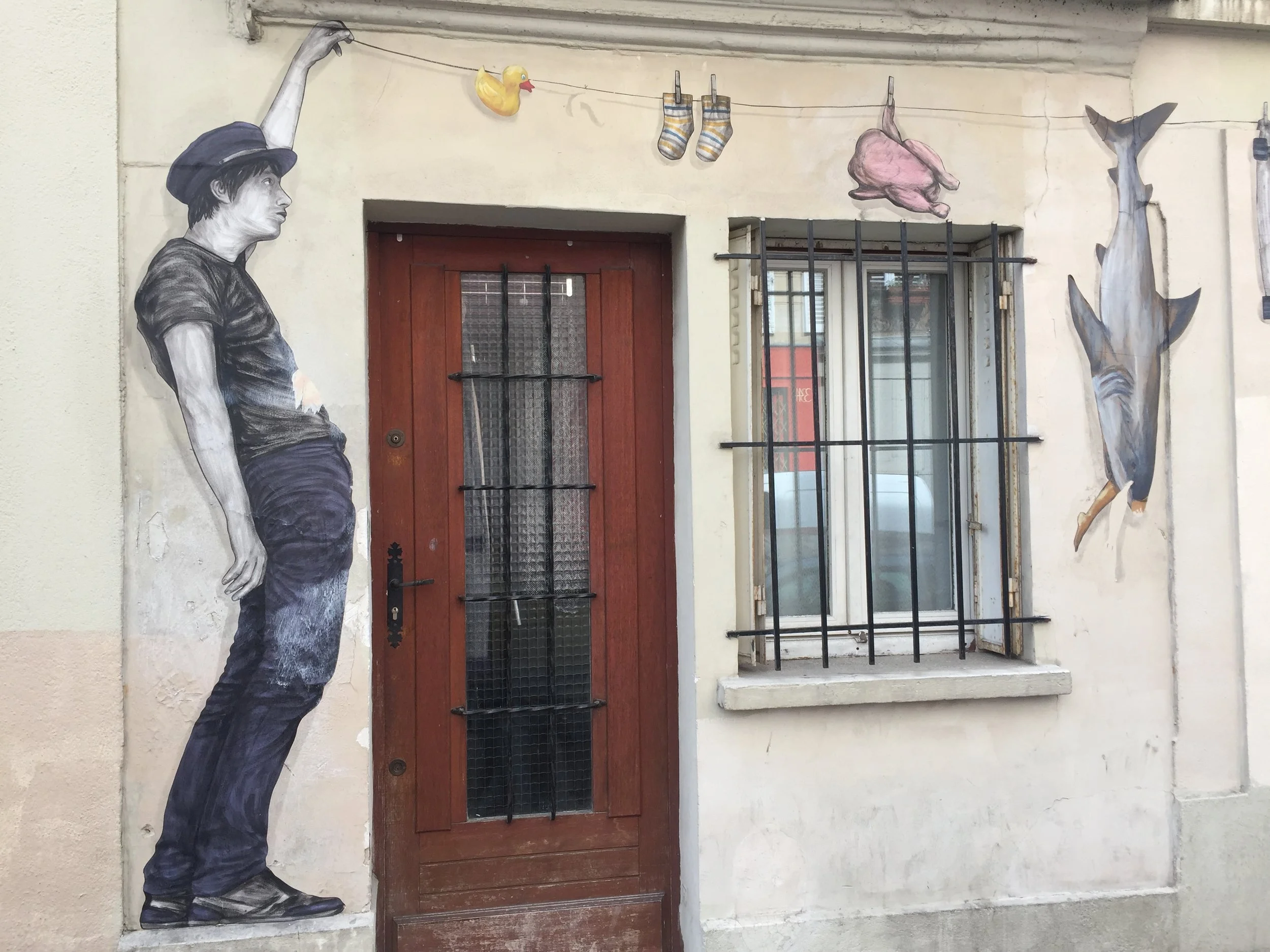
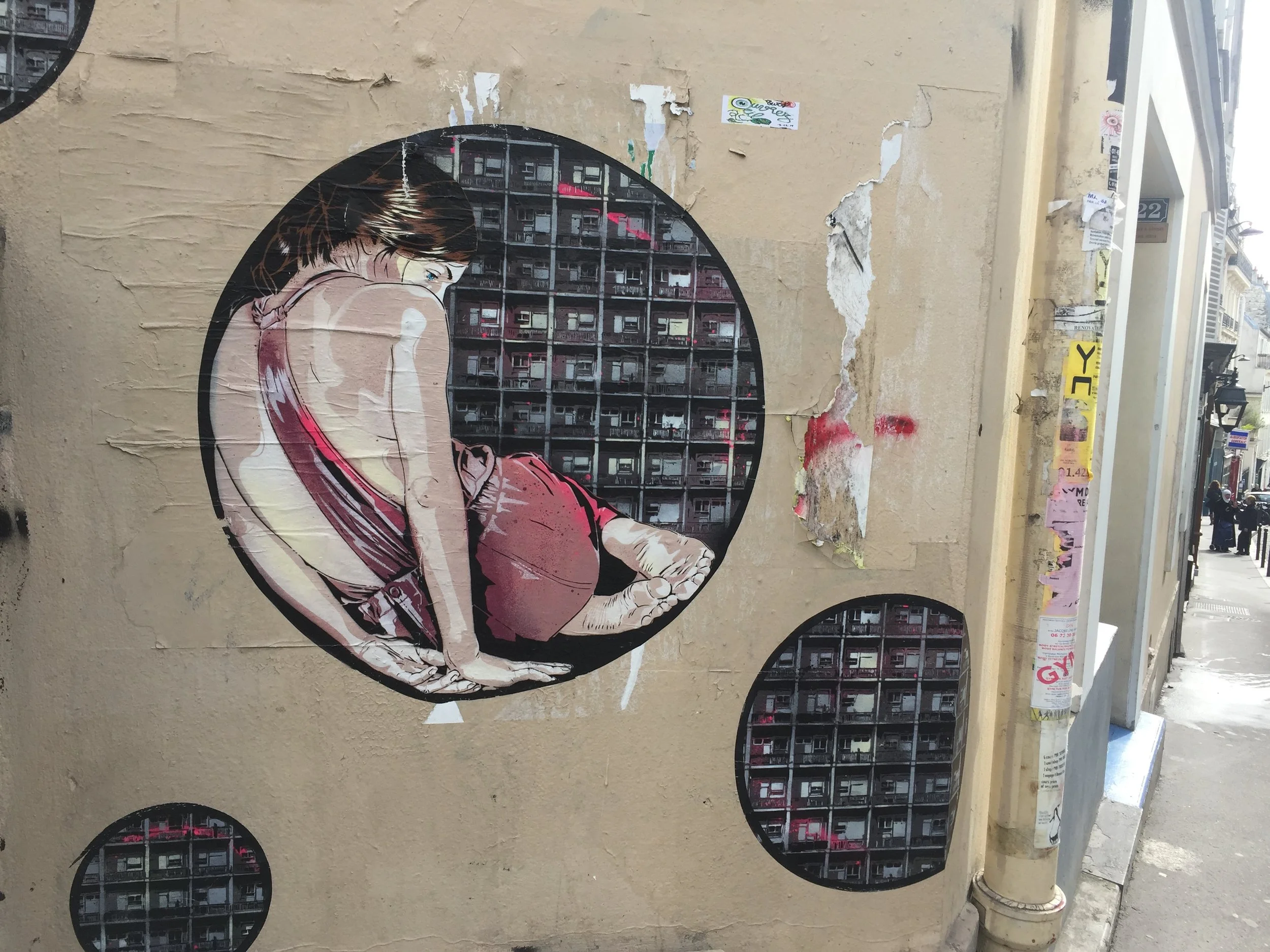
This street art also seems to represent a departure from the formal French art I'm used to seeing. 
IMG_7508.JPG
IMG_7506.JPG

While we were in Paris, I caught up with a friend I haven't seen since my early high school days. Linda has lived in Paris for 25 years, is married to a French man, and speaks French with her kids. She's not living the expat life. She's more like a Frenchwoman who might feel like an American somewhere deep inside. Maybe with what's going on in the U.S. these days, she keeps that American inner-life on the down-low. I imagine this must be complicated.

Since I'm always planning ahead, I have already checked out a way to visit Paris regularly even when we move back to the U.S.  I plan to check out this area of Harlem, which apparently has a lot of good Parisian-style bistros. Please let it still be there when we return.
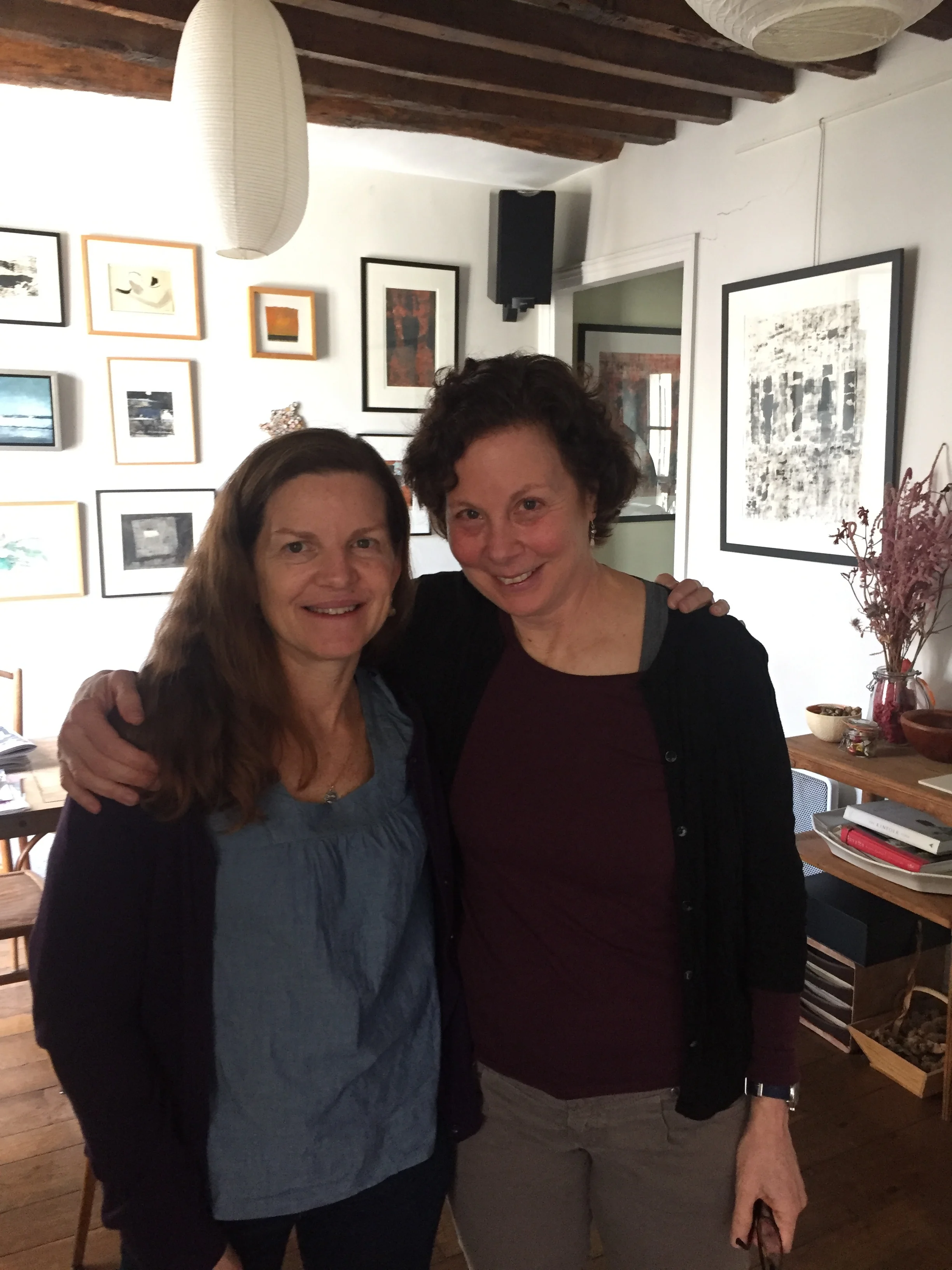
It's kind of amazing how you can not see someone for close to 40 years and pick right up with her like no time has passed. It helped that when I opened the door, she looked exactly the same as she did all those years ago. Linda lives in the up-and-cโ€ฆ

It's kind of amazing how you can not see someone for close to 40 years and pick right up with her like no time has passed. It helped that when I opened the door, she looked exactly the same as she did all those years ago. Linda lives in the up-and-coming (actually, it has probably already arrived) neighborhood South-Pigalle. If you are in the neighborhood, check out her restaurant, Buvette. We were so busy chatting that I didn't make it there this trip. This gives me a good excuse to return soon.
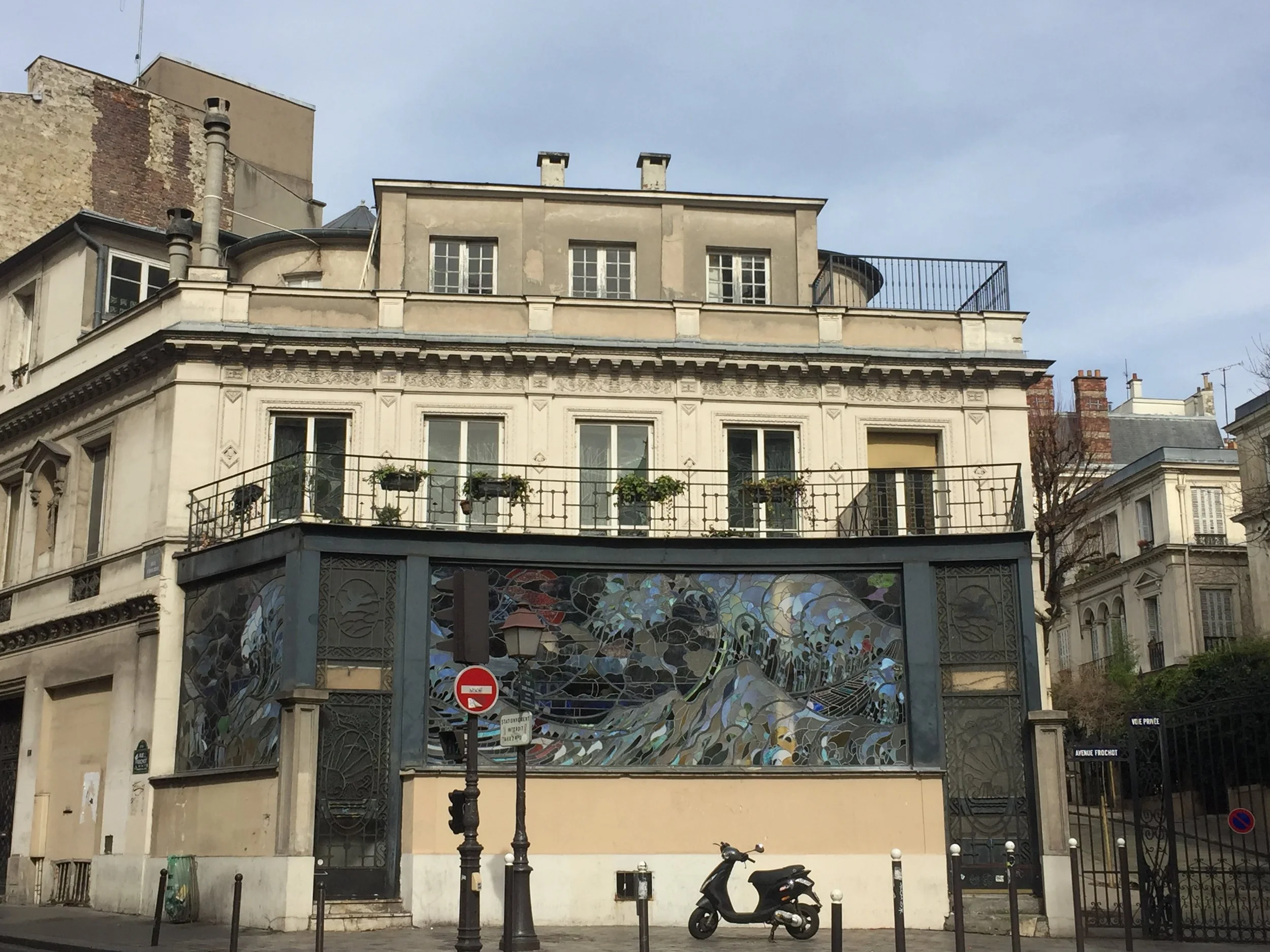
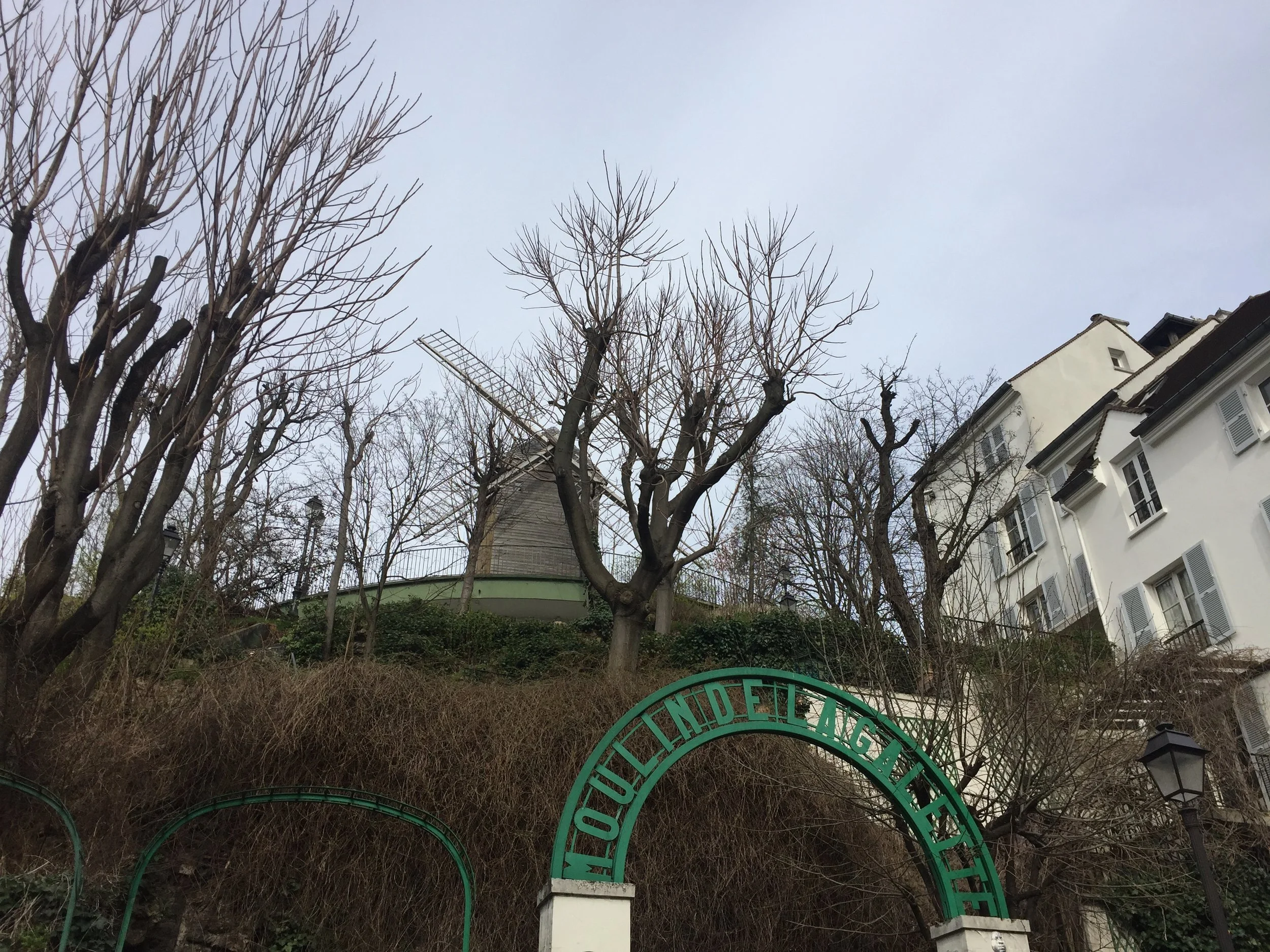
 The South-Pigalle neighborhood.

The South-Pigalle neighborhood.

 A little bit of home spotted in Paris.

A little bit of home spotted in Paris.

And speaking of home, I couldn't help but remember the song my friend Vera taught me, to help me learn Dutch. The song is about a Dutch man who happens upon a beautiful girl on the streets of Paris. He assumes she is French. It turns out she is Dutch, too, so he asks her to speak Dutch with him. And then he says what I feel like saying when I'm in Amsterdam, "Praat Nederlands met me. Even Nederlands met me. ["Talk Dutch with me. Just Dutch with me."]. The song was a big hit here. It's only in a video that someone could prefer hearing Dutch to French. One language is musical and pretty to listen to. The other is harsh and throat-clearing. I leave it to you to decide which is which.

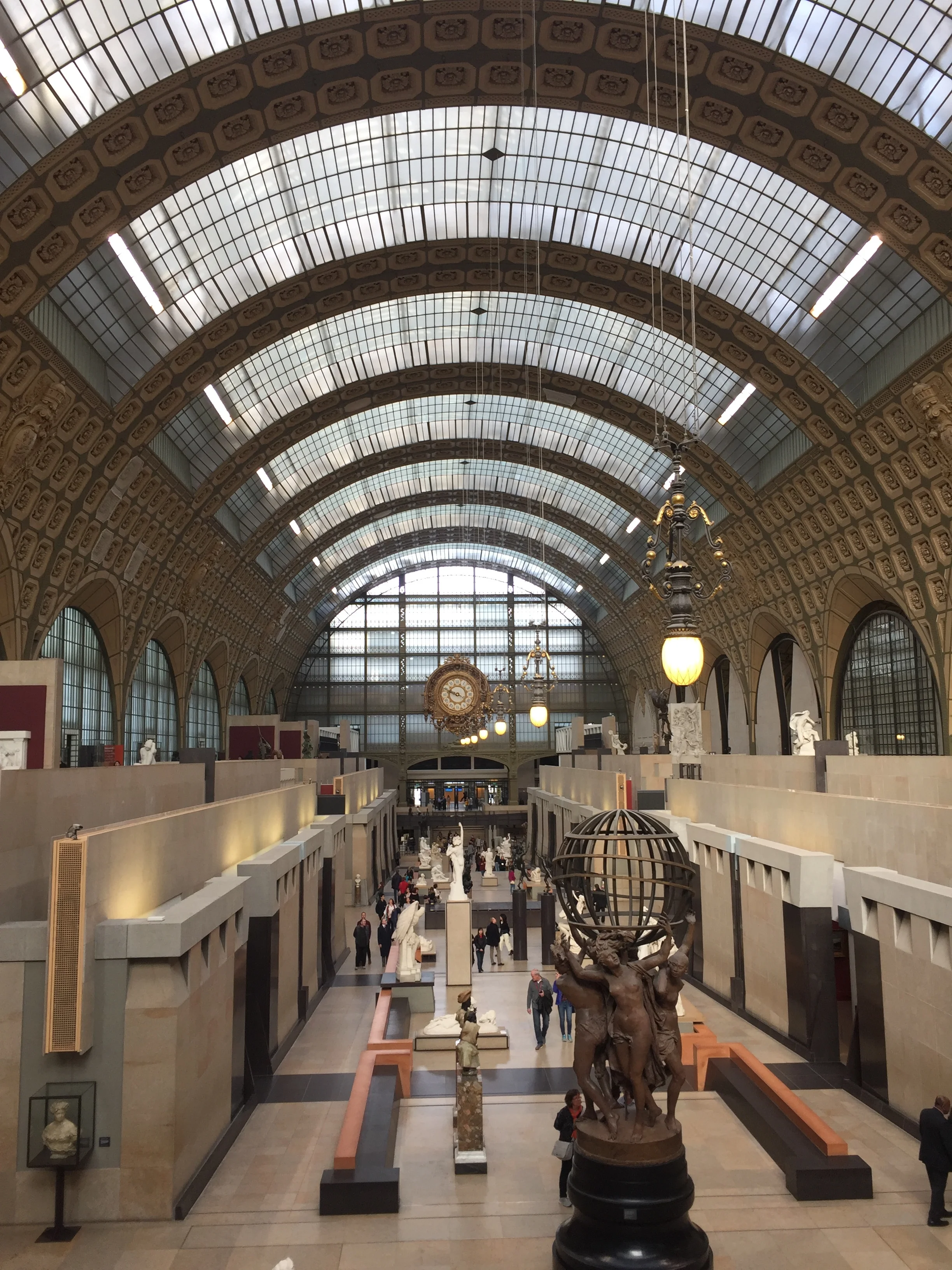
Since Paris is the cultured older sister, we had to visit a few museums while we were there. When someone thought up the idea of putting a collection of art inside a former train station, many people must have thought, "Oh la la. Crazy!" With the tall ceilings and all the light, I didn't have my usual need to take a post-museum nap after our visit. This is the place to be if you want to see the Greatest Hits of the Impressionists.
IMG_7514.JPG
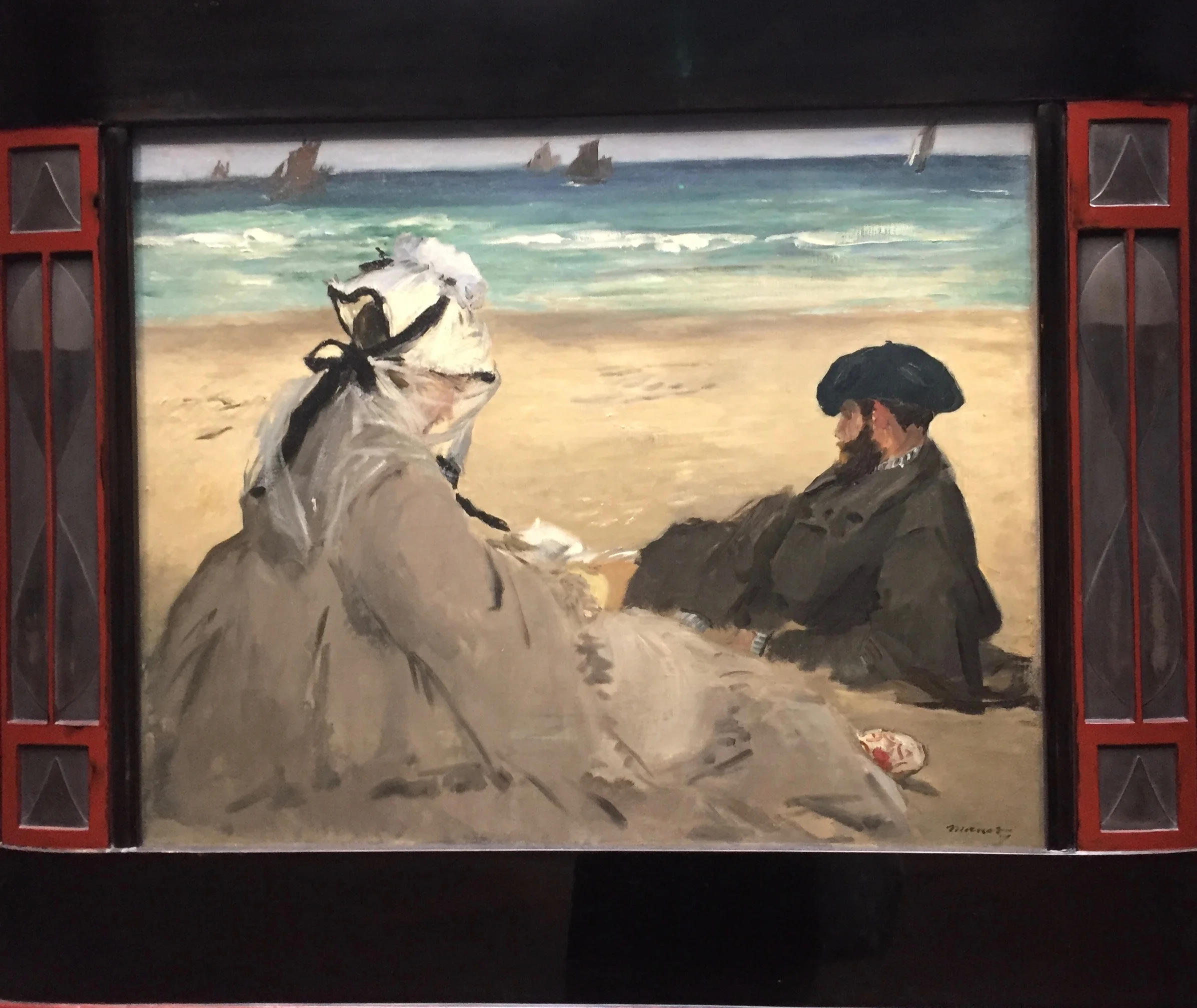
 There was a huge brouhaha in Europe last summer about the  "birkini ban"  on French beaches. When I saw this painting at the d'Orsay, I thought about how French women used to get all bundled up on the beach during the Impressionist era. What's the b

There was a huge brouhaha in Europe last summer about the "birkini ban" on French beaches. When I saw this painting at the d'Orsay, I thought about how French women used to get all bundled up on the beach during the Impressionist era. What's the big deal now? Oh, that's right. The women nowadays are Muslim.

Two weeks after Paris, we were off to London. Let the cueing and politeness begin. After two years of shoving onto public transportation in Amsterdam, it is such a delight to visit the land of the line. Even on the Tube ride from the airport into the city, everyone lined up to get on and off. and I actually heard the invisible conductor say, "Welcome! Have a pleasant trip and a lovely weekend." The only thing he left off was "Cheerio, old chap." The terrorist attack on the Westminster Bridge had taken place just two days before, but in London, in a style akin to New York City's, it was business as usual. The streets were full of tourists and residents going about their daily life. It was reassuring to see this optimism and resilience in action. 
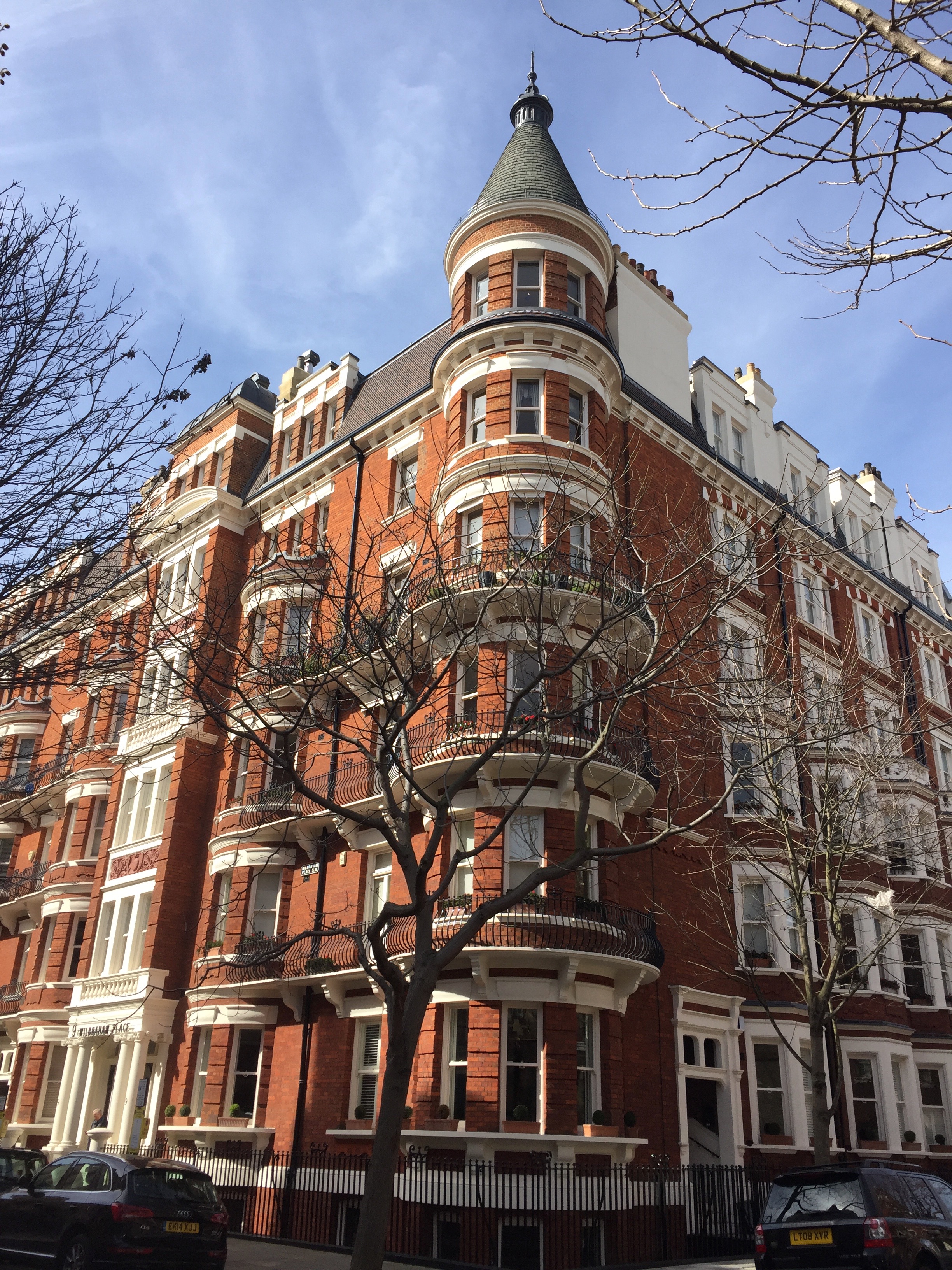
I found my apartment in the posh neighborhood known as Belgravia. Just using the word "posh" makes you feel posh.

I found my apartment in the posh neighborhood known as Belgravia. Just using the word "posh" makes you feel posh.

I have to admit it's a relief to visit London: to hear English spoken and, glory be, understand all the street signs. True, I sometimes have a hard time discerning what the Brits are saying, what with their accents and all, but at least I can comfortably decode the signs. I especially appreciate the cautions, "LOOK LEFT" or "LOOK RIGHT" painted on so many of the streets so we don't get hit by cars driving on the "wrong" side of the road. And, oh, the bookstores! There are so many fine ones, and we wandered around Foyle's for quite awhile until it was time to take advantage of the sun.
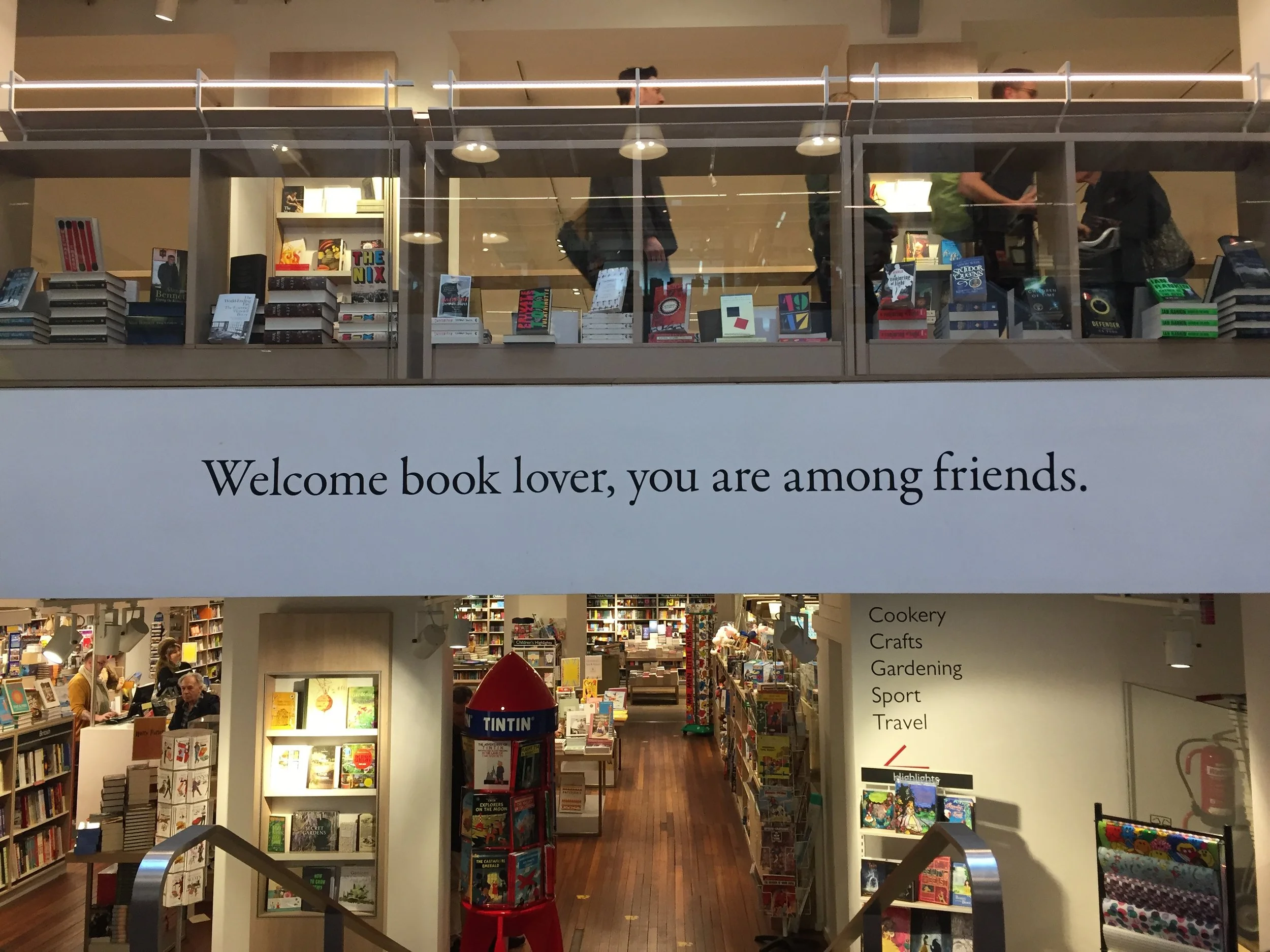
So many friends. So little time.

So many friends. So little time.

Another reason to visit London is so you can see shows. During our other recent trips to London, we were too busy hunting down Indian food to squeeze in a show. This time, we made sure to book tickets ahead of time, and loved our choice: a Tom Stoppard play, Travesties. It seemed so quintessentially British. The words flew by so fast and furious (and the puns and quips were so numerous) that I sometimes felt hopelessly lost. Let's just say James Joyce and Lenin were two characters in the play, and there was a play (The Importance of Being Earnest) within the play. If it sounds a bit highbrow, it was. The review in the link, above, called it "an intellectual farce" and that sums it up. It was a real work-out for my brain. I felt relieved when one of the actors - during his pitch for a charity after the play ended - said that we were a great audience who laughed at parts as if we understood. He claimed we seemed to understand the play more than the cast members themselves. London is the wise-cracking older brother in the family, the one who can read something once and commit it to memory. He makes you feel a bit slow and totally uneducated. 
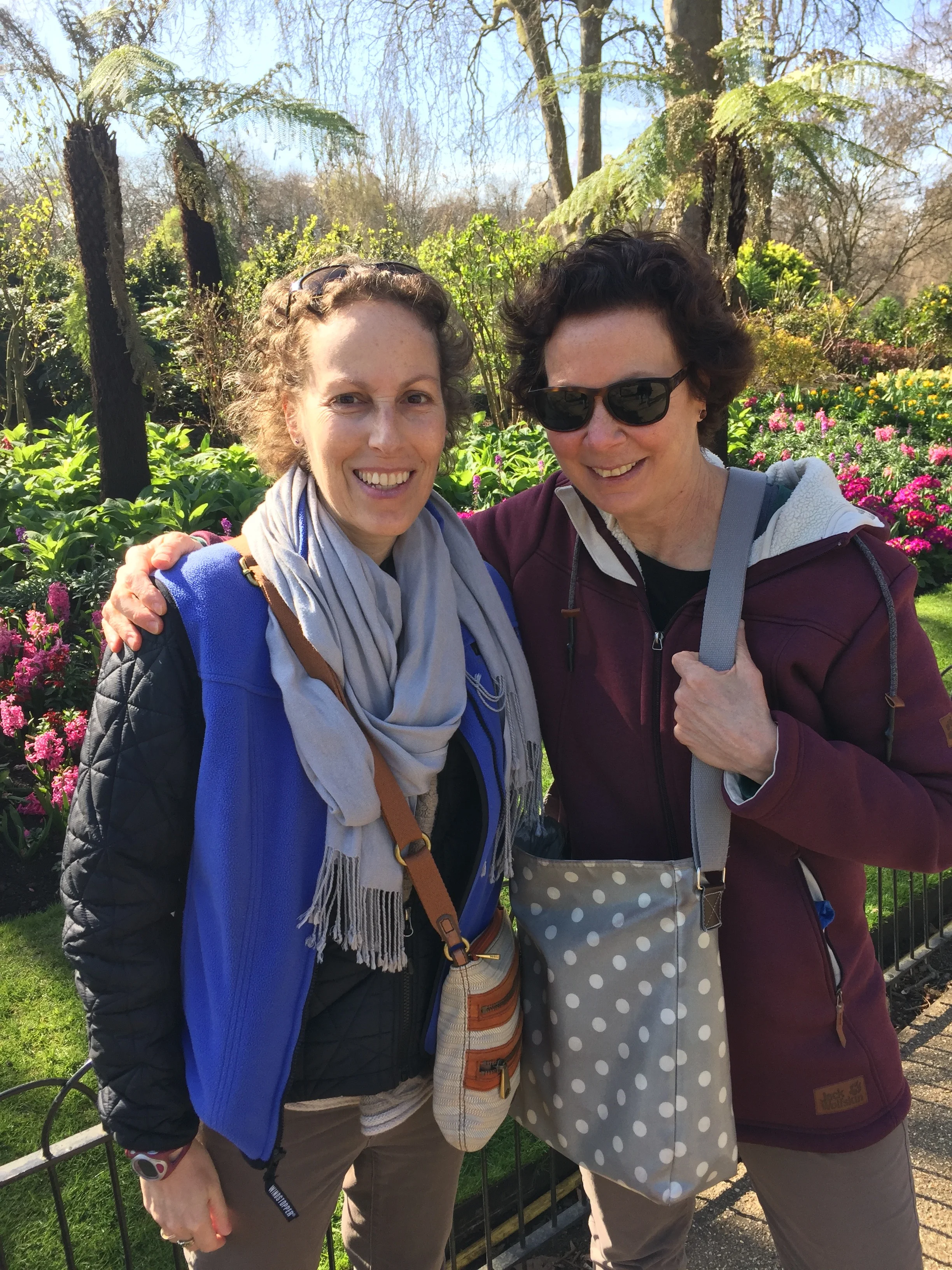
 No one does gardens like the Brits. I met up with my teacher friend Susan in  St. James Park  while she was in London visiting her studying-abroad son. Love this photo of you, SuSu. Thinking of you.

No one does gardens like the Brits. I met up with my teacher friend Susan in St. James Park while she was in London visiting her studying-abroad son. Love this photo of you, SuSu. Thinking of you.

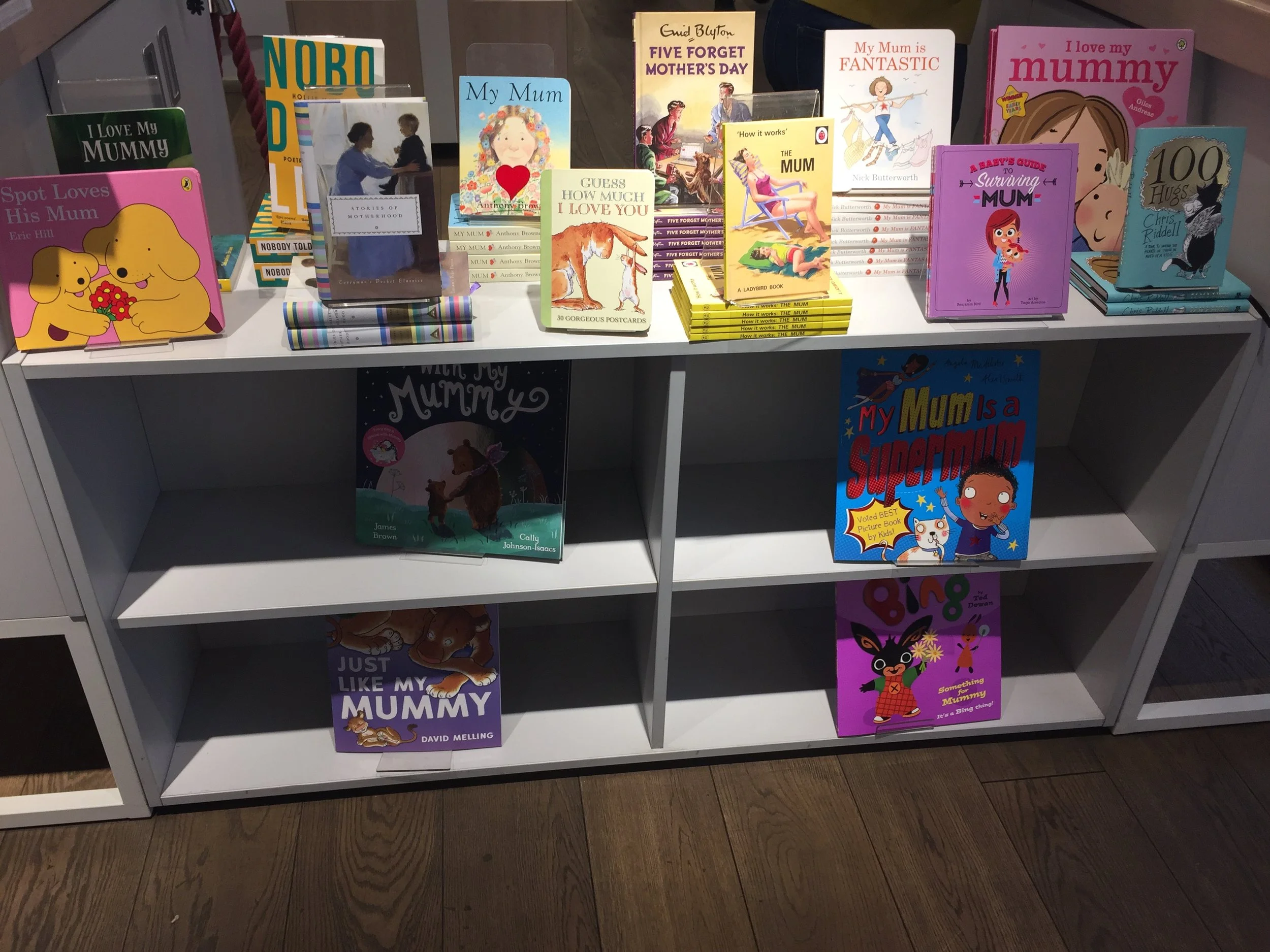
 It was Mum's Day in England the day I saw Susan, so we celebrated together. I rented her son to fill in for my kids.

It was Mum's Day in England the day I saw Susan, so we celebrated together. I rented her son to fill in for my kids.

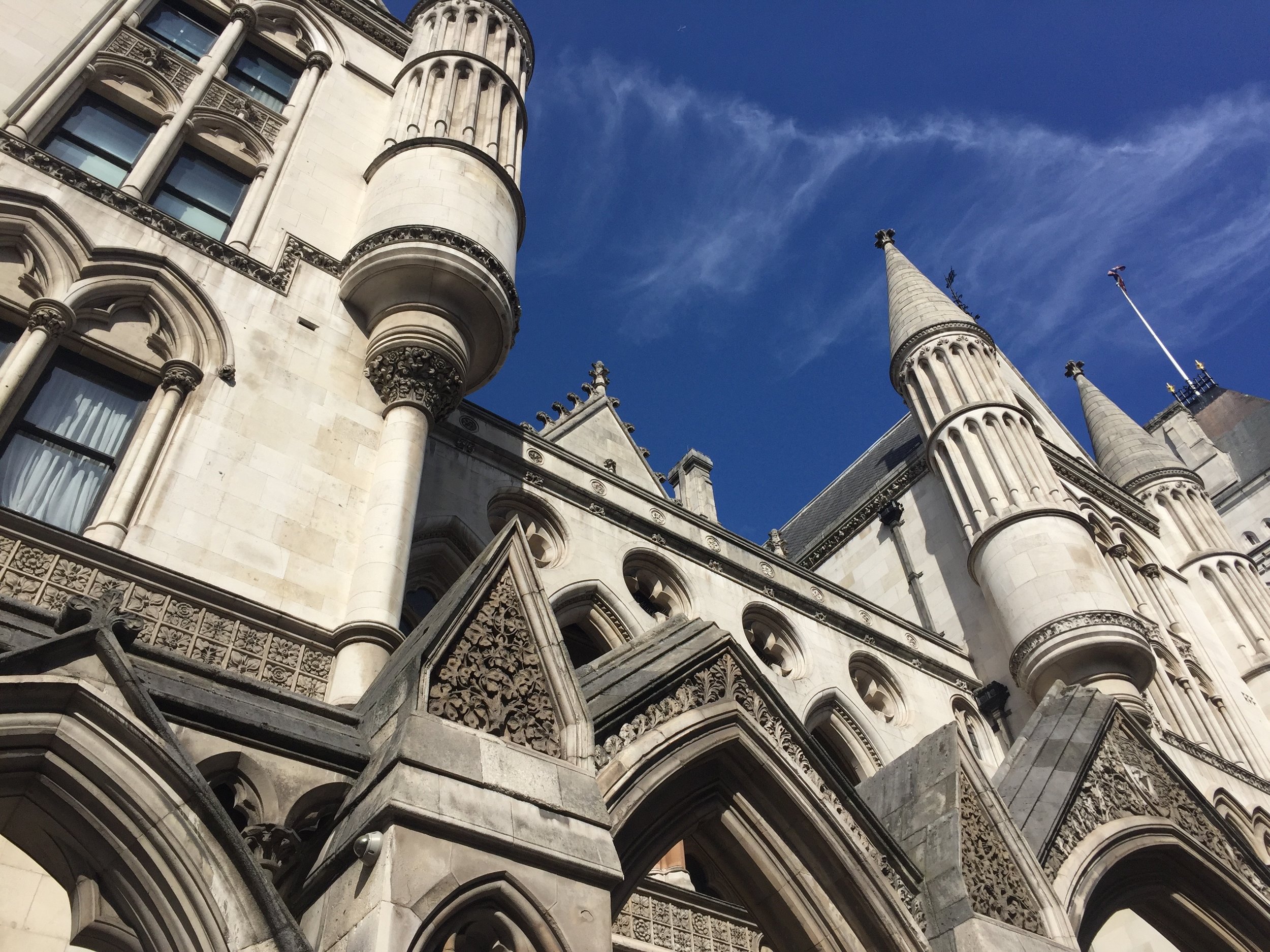
The architecture in London is so grand and complicated. Here are the Inns of Court, where barristers train. I'd like to climb up one of those towers and let down my golden hair.

The architecture in London is so grand and complicated. Here are the Inns of Court, where barristers train. I'd like to climb up one of those towers and let down my golden hair.

We have finally arrived at the last family member: Edinburgh. For those who have never been, you first need to know how to say the name of the city. It's pronounced Edinbourough, not Edinburg. Now on to the personality of the place. I think Edinburgh is like your eccentric aunt who dresses in slightly mismatched clothes, but who is charming and full of interesting stories. I've got some version of Mambo No. 5 in my head as I continue to talk about these spots. "A little bit of Paris in my life, a little bit of London by my side. A little bit of Edinburgh's what I need...."

I haven't done as many gal trips as some of my friends, but it's hard to imagine one going more smoothly than this one did. All three of us had the same goals in mind: seeing the castle, visiting the palace, and poking around the nooks and crannies of the city. It helps when you have simple goals you share and you value the bonding much more than the Trip Advisor recommendations.
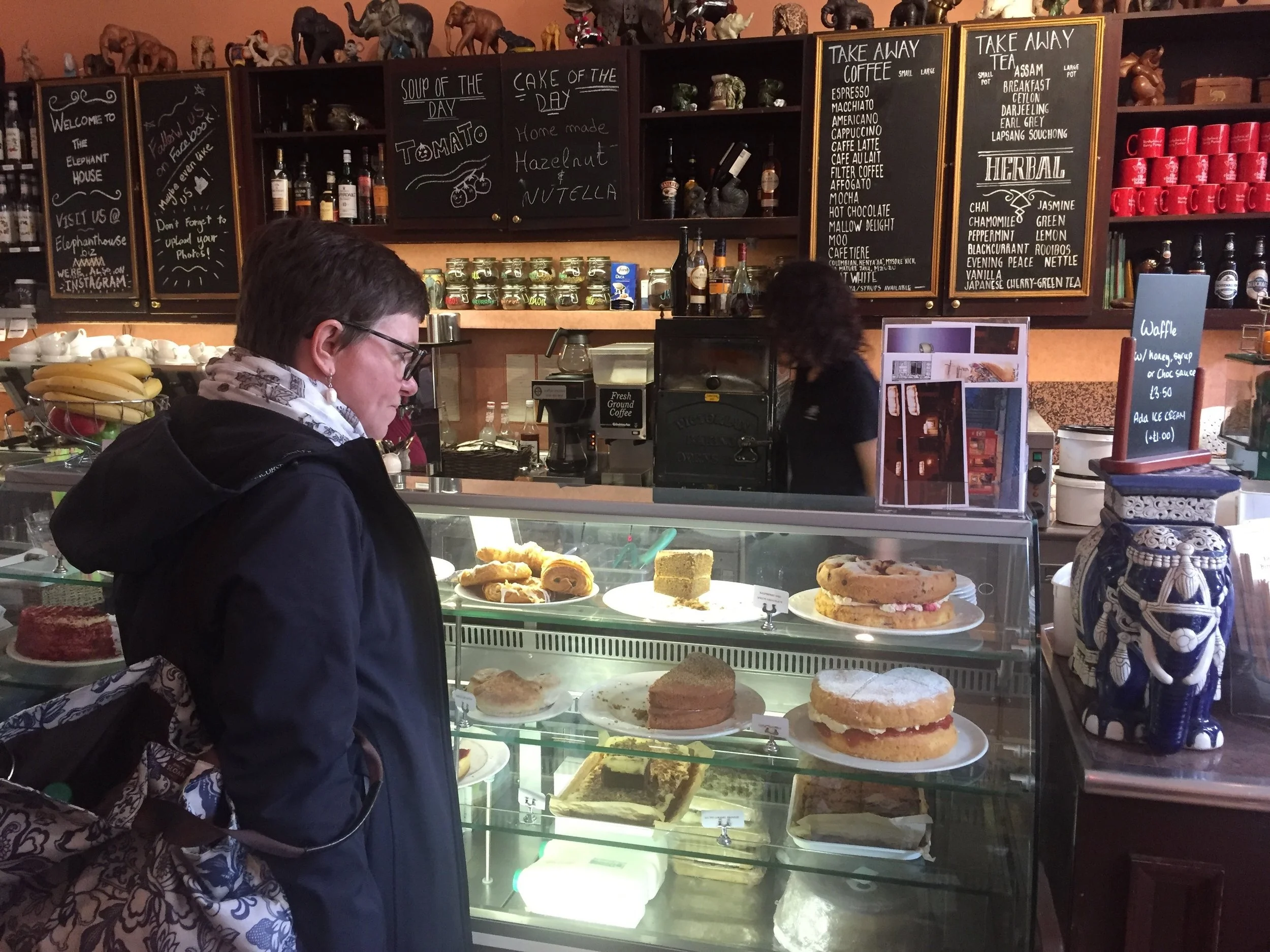
 This was probably the hardest decision we had to make each day: which kind of baked good to try when we stopped for a break. I always went with the scone. To those who know me, that will come as no surprise. Darlene, a physics and chemistry teacher,

This was probably the hardest decision we had to make each day: which kind of baked good to try when we stopped for a break. I always went with the scone. To those who know me, that will come as no surprise. Darlene, a physics and chemistry teacher, brought her scientific mind to bear on the selection process.

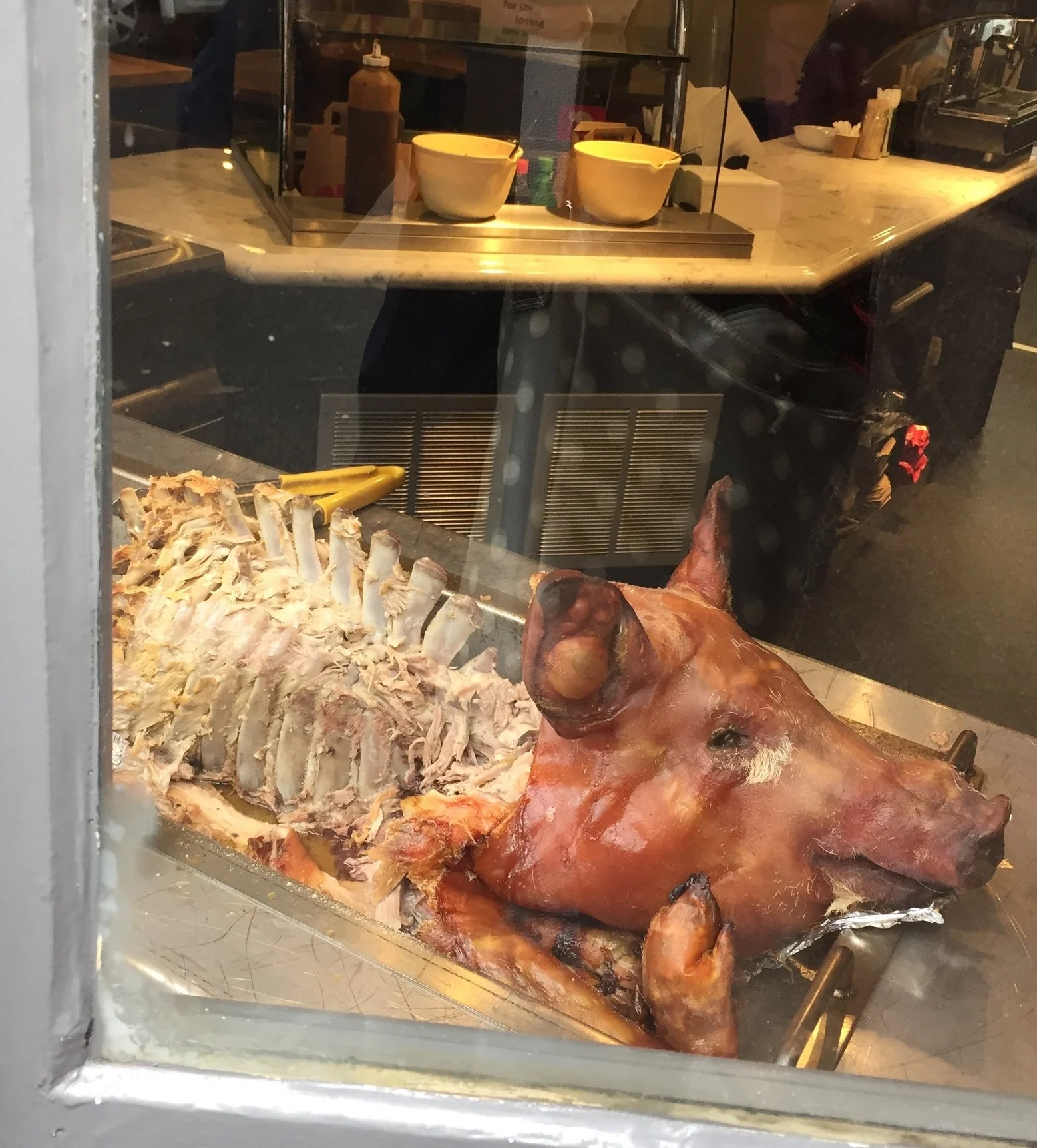
 We did not sample haggis, Scotland's national treasure, nor did we have any pig. We did see a few of them splayed in the front windows of restaurants, including this little piggy with a kind of "come hither" expression on his face. I preferred the d

We did not sample haggis, Scotland's national treasure, nor did we have any pig. We did see a few of them splayed in the front windows of restaurants, including this little piggy with a kind of "come hither" expression on his face. I preferred the displays of cashmere and shortbread.

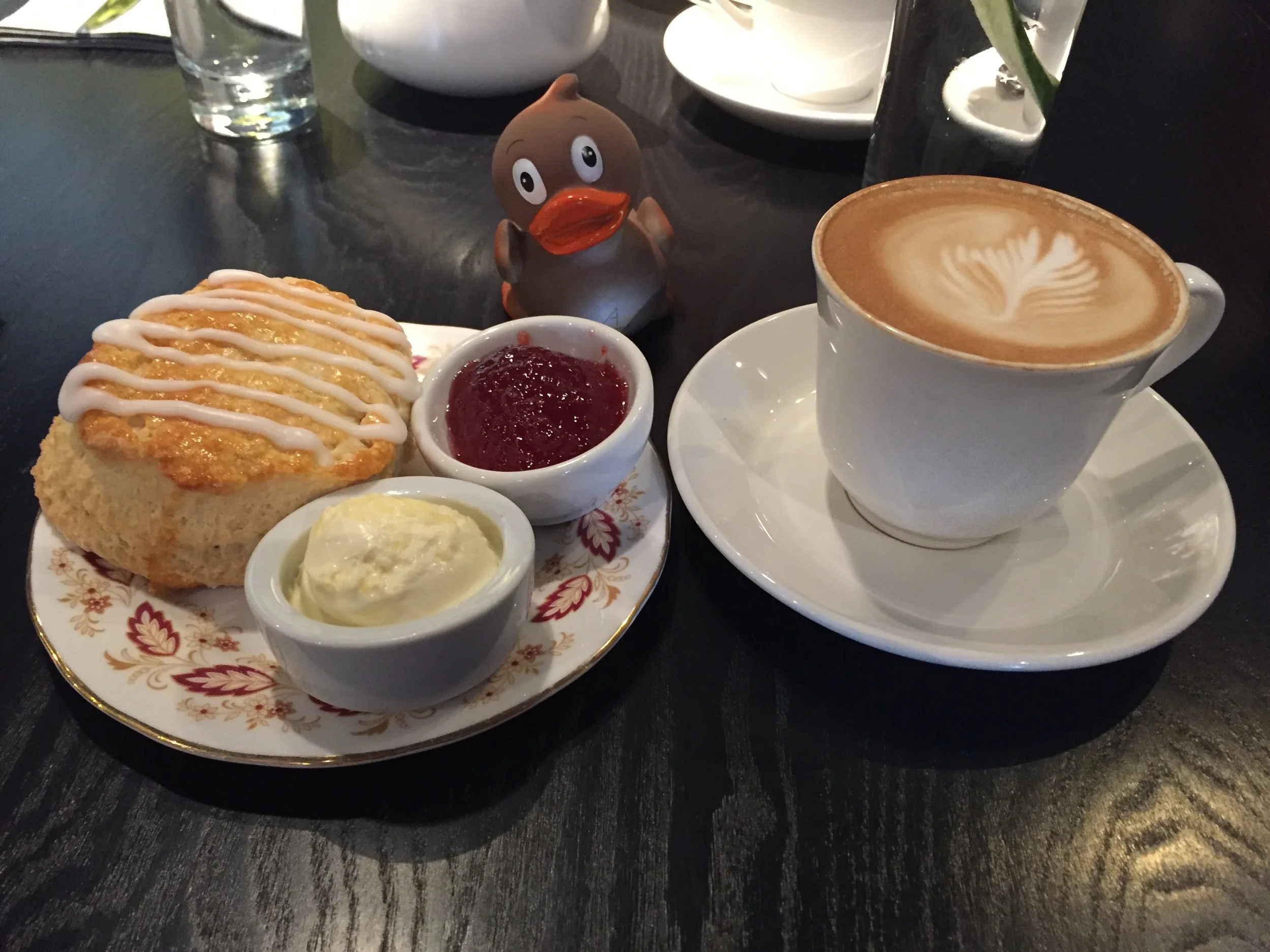
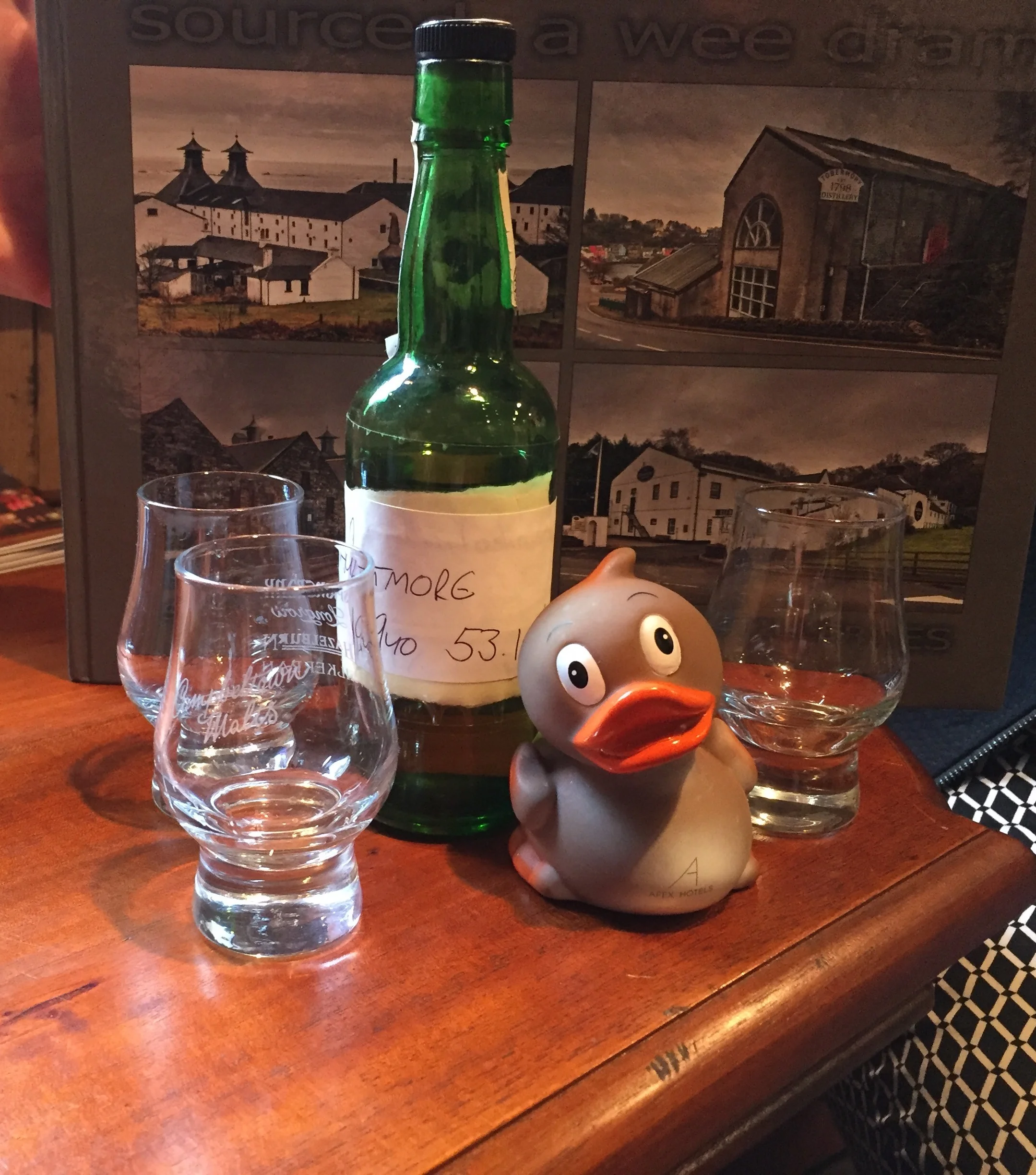
 Meet Mac, the ducky who was our companion while we were in Edinburgh. Our hotel claimed to be running a contest. If you submitted the best photo of the duck out and about in Edinburgh, you won a free night at the hotel. We were probably the only one

Meet Mac, the ducky who was our companion while we were in Edinburgh. Our hotel claimed to be running a contest. If you submitted the best photo of the duck out and about in Edinburgh, you won a free night at the hotel. We were probably the only ones who toted that guy around with us the entire time we were there. 

 We were so proud of ourselves for going out to hear some live music after dinner on our last night. Even with all of the carousing, we were still back in our hotel rooms by 10:30. We were trying to respect Mac's curfew.

We were so proud of ourselves for going out to hear some live music after dinner on our last night. Even with all of the carousing, we were still back in our hotel rooms by 10:30. We were trying to respect Mac's curfew.

Like the good expat girls that we are, we hired a guide to squire us around the city for half a day. We wondered briefly how we would recognize our tour guide, Cammy, but remembered he had tucked into an email that he weighed 350 pounds. He met us in the lobby of our hotel in a kilt, a reddish beard, and a ruddy complexion, checking off all the boxes for what a good Scotsman should look like. Cammy had a truly impressive knowledge of British history, including the ability to keep his king and queen facts straight. I have never been able to remember who is who, who is married to who, and who comes from where. I amused myself by trotting out the name, "Mary Queen of Scots" whenever there was a break in the action. My traveling mates, Darlene and Danielle - who both seemed to know their royalty facts - smiled with less and less frequency as this joke became as old as some of the sites (some dating back to the 1200's) we saw. If you go to Edinburgh, I highly recommend you contact Cammy.
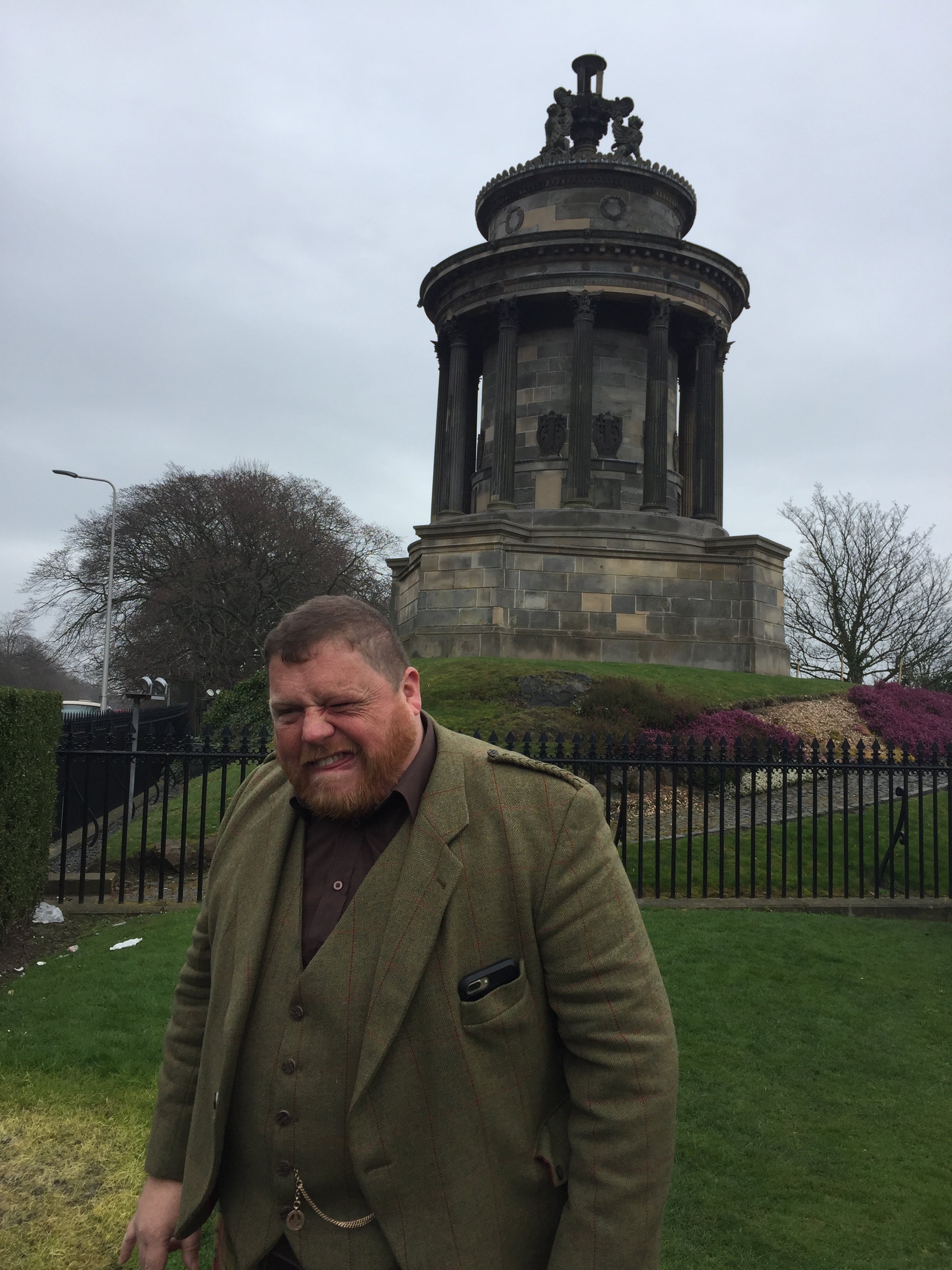
Cammy was in mid-sentence here during a recitation of a Robert Burns poem at the Burns monument. At first, I thought he said "Bums" monument. How nice, I thought, that the city of Edinburgh has a tribute to those less fortunate. The trash strewn aroโ€ฆ

Cammy was in mid-sentence here during a recitation of a Robert Burns poem at the Burns monument. At first, I thought he said "Bums" monument. How nice, I thought, that the city of Edinburgh has a tribute to those less fortunate. The trash strewn around the perimeter made that version make sense to me. Later, Danielle confessed she heard "Buns Monument", and that also made sense to both of us, if scones are included in the general category of "buns", I am all for just such a monument.
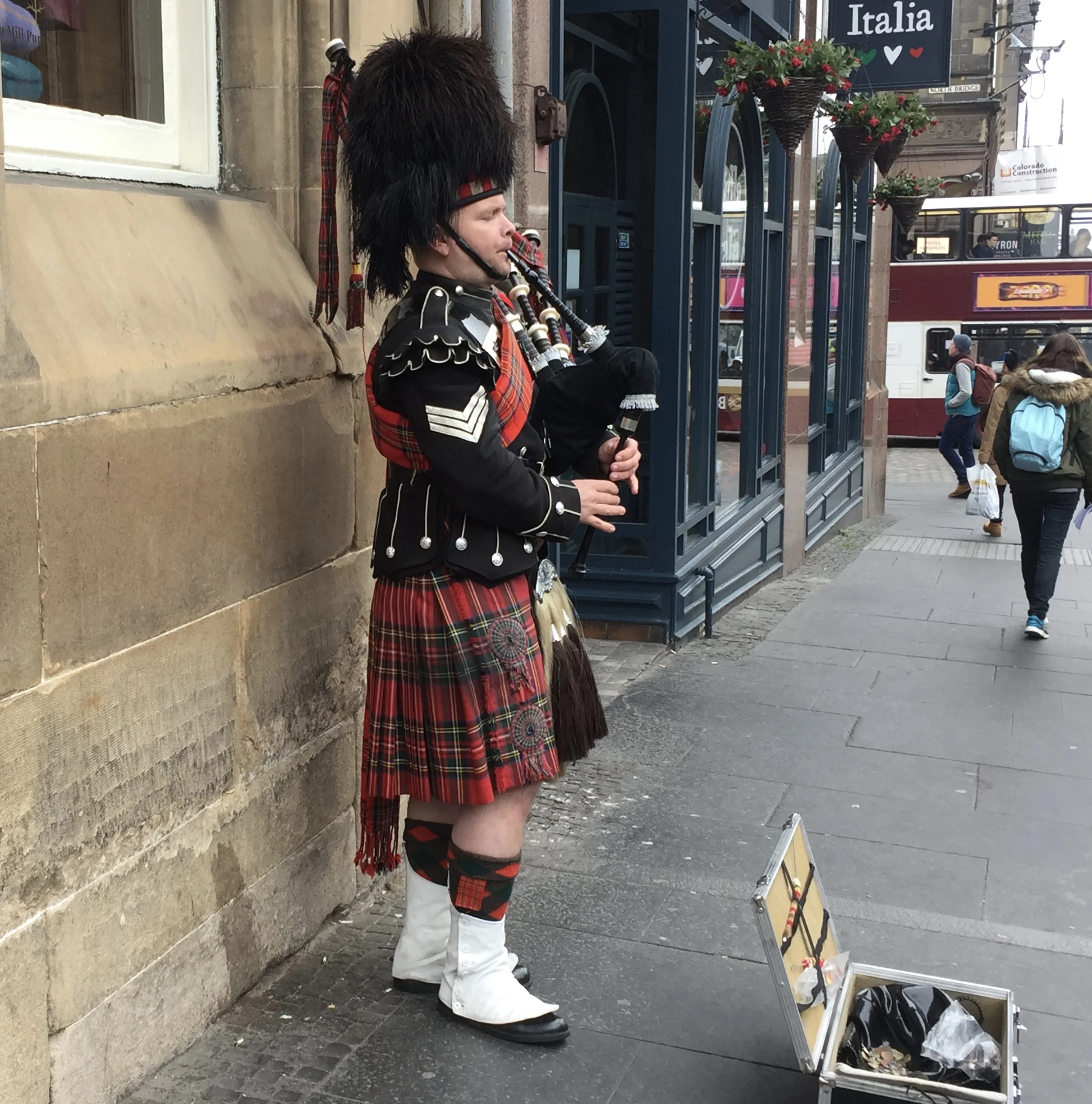
 These bagpipe players work really hard. In a place that is even chillier than Amsterdam, they sport bare legs. You have to give them credit for giving the tourists what they want.

These bagpipe players work really hard. In a place that is even chillier than Amsterdam, they sport bare legs. You have to give them credit for giving the tourists what they want.

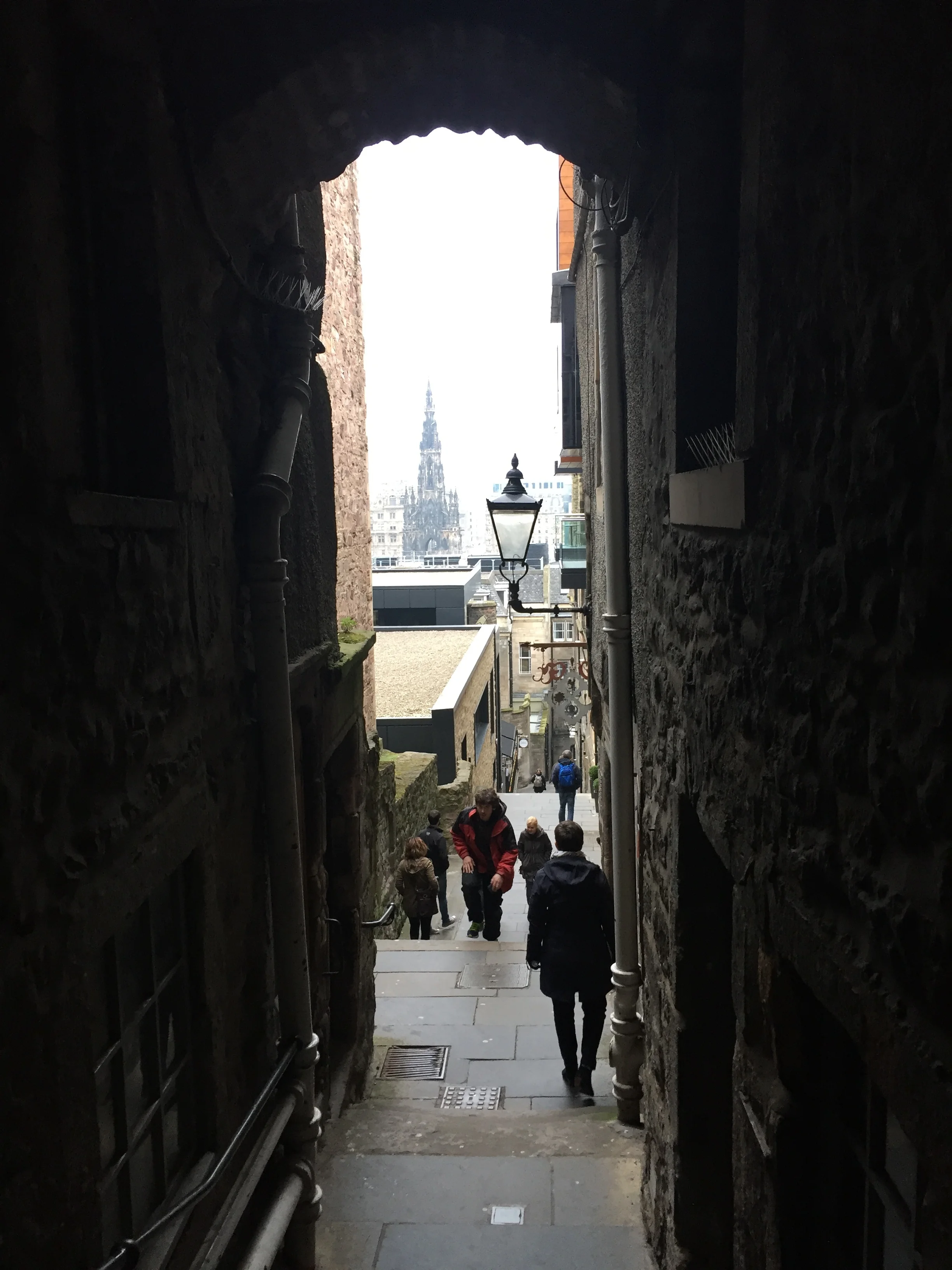
 There were lots of alleyways (called "closes") between parallel streets, with many steep stairs. This city is really good for the quads.

There were lots of alleyways (called "closes") between parallel streets, with many steep stairs. This city is really good for the quads.

 Edinburgh Castle looms over the city at every turn. The original castle was built in the 12th century. Now it's inhabited by tourists from all over the world. A group of Russian teenagers on our castle tour were more impressed by each other than the

Edinburgh Castle looms over the city at every turn. The original castle was built in the 12th century. Now it's inhabited by tourists from all over the world. A group of Russian teenagers on our castle tour were more impressed by each other than the castle.

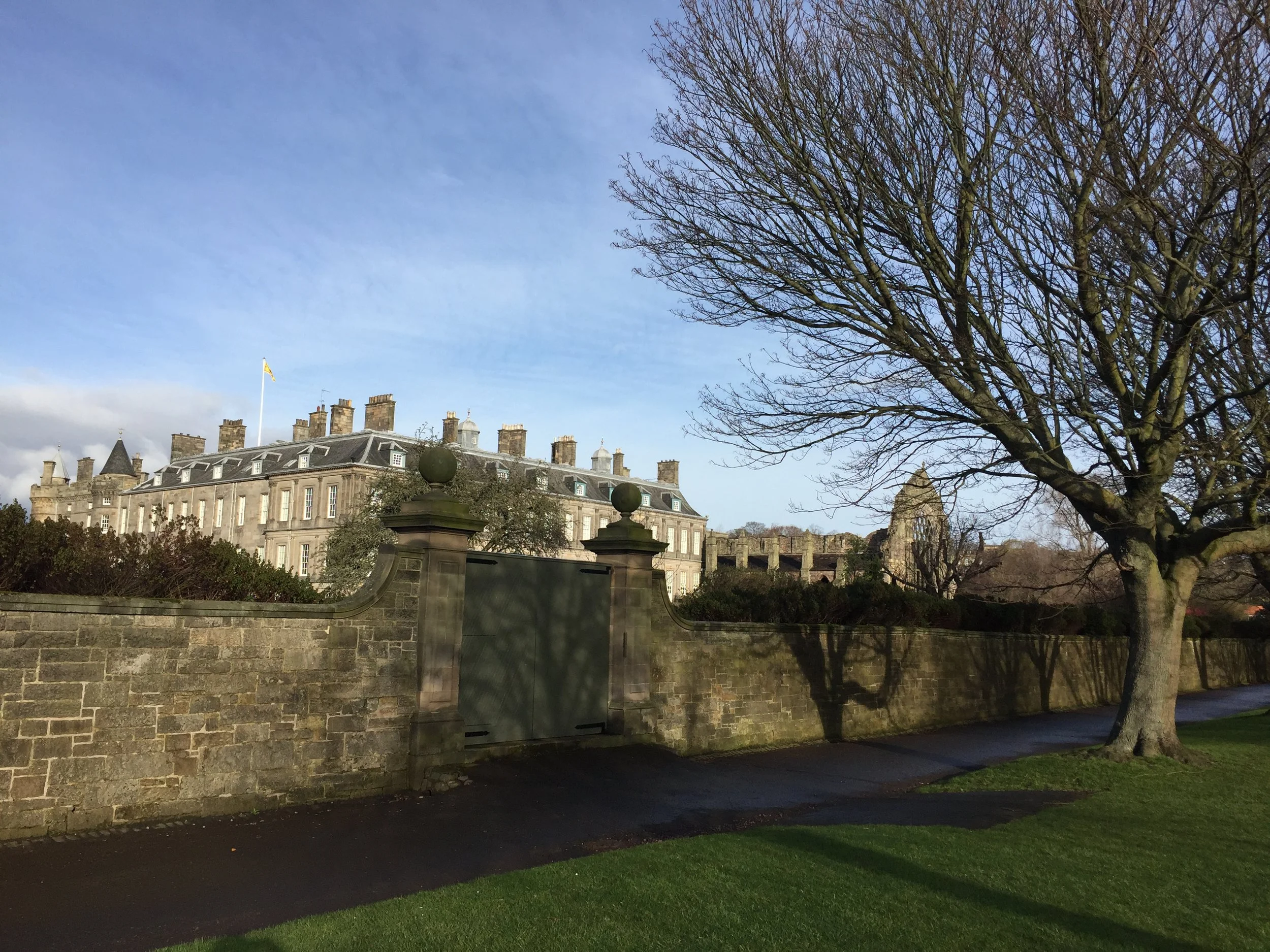
  The Palace of Holyroodhouse  is where the British Royal Family hangs out when they are in Scotland and are not at their own private castle (Balmoral). 

The Palace of Holyroodhouse is where the British Royal Family hangs out when they are in Scotland and are not at their own private castle (Balmoral). 

 Can you imagine going out for a run and seeing this? I loved how close by the "countryside" felt when you were in this city. Next time, I want to explore more of Scotland. Views like this made me look forward to visiting the Highlands someday.

Can you imagine going out for a run and seeing this? I loved how close by the "countryside" felt when you were in this city. Next time, I want to explore more of Scotland. Views like this made me look forward to visiting the Highlands someday.

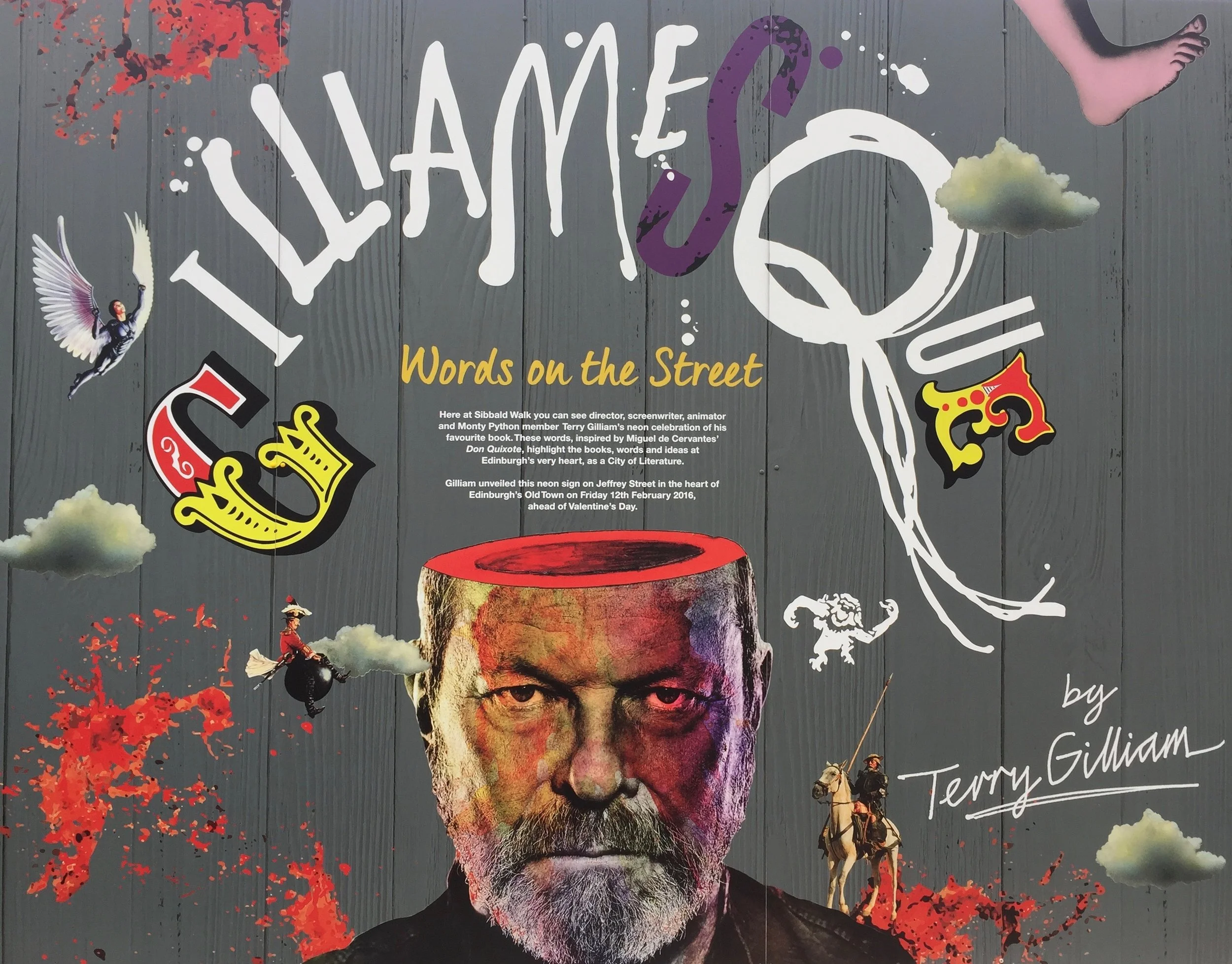
It soon became clear that Edinburgh is a literary city. It has been named a Unesco City of Literature, whatever that means. Perhaps it has something to do with the omnipresence of Mr. Burns, the many bookstores, and the even more numerous cozy coffeehouses to read and write in (including The Elephant House where JK Rowling wrote some of the Harry Potter novels). 
IMG_7615.jpg
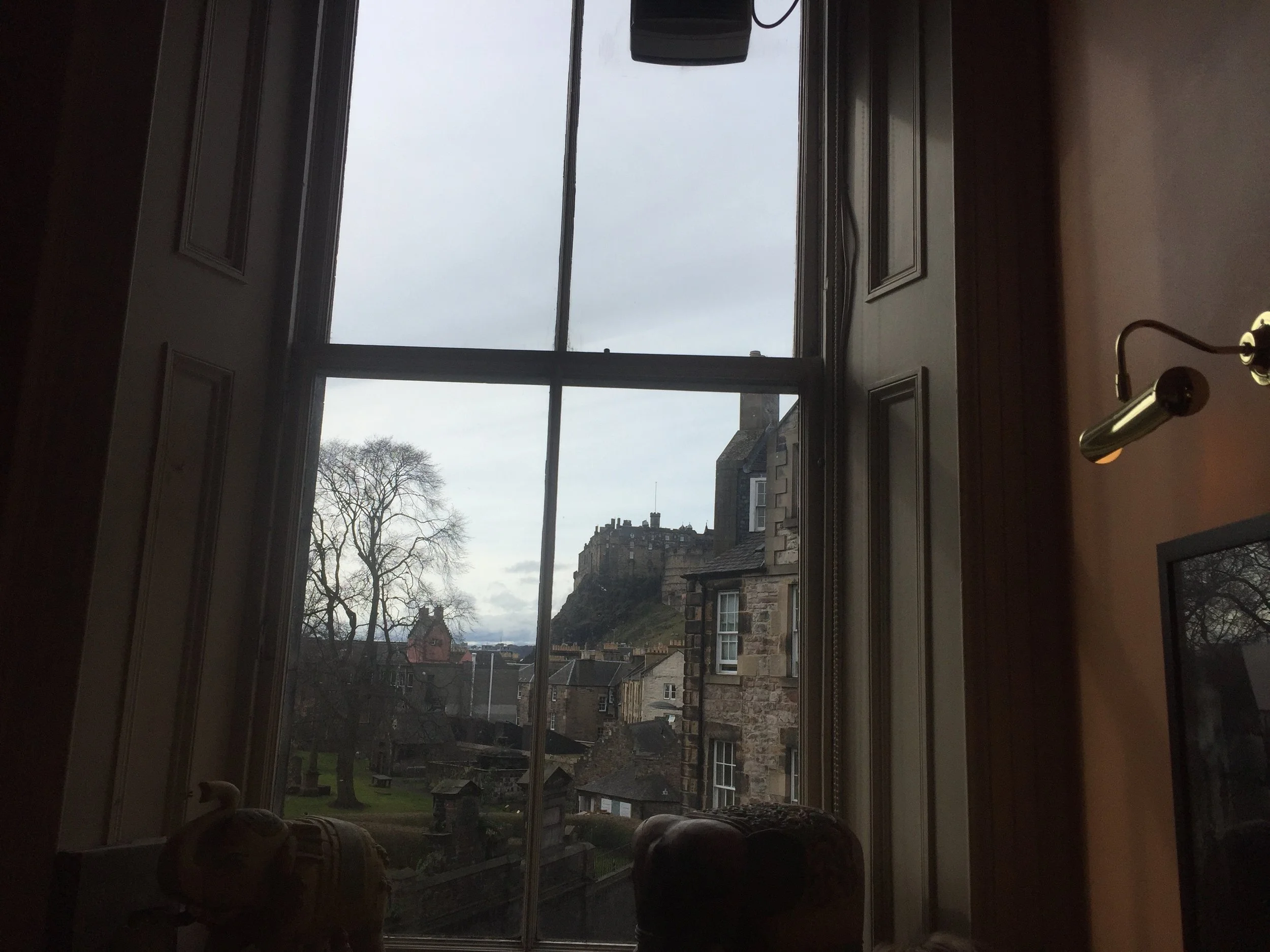
 Who knows what I could accomplish if I looked out at this view while writing?

Who knows what I could accomplish if I looked out at this view while writing?

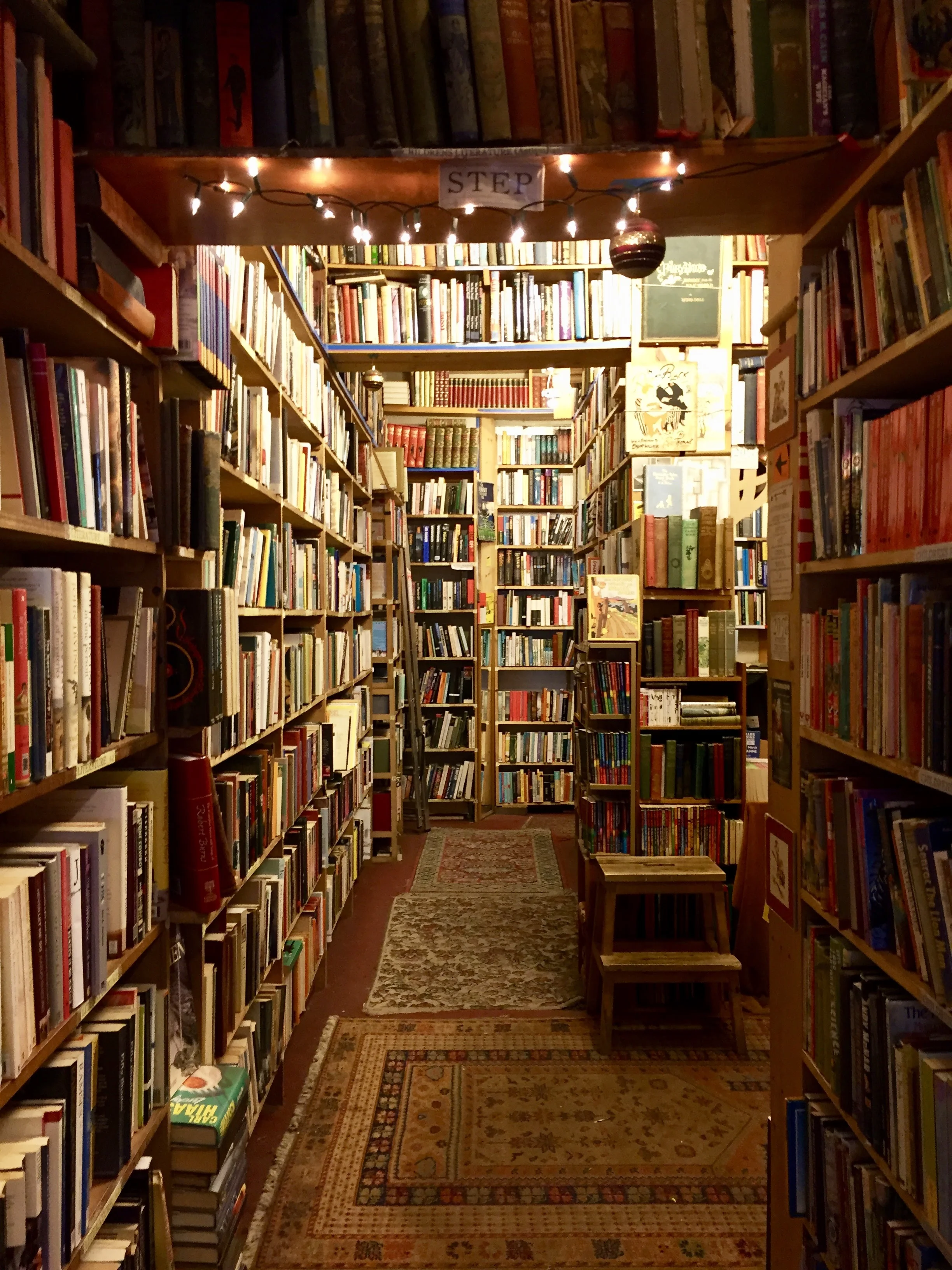
 Photo credit to Danielle. Bravo to her for taking the time from some serious book browsing to take this shot of one of the bookstores we got lost in.

Photo credit to Danielle. Bravo to her for taking the time from some serious book browsing to take this shot of one of the bookstores we got lost in.

Our guide Cammy explained that folks in Scotland follow politics carefully, and are known for their ability to debate. He told us about the most recent push for Scottish independence, which like Brexit, is fueled by younger voters. He described the generational allegiance to Great Britain in terms of his own family. His parents, who lived through WW II, see themselves as part of Great Britain first and Scotland second. The younger generation has a less fond feeling towards the British government. Margaret Thatcher was apparently the most hated figure among Scots of all ages. When the Scots heard her funeral was going to cost three million pounds, someone said, "For 3 million you could give everyone in Scotland a shovel, and we could dig a hole so deep we could hand her over to Satan in person." I'm still confused, despite Cammy's efforts to explain, about the difference between the terms Great Britain, The British Isles, England, and the United Kingdom. Trust me, there is a difference. Go ask Cammy, if you need to know. I think people who live in Scotland say they are from Scotland. When it suits them - say when Andy Murray wins Wimbledon - the British are proud to say Scotland is part of Great Britain. On less important issues than Wimbledon, I don't know what people from England say about their brothers and sisters in Scotland. 

It's hard not to compare the places you visit to the places you live. While wandering around, I noticed a few differences between Edinburgh and Amsterdam, and between Edinburgh and the U.S.
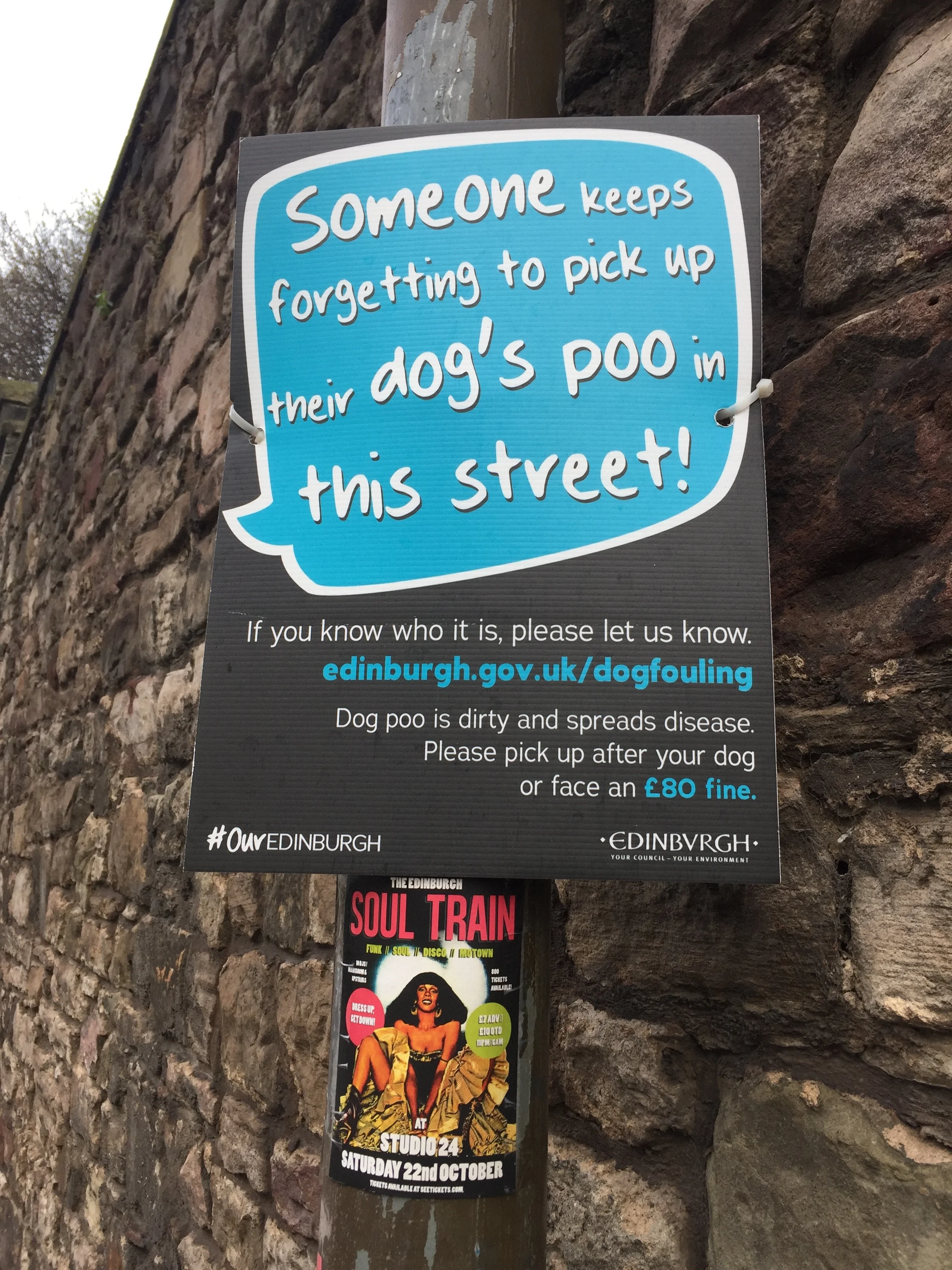

 What I wouldn't give for these signs to make their way to Amsterdam! Soul Train and dog poo punishment: what a perfect pair.

What I wouldn't give for these signs to make their way to Amsterdam! Soul Train and dog poo punishment: what a perfect pair.

 On a serious note, there seems to be quite a different attitude in Edinburgh towards taking care of veterans. That's a lesson the U.S. could learn.

On a serious note, there seems to be quite a different attitude in Edinburgh towards taking care of veterans. That's a lesson the U.S. could learn.

It turns out that Robert Burns wasn't the only famous "Burn" who hails from Scotland. So does the quirky and still amazing David Byrne. He even weighs in on the 3-city theme: "Heard about Houston? Heard about Detroit? Heard about Pittsburgh, P. A.?" He's having a lot of fun jumping around on that stage. I don't know if Robert Burns, who wrote, "My luve's like a red, red rose" had quite as much fun.

You might say you can't generalize about a place you have only visited for four days. I say that's the perfect amount of time to form an impression. My impression of the Scots, or at least the Edinburgers, was that they were friendly, welcoming to tourists, and down-to-earth. I know I don't have a lot of evidence to prove my point, but sometimes you go with the hunch you develop by walking around, looking, and listening. For example, at the very end of our journey, we wanted to get in one more scone run before getting on the plane. The purple-dyed-hair young lady who waited on us at one of the airport coffee shops smiled politely when we ordered our scone by saying, "Please, sir. I want some more," complete with British accent. Yes, I know Oliver took place in England, not in Scotland, and we were ordering a scone, not gruel, and she was a female, not a sir, but otherwise, we found this a perfect segue to bursting out into song with Consider Yourself. Our waitress continued to smile, and even managed a quiet laugh at our shenanigans. It only takes a trip with the gals to bring you right back to your adolescence. Or maybe I'm always ready to go there, if given half a chance. Anyway, for those of you who don't remember/care, Oliver was the 1968 movie musical starring the dreamy (and my first movie crush) Mark Lester, and the bad boy Jack Wild (who played the Artful Dodger and had that adorable turned-up nose - not so adorable years later in the disappointing H.R. Pufnstuf). I'm getting a little off track, so for those of you who want to reminisce more about this - Danielle - we can do that off-blog. 

Here's the famous scene, with subtitles (for some reason) in some Eastern European language. This clip brings me right back to that piece of cinema gold.

In fact, let's segue from Oliver Twist right back to the title of the blog. When I realized I would be visiting Paris and London in the same month, I decided Dickens' A Tale of Two Cities was required reading. It's on my shelf, and yet I have no memory of ever reading it before. Maybe I never did, and I just remember how torturous Rachel found it her senior year of high school. I have to admit it has been rather slow going, but I'm persevering. Charles Dickens wrote his books in monthly installments. You could say he was the inspiration for my blog schedule as well. I did remember the famous first paragraph, which also describes our current times, I think.

It was the best of times, it was the worst of times, it was the age of wisdom, it was the age of foolishness, it was the epoch of belief, it was the epoch of incredulity, it was the season of Light, it was the season of Darkness, it was the spring of hope, it was the winter of despair, we had everything before us, we had nothing before us, we were all going direct to Heaven, we were all going direct the other way....

So is it possible to discern the personality of a city? I say yes (sort of). Perhaps being an outsider - which is what expats are whenever and wherever they go - gives you the perspective to see from afar what people on the inside don't notice. I'm not sure how those personalities develop. It seems like they are somewhat self-fulfilling. In other words, you go to London expecting grand and polite that's what you get. You hear that Edinburgh is friendly, and low and behold, when you arrive expecting friendly, that's what you conclude, too. And what is the personality of Amsterdam, you ask? Maybe that's harder for me to say, the longer I am here. It's a complicated personality, for sure. It alternates between the mouthy teenager who constantly surprises you and the know-it-all uncle who is always right. I suppose all cities are complicated, but in my short jaunts, I'm not able to see those nuances. You may also wonder which of these three cities was my favorite. I'll play the mother card here and say I love them all, in different ways. Plus, that gives me the excuse to add in this song from the master of cool, Sly, and his Family Stone. "One child grows up to be somebody that just loves to learn. And another child grows up to be somebody you'd just love to burn." Who knows why one city turns out to be Paris and another one a place you would just love to burn? 
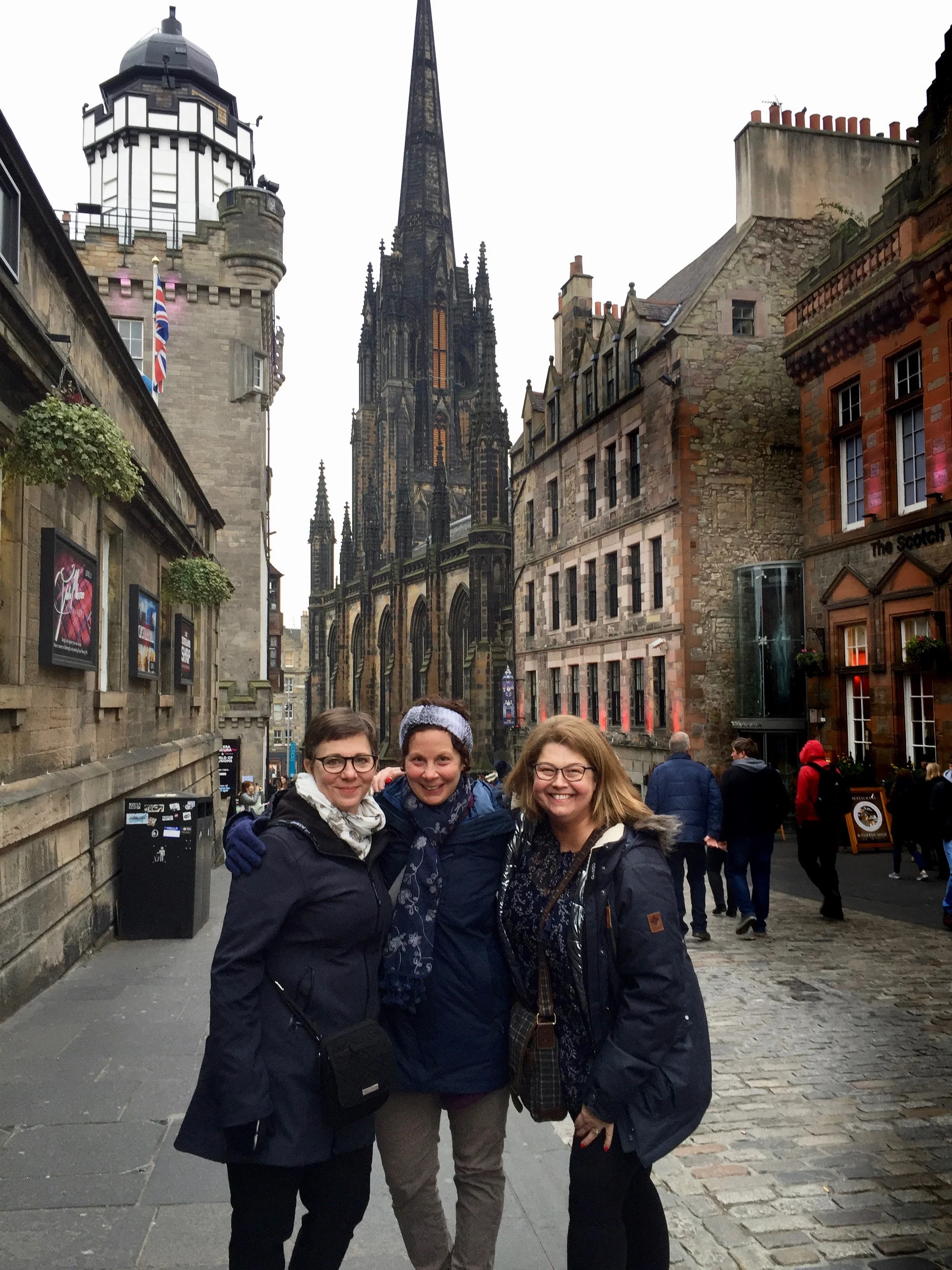
Thanks, gals, for the wee trip.

Thanks, gals, for the wee trip.

April 21, 2017 /Suzanne Vine
14 Comments
The Dutch are very well-read, although this study claims they rank only 10th in the world (below the U.S.) in literacy. It makes sense that the Dutch are also well-versed in election news and views. This photo has nothing to do with politics, but caโ€ฆ

The Dutch are very well-read, although this study claims they rank only 10th in the world (below the U.S.) in literacy. It makes sense that the Dutch are also well-versed in election news and views. This photo has nothing to do with politics, but can you believe how gorgeous this bookstore is?

The Netherlands Second: Election News from the Front

March 19, 2017 by Suzanne Vine

So many of us expats still have election fatigue. We are tired of the questions about the endless U.S. election season, the surprise ending to the long, dragged-out story, and the each-day-more-depressing-than-the next feeling to the news we wake up to each morning. I hesitated to write about the Dutch elections, fearing that no one - not my expat friends nor my family and friends in the U.S. - wanted to hear about the parallel election universe in the Netherlands. And yet, after droning on and on last month about how important it is to learn to speak Dutch, I decided it might be just a tad hypocritical to say I don't want or need to know what's going on here politically. Necessity is the mother of invention, according to some unknown person. I figured if I set off to write about the election, I would actually force myself to sit down and learn more about the political system. I realized it wasn't enough to have a vague notion that the Dutch celebrate some form of democracy. And where does the king fit into the picture? I needed to know enough to weigh in. For my readers who are Dutch, or married to a Dutch man, this blog post will undoubtedly have some laughable mistakes. Sorry. I'm an American girl. I've held off for so long on including this song, but it's high time, don't you think?

I suspect that in years past, expats were not asked by their family and friends in the U.S. about the Dutch elections. Let's be honest: no one really knew or cared what went on here politically, or any-which-way. This year was decidedly different. For the past two weeks, the New York Times has diligently covered the election, pointing out that the fate of Geert Wilders - often described as the Dutch Trump - would function as a worldwide referendum on the Trump ideology. This year, there seemed to be much more at stake for all of us in the election outcome in this tiny country of only 17 million people. Who really belongs here? And who should be allowed to move here in the future? These are two questions the Dutch are grappling with. Just like in the U.S., there is a debate over the haves and the have-nots. The gap between them is growing. Other big issues: the economy, the future of the E.U., and the relationship between the Netherlands and Russia, and the Netherlands and the U.S. 

This was my favorite sign at the Women's March here in January. 

This was my favorite sign at the Women's March here in January. 

The Dutch were fascinated by our election, and stunned by the result. In case you haven't seen this video, it's worth watching. The Dutch are not exactly known for their sense of humor, but this really hits a comedy home run. The voice of Mr. Trump is performed by an American from Boom Chicago, the American comedy club here. Alumni include Seth Meyers and Jordan Peele. I love it there because they skewer the Dutch and Americans in (almost) equal doses. Despite the laughs this video engendered, there was a genuine sense of worry here about the havoc the new administration could/would wreak on the rest of the world. 

Before I take you into the story of the Dutch election, we need to go back in time just a bit. For those of you who don't know, I have a long family history of political activism. My mother is and always was an ardent Democrat, a supporter of Hubert Humphrey in 1968 and George McGovern four years later. McGovern was the Bernie Sanders-like anti-Vietnam War candidate. I remember passing out buttons and flyers with my mom near our house in the suburbs. I doubt there were many takers. My mother was way ahead of her time. She made sure we had anti-war posters hanging in our room, and got us those POW/MIA bracelets that were so popular. And she talked a lot about the candidates at dinner time and how most of them were going to ruin our country (and the world, while they were at it). At the posh private school in Princeton I attended, I remember we held a mock election in class. The teacher tallied up the votes and the score was Nixon 19, McGovern 1. My mom was proud that I stayed loyal to the Democratic Party, and wasn't swayed by the prevailing Republican winds in my class.

imgres.jpg
 Does anyone else remember these bracelets? I just couldn't get over the fact that men were missing and might never be found.

Does anyone else remember these bracelets? I just couldn't get over the fact that men were missing and might never be found.

Then came the presidential election in 1980, when my sister and I both decided to write-in a vote for the Independent candidate: John Anderson. We probably knew less than nothing about his stand on the issues. I was 20, and she was 22, and we probably just liked the concept of voting for someone who was Independent, since we hadn't reached the stage of life yet where independence kicked in. We set off for the polling place together, and to her utter embarrassment, I couldn't figure out how to get out of the booth after casting my paper vote for Mr. Anderson. The kind voice of one of the volunteers at the make-shift polling spot next to the Loth Linoleum store finally succeeded in coaching me to find and pull the exit lever. I emerged from behind the velvet curtain with my head down. On the walk back home, my sister expressed (yet again) her disbelief in my sad inability to independently get out of the election booth. When she was finished with her ridicule, she asked how the election officials would know she had voted for John Anderson. It was then we realized that when presented with the slip of paper on which she was supposed to write-in the name "John Anderson", she had instead simply signed her name. In other words, she had voted for herself. My college roommate Sarah's father Percy loved this story so much. He wanted to have a t-shirt printed with "Jennifer Vine for President" emblazoned across the front. 

After that fascinating peek into my past, let's get back to the Dutch elections. There are some important differences between the U.S. system of government and the Dutch. For one, there is a king here. In the U.S., we just have the Kennedys, the Bushes, and the Clintons. Also, there is no president of the Netherlands. There are two "houses": the Tweede, like our House of Representatives, and the Eerste, like our Senate. There are also many political parties (28 ran in the current election) and there has to be a coalition in order to govern. In other words, people in the government need to compromise and work together with people who have very different views from their own. Imagine that.

Here is just a quick listing of some of the political parties in the mix this year. There's the VVD, Volkspartij Voor Vrijheid en Democratie (People's Party for Freedom and Democracy). I've told you before about the Dutch love for a good long word, and that love appears to extend to the naming of their political parties. The current Prime Minister of the Netherlands, Mark Rutte, heads up this party. They believe in small government and economic "freedom", but also support what we would consider liberal social issues like universal health care, pro-choice, and same-sex marriage. In a move that some likened to a Trump attempt to appease the right, he recently took out an ad telling folks to, "Doe normaal or ga weg,". That roughly translates to, "Act normal or leave." By "act normal", the Dutch mean to follow the accepted norms of behavior in the community. His words signaled - at least to the media here and in the U.S. - that Rutte was trying to appeal to the increasingly xenophobic feelings spreading not just across the Netherlands, but Germany, France, and elsewhere in Europe. He also took a stab at the people who point out that the Zwarte Piet blackface costume that some wear during Sinterklaas is a racist tradition that needs to stop. This article describes the continuing debate, stirred up by Rutte in his letter, over who decides whether something is an "innocent" tradition or racism. Thank you, Rachel Drucker, for sending it my way.

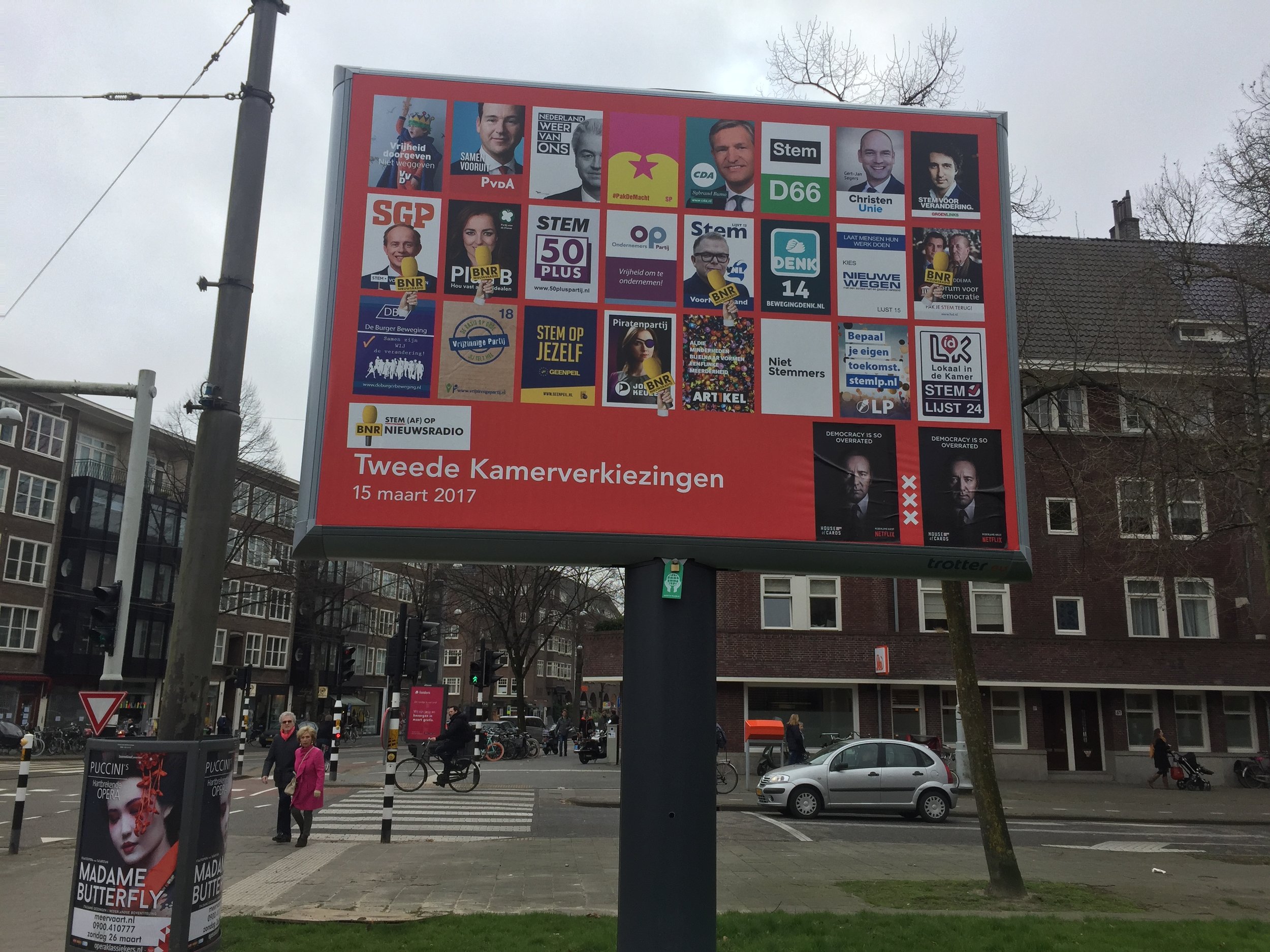
Even the billboards are different here. Each individual poster is slapped together into one giant coalition poster.

Even the billboards are different here. Each individual poster is slapped together into one giant coalition poster.

Here are a few more parties who were in the election mix: the Partij van de Arbeid (PvdA) or Labor Party. Truth be told, when I first saw the party name, I confused the word "arbeid" for "ardbei" which means strawberry. The Strawberry Party? The Labor Party seems to have a Bernie Sanders-type platform, focusing on jobs, healthcare and education. I'm not sure what the platform of a Strawberry Party would be, but it has interesting possibilities. A focus on better desserts? Affordable smoothies for everyone? The D66, or Democrats 66 (the year the party was created) is responsible for introducing some of the liberal social policies the Netherlands is known for: the legalization of gay marriage, euthanasia and prostitution. There is, of course, Geert Wilders' PVV Partij voor de Vrijheid (Party for Freedom). Apparently his brand of freedom applies only if you are white and were born in the Netherlands. Mr. Wilders, who rode to fame on an anti-Islam, anti-immigration horse, even dyes his mane a startling shade of blond, like our own fearless, fear-mongering leader. Less controversial and more thoughtful are: the Groenlinks (Green Left) party, which focuses on the environment; and Denk (which means "think" in Dutch). It's known as a pro-immigrant party, and is focused on eliminating racism and discrimination, and promoting the integration of refugees. The leaders are of Turkish origin, and a former Miss Netherlands is their Communications Director. I was somewhat perplexed that in this majority-secular country, the Christian Democrat Party (CDA) is also a big player. My Dutch history class teacher explained that rather than push aside right-wing parties, the Netherlands believes that if you give them a little power, you defuse their control. It's an interesting concept. 

And there is my personal favorite, the Partij voor de Dieren, PvdD, the Animal Party. I would like to propose this wise, kind, exceptionally hungry resident for a leadership position in the party.

And there is my personal favorite, the Partij voor de Dieren, PvdD, the Animal Party. I would like to propose this wise, kind, exceptionally hungry resident for a leadership position in the party.

The Netherlands clearly did not want to make the same mistakes made by the Brits during Brexit, or the Americans during the Trump election. They recognized here that the "youth vote" was an important ingredient in the anti-populist movement. For those who prefer not to hear four-letter words repeated often and loudly, you can skip the upcoming video. For the rest of you, the salty language represents an interesting attempt to reach out to the youth vote. I have noticed that the Dutch don't seem to attach the same meaning to the f- word as we do in the U.S. It's not nearly as bad as the Dutch curse, wishing cancer on someone. I kid you not.

I'm sure many of you have already read about the election results. I tried to build up to the climax of the story, getting you interested first in the issues and the players. And the winner was? Although the paper ballots - yes, you read that right - haven't officially been tallied yet, the centrist VVD, the current party in power, earned the most votes, garnering 33 seats. Two pro-EU parties, D66 and the Green Left, both did well, especially among young voters. The Christian Democrats also had a strong showing, tying Mr. Wilders' party for second place. I wonder if the Dutch kept track of the election the way folks in the U.S. obsess over their March Madness brackets. Now it's a math problem waiting to be solved. In order to govern, you need "half plus one"  - or 76 seats out of the total of 150 seats (75 in each house) - to sit together at the table. Because of the way the votes were spread out over so many parties, that means four parties may have to join together to form a coalition. 

In the end, I think it's in the Dutch DNA to resist doing what everyone else is doing. I suspect all of the press that Geert Wilders received from the media may have made the Dutch decide to run the other way. So, instead of a stunning rise in votes for his party, he received only 5 more seats - for a total of 19 seats - in the government than he had earned in the last election four years ago. That was well below the 40 seats he had been predicted to win several months ago. The election results caused everyone to breath a sigh of relief across Europe, and led to many more news stories, like this one in the New York Times about the implications for the rest of Europe in other upcoming elections. The Netherlands even received some congratulatory words from world leaders, proud of them for doing their own thing in the election. Once again, the Netherlands proved that rather than just do the expected, they prefer to forge their own path. They refuse to just holler back what they hear. Since the previous video flooded your senses with the f*** word, I chose the clean version this time.

More astonishing to this American girl than the actual election results is the voter turnout: a stunning 82%. When I started this post by saying this was a country of informed people, I wasn't kidding. I'm also astonished by the idea that after such a contentious election, the party leaders all sat around a table the very next day to talk about how to form a coalition. I just can't imagine that happening in the U.S. And would so many politicians wear that shade of blue? It's like the Delft blue in a Dutch tile. So cheerful. What's not so cheerful is the notion that there is only one women represented around the table. She is Marianne Thieme, the leader of the Animal Party. She doesn't even get to wear the cheerful blue. In a country that prides itself on its openness and diversity, the lack of gender and racial diversity in the government is startling. [Note: many thanks to Martha Canning, President of the American Women's Club of Amsterdam for correcting me when I initially reported that the lone woman was not an elected official, but rather the woman charged with creating the coalition. So instead of no women on board, there is actually one. It takes a village to write a blog.] 

 Those politicians look like an updated version of a Rembrandt painting.

Those politicians look like an updated version of a Rembrandt painting.

 Until 2006, one of the political parties, the SGP, didn't even allow women to join the party, and was opposed to universal suffrage. These women from the Dutch Golden Age painting by Frans Hals would not have approved of such a archaic situation.

Until 2006, one of the political parties, the SGP, didn't even allow women to join the party, and was opposed to universal suffrage. These women from the Dutch Golden Age painting by Frans Hals would not have approved of such a archaic situation.

Where does the Dutch royalty fit into this scheme, you ask? I ask myself the same question. It seems slightly out of character for a country that prides itself on its egalitarianism to also hold their royal family so dear. My Dutch History teacher provided one explanation. He said, "Royalty plays an important role in modern society. It unifies it." Hmmm. I guess that will have to do as an explanation for now. Indeed, without a king or queen, the Dutch would be left without their favorite holiday: King's Day (or Queen's Day, depending on who is sitting on the throne). That would mean giving up a full day of drinking and selling your old clothes on the street, so I think the royals may be here to stay. Here's the King and his family, first looking like a regular family, and then all dolled up in their royal garb.

Dutch-royal-family-4.jpg
images.jpg

In the end, I'm glad the world focused on the Netherlands for a little while. This wee slip of a country has to care about what happens in the U.S., because of how big and bossy we are. The Netherlands deserves to have someone else care about it for once. Maybe the interest in the Dutch election proves the U.S. is becoming a little less self-centered, a little less focused only on its own government. That's would be a good thing. We have only a few weeks to rest up before we will have to get up to speed on the elections in France, Germany, and Italy. Until then, I'm going to think about this "woman of a certain age". We saw her last weekend while celebrating Peter's birthday in Paris. At first blush, from a distance, it seemed like she might have been a slightly daft old lady who wandered in off the street to join the musicians. After we stopped to watch, we realized she was part of the act. There was something so sweet and uplifting about the way she danced with both determination and joy. And although I'm not sure I quite captured it in my short video, there was also something magical about the way almost every passer-by broke out in a smile when they glanced over at her. I'm not sure what the lesson is here, but it's something about the contagiousness of happiness. We could all use a little of that right now.

I know I shouldn't complain after the late-season snow and ice you have had to contend with in the U.S., but it does sometimes feel this way here. Never mind summer. I hope Spring is on its way soon, for all of us.

I know I shouldn't complain after the late-season snow and ice you have had to contend with in the U.S., but it does sometimes feel this way here. Never mind summer. I hope Spring is on its way soon, for all of us.

March 19, 2017 /Suzanne Vine
15 Comments
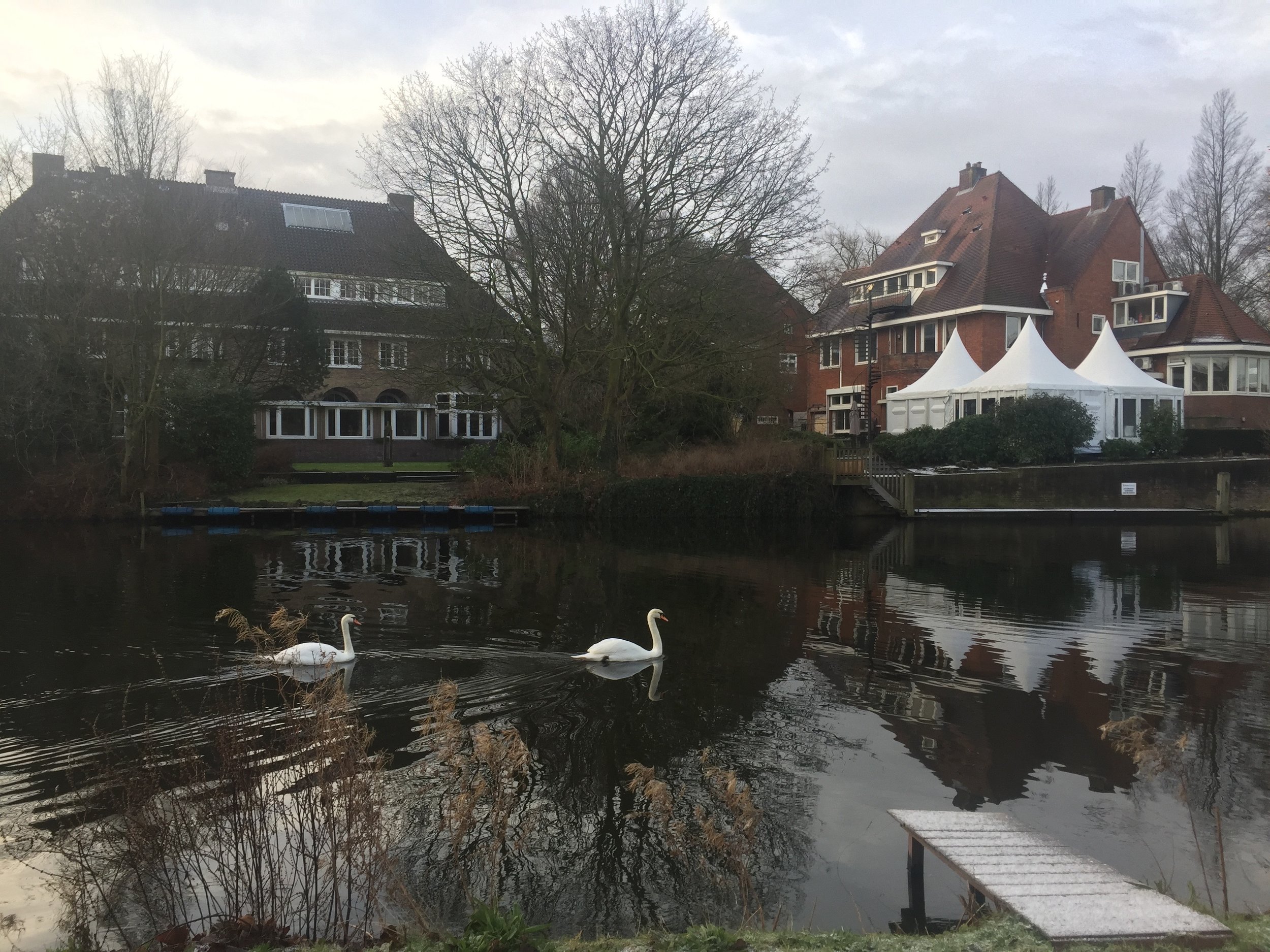
I just want to speak Dutch as effortlessly as these swans swim past me on the canal. Alas, this has proven to be quite a challenge. Maybe swans aren't all they are cracked up to be after all.

I just want to speak Dutch as effortlessly as these swans swim past me on the canal. Alas, this has proven to be quite a challenge. Maybe swans aren't all they are cracked up to be after all.

See No, Hear No, Speak No Dutch: Language Learning and Teaching in Amsterdam

February 17, 2017 by Suzanne Vine

My lace-thin ability to speak Dutch is an endless source of amusement to my kids, as is so much of what I do and say. Although neither one of them lives here, they know enough to know that after you sit down at a restaurant and the waitress approaches you, he or she is not there to take your full order. Rather, she is asking something along the lines of, "Wil je iets drinken?" (Do you want something to drink?). One part of my brain knows that, too. Why then do I plunge headlong into my entire order, you might ask. My kids say the problem is I either don't hear, or more likely don't listen very carefully. That may only be part of the problem. The main part I think it's because I am nervous. I'm valiantly trying to prove I do speak some Dutch. Then there's the fact that I'm hungry. Also, I am still thinking like an American; we are rushed into sitting, glancing at a menu, and ordering in one fell swoop. Here, there's a whole process that could take awhile. A long while. That's actually a good description of my journey to learn Dutch: it could take awhile. A long while. "Maybe tomorrow? Maybe someday?" That's what The Pretenders tell me. 

You might think when you move to a different country, you should learn the language. You might think it's maybe not essential, but certainly helpful for managing everyday life. You might also think you won't ever be accepted in that new place if you don't learn the language. Funny how Americans living in the U.S. insist on newcomers - especially when they are Hispanic - learning the language, but we don't feel the same way when we are the newcomers. As our new president says, we need to speak a language in order to "assimilate". 

Why then don't more Americans here speak Dutch? Let's start with the fact that so many Dutch folks speak such darn good English. From the check-out people at the local grocery store, to the restaurant employees, to the tram conductors, they can all speak English. Whether they always do is another matter entirely. The fluency seems to correlate with age (the younger you are, the more solid your English proficiency) and level of education/class. Soon after we arrived, I blogged about trying to fit in here [Getting My Dutch On, November 1, 2014], and alluded to my struggles with learning Dutch. I had modest expectations back then. "I'm looking forward to knowing enough Dutch so I can have some small conversations with people here, and not feel like an outsider," I wrote. Let's take a look at how that has gone for me.

Here are a few other random reasons we expats tell ourselves we are not learning Dutch: we are only here for (fill in the blank) years, we are too old to learn, we don't have time, we don't have the patience. I have a few friends who are really learning a lot of Dutch...but the majority of them have a huge incentive: they are married to Dutch men. Even those gals say they aren't close to fluent. Two of those Americans-married-to-Dutch-men and I recently teamed up to wish a member of our book group a Happy Birthday in Dutch. Can I tell you how happy I am to be able to sing along whenever the occasion arises? Talk about feeling like an insider.


In addition to the problem of not needing to speak it - use it or lose it - it's a difficult language. Your mouth has to move in ways it's just not used to moving in order to pronounce some of the words. Most people first notice the guttural "g", which appears in a lot of Dutch words and sounds like you are clearing your throat loudly and rudely. Although many find the language harsh, I discovered while writing this post that Dutch was recently voted one of the sexiest languages by no less a panel of experts than the members of a dating website. I would like to suggest that has probably more to do with how attractive the Dutch are, and nothing to do with the language. Anyway, the throat-clearing "g" sound doesn't bollocks me up so much. Rather, it's the vowel pairs like "ui" in the word zuid, or south. I live in that part of the city, so I should know how to say it: "z" and then OWWW, like you just stubbed your toe and then, just to confuse me more, the "t" and not the "d" sound at the end. Because I am trying to learn this language at such a late stage of my development, I have no "muscle memory" (or, truth be told, any memory at all) built up to say words like "zuid". Not having an ample supply of muscle memory used to be my excuse for never mastering a good vibrato - the process of moving your fingers move back and forth to make the notes more expressive - when I played the violin. I didn't learn it early enough in life. The notion is that if you practice something over and over again, your muscles remember how to move and they do it without your having to think about it. Dad, you were right: I should have practiced more. Is it too late to admit it?

In addition to the difficulty with moving my muscles, there is also the sheer (often preposterous) length of some Dutch words. As I mentioned in one of my first posts, the words look positively Dr. Seussian to me. I came across this one when I was trying to figure out if I needed Dutch health insurance: ziektekostenverzekeraar.  It means health insurer. I think the urge to create ever-longer words may be related to the Dutch competitive streak. Ask anyone about that who has waited on their bike for the light to change and watched person after person inch in front of you to win that race home. Anyway, I enjoy trying to decode the meanings. How many regular-sized words can I find inside the jumbo-sized Dutch word? The Dutch may drink all their drinks in tiny cups, but they love their jumbo words.

The pictures next to the words don't always answer all my questions either. This photo was taken under cover of darkness. I don't want to hurt anyone's feelings, after all.

The pictures next to the words don't always answer all my questions either. This photo was taken under cover of darkness. I don't want to hurt anyone's feelings, after all.

Then there's the matter of the words that look identical to English words, but mean something very different. If someone tells you are slim, it has nothing to do with your body. It means you are clever. A pet is not Casey, but a cap. And a bank could mean a bank, but it also means a sofa. A jongen should be a young'un, or child. Nope. It means boy. Now you have some idea of what I'm up against. I'm taking a Dutch history class now, and I realize that most of those words were taken by Americans from the Dutch, so it's probably our fault for changing up the meaning in the first place. Regardless of who is to blame, it makes for muchos difficulties in learning.

When I first arrived, I liked to imagine that this was a college where I could go to learn to tell a joke, without botching the punchline every time. But no, joke doesn't mean joke. It's a common Dutch first name for men.

When I first arrived, I liked to imagine that this was a college where I could go to learn to tell a joke, without botching the punchline every time. But no, joke doesn't mean joke. It's a common Dutch first name for men.

On the other hand, once you have started to crack the code, you begin to realize that Dutch can be easier to decipher than English. That's because so many words are so literal. For example, handschoenen (literally, hand shoes) are gloves. A werkgever, or work-giver, is an employer. And a werknemer, or work taker, is an employee. A stinkdier, a stink-animal, is...a skunk. When I can't figure things out on my own, in many cases, Google Translate comes to the rescue. How did expats survive without it? At times, however, it only adds to the confusion. Peter once set off to the grocery store in search of vegetable broth. He found one made with paddenstoel, which Google Translate unhelpfully told him was a toad chair. They meant to say "toadstool", otherwise known as a mushroom. 

Like any good student, I take classes. I started off with a tutor who came to the house, and who was paid by Peter's company. That was a nice perk. Then there's the app, Duolingo, which has the advantage of being free and online, so you can learn in your P.J's. When I ran out of private lessons, I turned to a Dutch conversation class at our neighborhood community center. It's like the U.N. General Assembly in that room: we hail from Uganda, the Philippines, Brazil, Spain, France, South Korea, Sweden, Peru, and the U.S. For two hours every Monday morning, we talk in Dutch about how we spent our weekends, what we ate, where we have travelled. My brain hurts by the time I get home. 

 Here's Rudy, from the Philippines, who invited the class members over for lunch at the end of the year. He serenaded us after we ate. He is the class clown: always trying to get my attention with a joke. I'm usually game.

Here's Rudy, from the Philippines, who invited the class members over for lunch at the end of the year. He serenaded us after we ate. He is the class clown: always trying to get my attention with a joke. I'm usually game.

 Rudy's building is an outstanding example of the Amsterdam School of architecture. He gave us a tour of the building, which was built for single people and is still subsidized by the government. His rent is ridiculously low. 

Rudy's building is an outstanding example of the Amsterdam School of architecture. He gave us a tour of the building, which was built for single people and is still subsidized by the government. His rent is ridiculously low. 

Now that I lost my good friend Vera to Tokyo (yet another expat friend who has up and left me) I have also lost my Dutch "Babble" class that she set up. Truth be told, we tried to speak Dutch, but it often quickly dissolved into talking in English about trying to speak Dutch, and then into speaking English about things that have nothing to do with Dutch, and then into just drinking wine and laughing. We did watch a great, trashy Dutch TV show Gooische Vrouwen, a cross, I'm told, between Desperate Housewives and Sex and the City, neither of which I have watched. Somehow in Dutch, watching Gooische Vrouwen was like watching PBS to me: educational programming. Vera, our fearless leader in Dutch-talk, isn't even Dutch. She's German, but since she is married to a Dutchman, and lived in the Netherlands for many years, she is Dutch-ish. 

Here's Vera and her daughter Rosanne at the beach this summer with Rachel and me. Was it ever hot enough here to go to the beach? Miss you, lieve dame!

Here's Vera and her daughter Rosanne at the beach this summer with Rachel and me. Was it ever hot enough here to go to the beach? Miss you, lieve dame!

Aside from my classes, I learn the most when I go out into the world and speak Dutch. At the Saturday market near our apartment, I try to speak only Dutch. My best teachers there are the cheese guy, and the folks at The Nut House (love that name) - the stand that sells nuts and dried fruits. Food is a great incentive for me. If I ask for it correctly, I get what I want. My other teachers are the lady at the dry cleaners, everyone at Casey's vet's office, and a few of the instructors at my gym. Thanks to the gym gals, I can count, I know my body parts, and I know a lot of words of encouragement: Gaan we! (Let's go), Nog รฉรฉn keer! (One more time), Goed gedaan! (Well done). it makes my day when I manage to have a conversation at any one of these places.

These kind and patient teachers make up for the small number of people who get very impatient when I lumber along in Dutch, and finally ask me to, "Just say it in English." Like the lady in the bookstore who asked if I needed help. I told her I had already found mijn boek and held up Marilynne Robinson's Gilead. Then she asked me if I was Marilynne Robinson. I may be a reading snob, and I don't expect everyone to have heard of the Pulitzer-Prize winning author, but this lady worked in a book store! When I had a hard time explaining to her in Dutch that by saying "mijn boek" I didn't mean I wrote the book, just that it was the book I wanted, she finally said, "Just say it in English." That's what I want to say when I have to make a phone call to find out about taxes, or insurance, or a bill, and get a long-winded message in Dutch that leaves me winded myself. 

In my Dutch History class, I learned I'm in good royal company in my quest to learn Dutch. Louis Napoleon, a Frenchman, who was the first king of the Netherlands, wanted to learn a little Dutch to show his Dutch subjects he was on their side. Proudly strutting his stuff, he announced that he was their konijn, mistaking konijn, the word for rabbit, for koning, the word for king. Still, he persevered. To this day, he is known as the Rabbit King. I feel your pain, King Louis. If he can do it, I can do it.

As I mentioned earlier, a big difficulty in learning the language has been my inability to hear/listen. Lest you think this is just a function of my getting older, I can assure you it is not. I have always had a hard time deciphering the lyrics of songs. In my defense, I think it's because the music has always been more important to me than the lyrics. If I'm closely listening to the music, I can't also concentrate on the lyrics, now can I? That may explain why I completely didn't get it when Bob Dylan was awarded the Pulitzer Prize. I first became aware of my listening problem when I was squeezed into a car with some friends heading "down the shore" (what we folks in N.J. call "going to the beach"). Neil Diamond's Forever in Blue Jeans popped onto the radio and I burst into song, belting out the lyrics: "Reverend Blue Jeans". My friends looked startled, unable to believe I wasn't trying to be funny, but actually thought those were the lyrics. Fast forward to driving with my own two teenagers in the car and the classic Whoomp There It Is comes on, and I sing out at the top of my lungs, "Whoomp, bare ass." Because wouldn't those be the most fitting lyrics to many songs from that era, and most of them now? Anyway, I'm thinking maybe I'm so busy listening to the sound of the Dutch language I can't pay attention to the meaning. Just a thought.

Even when I try really hard to eavesdrop on Dutch conversations or decode the meaning of Dutch songs, it's hard. Sometimes I can't even say for sure if the song lyrics are in English or in Dutch. Here's one from my Zumba class, which also functions as a Dutch class when she shouts out some directions about how to move and shake, or plays an occasional song in Dutch. Can you tell what language this one is in? 

As if learning Dutch words isn't hard enough, there are all the idioms. To really fit in, you need to know how to throw a few of these into your conversations. One of my favorites is, "vreemde eend in de bijt" - literally "a strange duck in the pack" - which means a misfit, or someone who doesn't fit into a group. That's how I feel here when I'm surrounded by folks prattling on in Dutch. For those occasions when I'm cut off by someone on their bike (or to understand what someone is shouting at me from their bike) I need to brush up on my Dutch cursing.  Again, one reason I haven't felt the need to do that is that so many people curse in English. I'm quite familiar with the many uses of the "f" word, but would like to round out my cursing expertise with some choice Dutch expressions. I have some studying to do.

All over Amsterdam I see these little rooms where I imagine myself sitting with a good book, or studying my Dutch. I see a post about the Amsterdam architecture in my future.

All over Amsterdam I see these little rooms where I imagine myself sitting with a good book, or studying my Dutch. I see a post about the Amsterdam architecture in my future.

The silver lining to the cloud of learning Dutch is that I think it has made me a better teacher. I have a lot of experience now with making mistakes. I am living proof of all those studies which say language learning is best done when you are young, before the brain calcifies and turns stubborn. I've been teaching English to two young French kids who have made astonishing progress. I like to think it's all due to my brilliant teaching, but I know it's because their brains are young and limber. They have no qualms about forging ahead in English conversations, with their adorable French accents. When I have to explain something to them in French, they see (and hear) me stumble and fail and persevere. Last week, Jeanne told me I was improving, and handed me two French picture books to help me practice. It really is hard to tell who is the teacher and who is the student sometimes. Later, when we were talking about the times of day, Max asked me for the English word for bรปche. I searched my brain and thought of the Christmas dessert, bรปche de Noel - yet another occasion when knowing my foodstuffs has come to my rescue - and explained it was "log". He proudly told me he, "slept like a log".  He's on his way to being an insider if he can come up with a phrase like that. Those kids are inspiring me. 

Also inspiring me are the women I've been tutoring to help pass a certification in culinary training. They are victims of human trafficking who are rebuilding their lives. They were born in countries all over the world - from Eastern Europe, to parts of Africa I need to look up on a map. They have not only learned English, but are now also learning Dutch. Thank goodness for Google Translate, which helps us navigate the divide between their native languages, English, Dutch, and the many culinary words and phrases that are in French. I walk away from each tutoring session thinking, "If they can do it, so can I!" I'm sure I'll write more about my work with this organization We Are Not For Sale, soon, but if you want to know more, or find out how you can help, please check them out. 

For my readers who live in Amsterdam, if you haven't already eaten at Dignita, it's a must. All of the proceeds from the restaurant go to support the work We Are Not For Sale is doing. And yes, this brunch tastes as good as it looks. It's calleโ€ฆ

For my readers who live in Amsterdam, if you haven't already eaten at Dignita, it's a must. All of the proceeds from the restaurant go to support the work We Are Not For Sale is doing. And yes, this brunch tastes as good as it looks. It's called the Benny Boy. Heel lekker (very deliicious)!

I love that writing this blog gives me the chance to look back at my history as I think about my present. In my first job out of college, I worked alongside a lot of nuns at a preschool in San Francisco that served mostly children from the - at the time - heavily-Latino Mission District. I got my first exposure at the Holy Family Day Home to kids who didn't speak English as a first language. Most of them spoke much better English than their parents. All of them made me smile every day. Over the years and throughout the places I've lived - from representing troubled kids at Legal Aid in Brooklyn, to teaching 4th graders in Maplewood, N.J., to living in Amsterdam and adapting to a new language and culture - I have thought of them. It's amazing to think they are all in their late 30's now. This blog post is dedicated to the Spaghettios, the name for our class. Phillip, Jorge, Gabriel, Christopher, Erika, Mayela: I remember so many of their names, and every one of their faces. And, oh boy do I remember how much they loved singing Donde Esta Santa Claus.

IMG_7424.JPG
IMG_7425.JPG
IMG_7426.JPG
IMG_7422.JPG

When I think back to those four-year-olds learning English, even without any parental support, I realize I have it easy. "Ik doe my mijn best" (I do my best) I say when I get a compliment about my Dutch. It's not easy walking around feeling vaguely stupid, which is a big reason grown-ups don't like to learn languages. We're not used to making so many mistakes. The thing is, I've got nothing but time here, so I'm still plodding on, trying to learn. Recently, I've decided to go a little easier on myself. Rather than beat myself up for not knowing more, I'm trying to stay positive. I'm trying my best, but I'm only human. Just like the song tells me, "Maybe I'm foolish, maybe I'm blind. Thinking I can see through this." Cue the music.  

I also like the way Corinne Bailey Rae tells me, "Maybe sometimes we feel afraid, but it's alright. The more you stay the same, the more they seem to change. Ooo, don't you hesitate." Plus, she's riding a bike while she's singing, so that seems very fitting for a blog about Amsterdam. The bike riding gives my body some exercise, and the Dutch lessons do the same for my brain. In a recent interview, the famous linguist/philosopher Noam Chomsky was asked how to account for his stamina and energy at age 87. His reply? "The bicycle theory. As long as you keep riding, you don't fall." Looks like I'll have to keep riding.

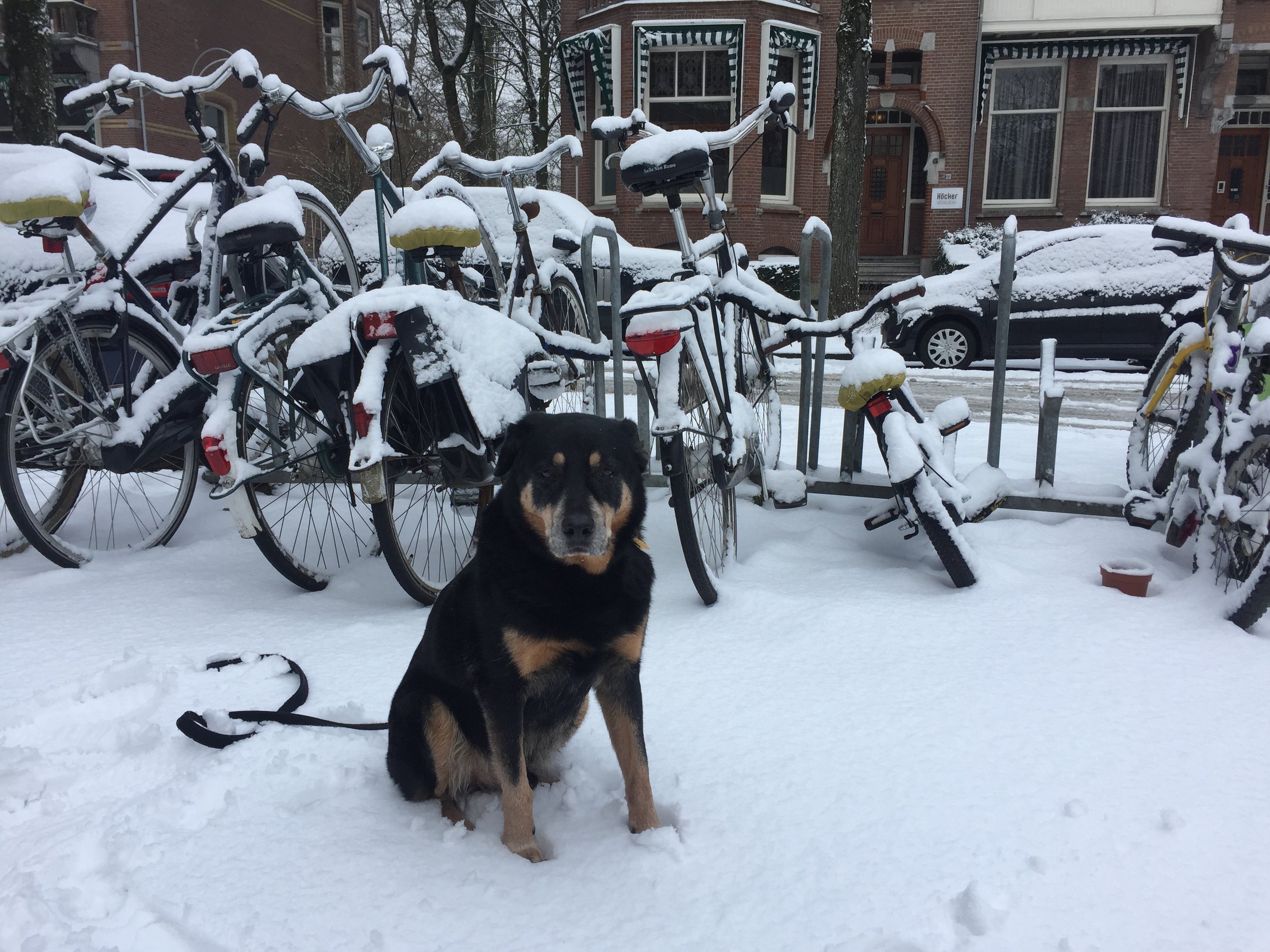
For fans of Casey, I staged this shot with the French and Dutch picture books I'm currently reading so you could catch a glimpse of him. He does sometimes take books down off the shelf in order to eat the covers off. His Dutch is steadily improving,โ€ฆ

For fans of Casey, I staged this shot with the French and Dutch picture books I'm currently reading so you could catch a glimpse of him. He does sometimes take books down off the shelf in order to eat the covers off. His Dutch is steadily improving, too, by the way. 

February 17, 2017 /Suzanne Vine
14 Comments
December in Spain. Sun, blue skies, Spanish food: it was all like a dream come true.

December in Spain. Sun, blue skies, Spanish food: it was all like a dream come true.

Is it the Most Wonderful Time of the Year? Beating the Amsterdam December Blues

January 22, 2017 by Suzanne Vine

The December blues. We all expect a lot from the holiday season, and it can't possibly ever measure up to those sparkling expectations. My relationship with December has always been riddled with complications. To start with, there's the issue of celebrating a December holiday (Hanukkah) which is so far down on the totem pole of attention it's nearly touching the ground. Then there's the problem of having an end-of-December birthday - December 30th to be exact - that is so easily forgotten. It's sandwiched into that dead zone between Christmas and New Year's when most people are either so busy with family, bored, or just stuffed from overeating that they lose track of the days. And even for those who are still calendar-aware in late December, there's the need to "rest up" on December 30th for New Year's Eve the following night. When I was a kid, my mom even had the nerve to schedule eye-doctor exams on my birthday. I walked around with paper sunglasses to block out the sun and felt sorry for myself. O.K., that probably only happened once, but we all need to inflate and exaggerate bad childhood memories for maximum sympathetic effect. Or at least I do. 

I tell you this short history of my own December blues so you will have some understanding of the lengths to which Peter has gone to rewrite my sad birthday narrative. In the past decade, I have celebrated my birthday in Jerusalem, Paris, Madrid, Rome, Amsterdam, and (this year) Cรณrdoba, Spain. There was a lot of birthday anxiety to overcome.

 It's as if the company who booked our trip to Spain knew about my birthday blues. Even a non-candy lover had to appreciate this glorious display that greeted me after a day of wandering around Cรณrdoba.

It's as if the company who booked our trip to Spain knew about my birthday blues. Even a non-candy lover had to appreciate this glorious display that greeted me after a day of wandering around Cรณrdoba.

 At   Choco  , the super fancy restaurant where we celebrated my big day, the one-candle birthday display was in keeping with the minimalist decor and contemporary art-ish food presentations. Rachel noted that it all seemed like something out of the

At Choco, the super fancy restaurant where we celebrated my big day, the one-candle birthday display was in keeping with the minimalist decor and contemporary art-ish food presentations. Rachel noted that it all seemed like something out of the movie Zoolander. Maybe so (and for those of you who haven't seen that fine film, it means it was a bit austerely pretentious), but the food was certainly delicious. 

67557580.jpg

Before I go on to extol the virtues of Southern Spain in December, I just want to say a bit about December in Amsterdam. As I blogged about in Decembers long ago (2014 and 2015, to be exact), there are a swirl of winter holidays here. Starting in early December (on the 5th), there is Sinterklaas, which is mostly celebrated by and for children. Dutch kids put their shoes by the fireplace. If they have been good, they will wake up to find presents filling the shoes. If not, they may find a lump of coal. Here is one holiday in which having big feet - as I do - would come in quite handy, at least if I had been good that year. Most of the rest of the world knows about Sinterklaas because of the controversy over his assistant Zwarte Piet, literally Black Peter. There has been lots of debate in the Netherlands over the past few years about the appropriateness of sporting black face (and often an afro, and exaggeratedly large lips) and claiming it is just meant to depict the soot resulting from your ride down the chimney. This year, thankfully I saw fewer folks in blackface, and more smudged cheeks. Progress may also be coming down the chimney.

At the end of December, there is Eerste en Tweede Kerstdag, which is 1st and 2nd Christmas. That means two days of Christmas, with one day usually spent with your family and the next with your in-laws (and for those who don't celebrate Christmas, it all means two days of closed stores). If you're not married I guess there is an extra day for a Netflix binge. It may be a bit of an exaggeration, but it seems most people who work in office-type jobs take the whole week off between Christmas and the New Year, which often stretches into the next week to accommodate skiing and other holiday cheer.

 The fancy shopping street,  P.C. Hooftstraat , went all out this year. The circles each had a different Dutch master painting inside. 

The fancy shopping street, P.C. Hooftstraat, went all out this year. The circles each had a different Dutch master painting inside. 

 The  Foodhallen , Amsterdam's indoor food market, was also wearing her holiday best this year. 

The Foodhallen, Amsterdam's indoor food market, was also wearing her holiday best this year. 

 Even this favorite brunch spot,  Dignita , had a Christmas tree. 

Even this favorite brunch spot, Dignita, had a Christmas tree. 

 This spectacular breakfast I ate at   Dignita   (and if you haven't been yet, it's a must) wasn't a Christmas special per se, but it looks like a holiday treat, with the red and green garnishes. The potato pillow the poached egg rested on tasted jus

This spectacular breakfast I ate at Dignita (and if you haven't been yet, it's a must) wasn't a Christmas special per se, but it looks like a holiday treat, with the red and green garnishes. The potato pillow the poached egg rested on tasted just like a latke, so eating this breakfast was a multi-religious experience. 

Amsterdam's version of this song could be called, "December in the Rain". We heard Roy Hargrove play at the Concertgebouw, the spectacular concert hall here, in December.  I especially loved this song because he not only played the trumpet, but also sang. That concert was one sure way to beat the December blues. 

Just when blues season begins, Christmas lights and trees start appearing all over Amsterdam. One thing I love about being here in December is that Christmas isn't about religion or even about mega-shopping, but more about celebrating with family. You certainly feel like less of an outsider at Christmas time when you are Jewish in a country which is increasingly secular. According to this recent article, two-thirds of the Dutch say they have no religion. Perhaps the churches weren't full in Amsterdam, but on Christmas Day, when we set off through Vondelpark to go to the movies, the park was packed. So were the movies. And so was the Chinese restaurant where we continued the beloved Jewish tradition of eating Chinese food after our film. It turns out that this tradition is not just beloved, but actually sacred. After the Chinese food, we walked to the center of the city to see a giant menorah scenically placed next to a canal. We saw quite a few tourists lining up to snap their photo in front of it. 

 It was fun celebrating the first night of Hanukkah with Tali and Libbi, my two youngest Amsterdam friends. 

It was fun celebrating the first night of Hanukkah with Tali and Libbi, my two youngest Amsterdam friends. 

IMG_7314.JPG

After two years of watching and listening from the sidelines, this year I decided to join the fun with my friends in the American Women's Club to see what a Christmas market in Germany was all about. I imagined row after row of kitschy tree ornaments. I assumed this Jewish gal would feel very out of place. It turns out that I was wrong. To begin with, I found the best darn latke I have ever tasted smack dab in the middle of the Christmas market in Cologne. Yes, there were ornaments for sale, but they weren't all kitschy. Mostly, there was gorgeous handcrafted jewelry, and lots of warm hats and scarves for bundling up in if the glรผhwein, a hot mulled wine, didn't do the trick. There were crowds of people - we went early in December, before the attack at the Christmas market in Berlin - and the people at the stalls were helpful and friendly. I did hear many American Christmas carols spilling out of the loudspeakers, the words to which I can merrily sing along with thanks to my meticulous Christmas song education many years ago at Princeton Day School. The whole town of Cologne was lit up...like a Christmas tree? I can't think of another simile that works as well when it comes to lights.

 Shortly after this photo was taken, I put the mug of molten hot wine down so I could concentrate on the star of this show: those potato latkes. That wasn't what they were called at the Christmas market, but make no mistake, these were latkes of the

Shortly after this photo was taken, I put the mug of molten hot wine down so I could concentrate on the star of this show: those potato latkes. That wasn't what they were called at the Christmas market, but make no mistake, these were latkes of the highest order. Hallelujah! I'm not so sure my friends Darlene and Seanette agreed with how I ranked the latkes over the wine.

 I even saw angels at the Christmas market. 

I even saw angels at the Christmas market. 

Despite the fun times I managed to find in the Amsterdam darkness, it was still a wonderful gift to be able to get out of town just after Christmas and head to Spain - to the cities of Seville, Cรณrdoba, and Granada. Honestly, I didn't know much about these cities before we arrived. What I did know is that the weather symbol on my iPhone showed sun for the entire week. That was really all I needed to know. The rest - the fabulous food and wine, the reasonable prices, the friendly people, the excellent service in the restaurants - was just so much icing on a glorious cake.

Actually, when I started to write this post, I realized that I did know something about Seville. When I was in about 4th grade, one of my favorite books was called I, Juan de Pareja. It's fiction, but based on the true story of the half-African slave of the famous Spanish painter Diego Velรกzquez. Juan serves as the assistant to his master, and watches him carefully. Later, after Velรกzquez frees him, Juan de Pareja becomes a painter himself. He is also the model for the Velรกzquez painting that hangs in the Met. When my mom took me there one day, I bought the postcard of the painting, and for some reason, have saved it all these years. I guess we never know when and how those childhood memories will spring into action years later.

I-Juan-de-Pareja.jpg
Retrato_de_Juan_Pareja,_by_Diego_Velaฬzquez.jpg

And here is the Seville I visited in that book, but it's real this time.

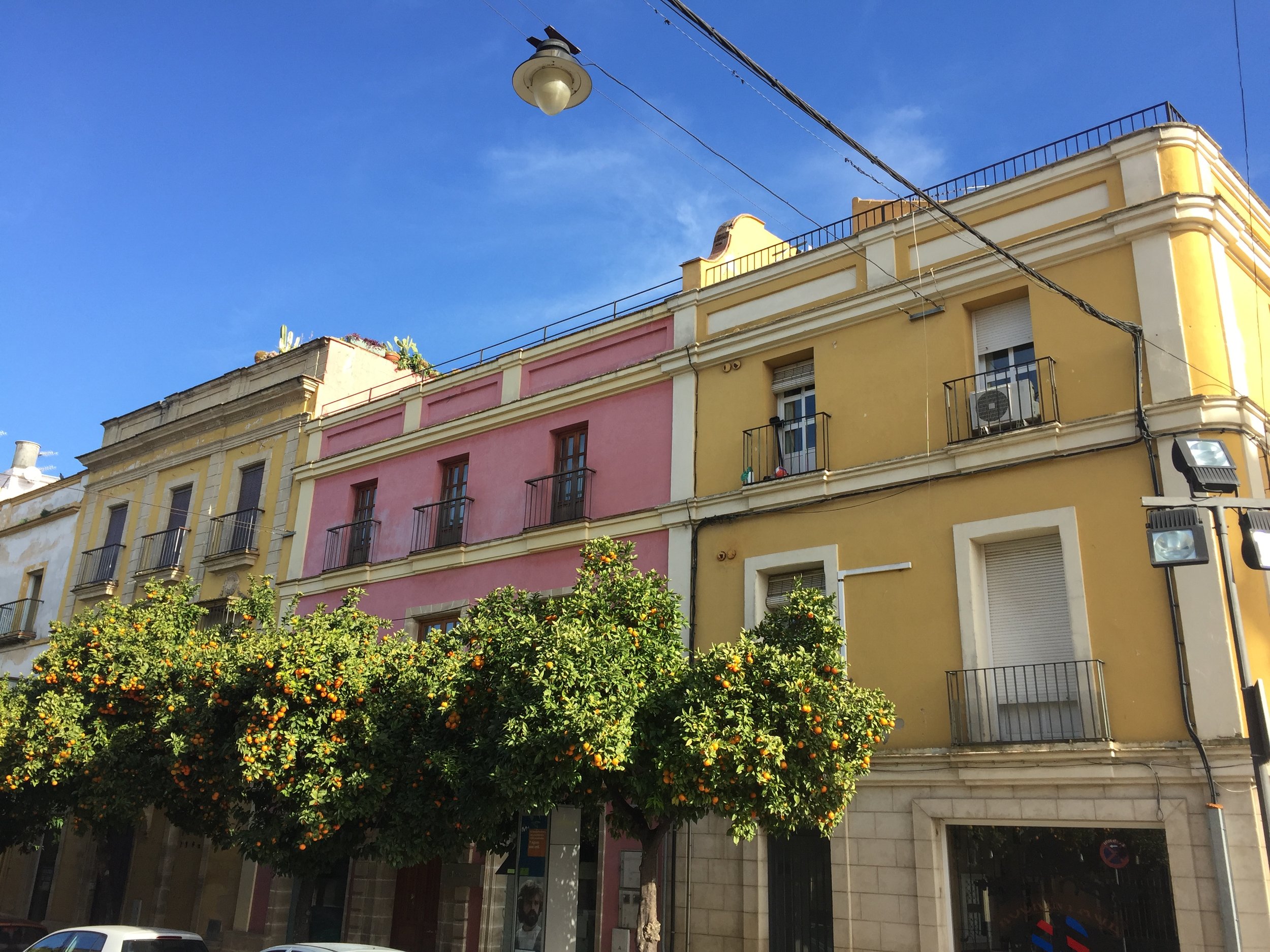
 I haven't seen houses this colorful since I lived in San Francisco. They looked like actresses lined up on the red carpet at the Oscars, one more gorgeous than the next.

I haven't seen houses this colorful since I lived in San Francisco. They looked like actresses lined up on the red carpet at the Oscars, one more gorgeous than the next.

 We saw orange trees everywhere on the streets. Although we were told this variety is hardy, but bitter and not for eating, I wanted to try just one. I decided to take our guide's word for it. They certainly looked beautiful, and we were told that in

We saw orange trees everywhere on the streets. Although we were told this variety is hardy, but bitter and not for eating, I wanted to try just one. I decided to take our guide's word for it. They certainly looked beautiful, and we were told that in the spring, they make the cities smell delicious, too. 

 As if there were any doubt that I wasn't in Kansas (Amsterdam) anymore, there were these cactii to remind me. These happened to be in Granada, but they were also everywhere in Seville and Cรณrdoba.

As if there were any doubt that I wasn't in Kansas (Amsterdam) anymore, there were these cactii to remind me. These happened to be in Granada, but they were also everywhere in Seville and Cรณrdoba.

We spent our first full day in Seville driving to the town of Jerez for a sherry tasting. By 11 a.m. we were staring down a straight line - of sherry bottles - that the Rockettes would have envied. We learned a lot about sherry, including the fact that it's no longer just an after-dinner drink for old ladies. Apparently, it's all the rage in some chic spots from London to New York City. 

IMG_7146.jpg
 Peeking out of the window of one of the  sherry wineries , you could see blue sky. That's not a sight we are used to in Amsterdam in December.

Peeking out of the window of one of the sherry wineries, you could see blue sky. That's not a sight we are used to in Amsterdam in December.

That evening, during a tapas tour of Seville, we tasted a few sherries, along with some sensational food. Quick plug for the travel company we used: I can't say enough about how exceptional it is. We took 1/2 day walking tours in each city, and were really impressed with the knowledge of each of our guides. I still can't remember how the Inquisition, the Crusades, and Franco fit together, but these guides made the passage of centuries and mixture of cultures in Spain all make sense. Also, our first guide, Roger, was a Brit who came to Seville 30 years ago and decided to stay. We had the whole "living-outside-your-own-country" card in common, so he understood us. Even after 30 years, and the ability to speak fluent Spanish, he says he still feels like somewhat of an outsider in Seville. I don't know if that made me feel better or worse about our prospects for ever truly fitting in in Amsterdam.   

 This is the famed Iberico ham. Glorious. It's the MVP of the items at a tapas bar.

This is the famed Iberico ham. Glorious. It's the MVP of the items at a tapas bar.

 For those of you who have never been to a tapas bar, you squeeze in, order a few plates to share, choose a glass of wine or a beer, and dig in. There were lots of dangling meats also hanging around these spots.

For those of you who have never been to a tapas bar, you squeeze in, order a few plates to share, choose a glass of wine or a beer, and dig in. There were lots of dangling meats also hanging around these spots.

These photos were taken in the courtyard of the Alcรกzar in Seville, built by the Moors and still used by the royal family of Spain as their residence when they are in town. This was just the first of the castles built by the Moors that were later "rโ€ฆ

These photos were taken in the courtyard of the Alcรกzar in Seville, built by the Moors and still used by the royal family of Spain as their residence when they are in town. This was just the first of the castles built by the Moors that were later "renovated" by the Christians. I loved the quiet courtyards in the middle. 

From Seville, we took the train to our next destination: Cรณrdoba. I was surprised to find that we had to go through security at the train station, which included x-raying our bags. In addition to the security system which worked extremely efficiently, everything about the Spanish train experience put American train service to shame. The trains were clean, the ride was smooth, and the departure was right on time. Too bad Amtrak doesn't function like that. 

Our hotel was located in the Jewish Quarter, kind of a misnomer, since sadly there is no Jewish community left in Cรณrdoba. There is a synagogue, which was discovered when a Church was being renovated and some Hebrew lettering was uncovered. 

Right next to our hotel we ran into Maimonides, a 12th century Jewish philosopher, doctor, and Torah scholar (and those are just some of his notable specialities) who was born in Cรณrdoba. Apparently, you will become wise if you rub his foot, so we gave it a shot. 

IMG_7194.JPG
 These plaques on the pavement mark the Jewish Quarter in Cรณrdoba. I was glad to see they used Hebrew letters. These brass plaques reminded me of the ones in Amsterdam (and in other parts of Europe) marking where Jews who died in the Holocaust o

These plaques on the pavement mark the Jewish Quarter in Cรณrdoba. I was glad to see they used Hebrew letters. These brass plaques reminded me of the ones in Amsterdam (and in other parts of Europe) marking where Jews who died in the Holocaust once lived.

 In addition to weighing in on the meaning of the Torah, Maimonides had a lot of opinions about food. I love beans, so if Maimonides is correct, that could explain a lot about my mind. Many of my friends would be happy to read that he agrees with the

In addition to weighing in on the meaning of the Torah, Maimonides had a lot of opinions about food. I love beans, so if Maimonides is correct, that could explain a lot about my mind. Many of my friends would be happy to read that he agrees with them about the benefits of wine.

Throughout our visit, we heard a lot about how the architecture in this area of Spain incorporates aspects of Roman, Moorish, and Catholic church/Gothic elements. In Cรณrdoba, this really all came to a head inside the Mosque-Cathedral (Mezquita-Catedral) of Cรณrdoba where there is actually a Catholic church built inside an ancient Moorish mosque. It's the architectural equivalent of a Turducken, that crazy chicken-stuffed-into-a-duck-stuffed-into-a-turkey concoction.  

 We learned that the Moorish style of architecture was designed to let in light, but not to last forever. The Moors were used to packing up and moving often, so they didn't think longevity was important when it came to structures. 

We learned that the Moorish style of architecture was designed to let in light, but not to last forever. The Moors were used to packing up and moving often, so they didn't think longevity was important when it came to structures. 

 You needed to have a strong neck here. The ceilings were so gorgeous that you had to look up for long stretches to take it all in.

You needed to have a strong neck here. The ceilings were so gorgeous that you had to look up for long stretches to take it all in.

 Guess who we ran into? It was this St. John's (Long Island, NY) gospel choir group, delighting the crowds in the church section. That was some field trip!

Guess who we ran into? It was this St. John's (Long Island, NY) gospel choir group, delighting the crowds in the church section. That was some field trip!

Our guides in all three cities mentioned that the different architectural styles - created by the Romans, Visigoths, Moors, Jews, and Christians - all played nicely together in the buildings we visited. At some points in history in this part of the world, so did the people. Of course, that was not the case during the Inquisition, thanks to Christopher Columbus' patrons, Isabella and Ferdinand. While Isabella and Ferdinand may be best known in elementary school textbooks for financing Columbus' journeys, they weren't just his benevolent benefactors. They masterminded the Inquisition, forcing Jews to either convert to Catholicism or be expelled. Many of the Jews were killed, as were Muslims and anyone else who didn't want to be a Catholic. Not exactly a welcoming place to live in those days. 

Here's Columbus pleading his case to the king and queen.

Here's Columbus pleading his case to the king and queen.

Back in the day, it was still unusual to want to see another part of the world. Sometimes I feel about as welcome in Amsterdam as Columbus must have been in the New World. Then again, as an expat, I'm not trying to bring precious spices back to my patron, nor am I foisting my ways onto a different culture. Or am I? Like Columbus and the other explorers, we expats are looking for something; often it's just a matter of searching for some sun in December. "Sweet dreams are made of these. Who am I to disagree? I travel the world and the seven seas. Everybody's looking for something." You are so right about that, Annie Lennox.

One thing we were looking for on this trip was some delicious food, and we certainly found it. While we ate at one-after-another terrific place, Taberna Luque in Seville really summed up for me everything wonderful about Spain. It's a two-person operation: Antonio works the floor and his wife Mari cooks. He didn't speak much English, but he singlehandedly proved just how much information can be communicated with smiles and gestures. His warmth, the simple but delicious food, the swift but professional service, were all so very welcome. I've mentioned before (and before) that the restaurant culture in Amsterdam doesn't often include service with a smile. Or service that is very swift. So this Spanish-style service was especially appreciated. Our guide in Seville, Jamie, gave us a brief primer on Spanish culture: he told us the Spanish are often loud, they like to hug, and they don't believe in personal space. In fact, he said, if you are tucked into the corner at an empty restaurant, the next customers who come in will very likely sit down at the table right next to you. They like to be next to people. I'm sure this extroverted culture might wear thin at times, but it certainly felt darn warm to us. 

 Rachel is a super adventuresome eater. She went with the grilled calamari, served whole. I think she especially liked the curls on the top of the fish. The bill for the three of us was around 40 euros. 

Rachel is a super adventuresome eater. She went with the grilled calamari, served whole. I think she especially liked the curls on the top of the fish. The bill for the three of us was around 40 euros. 

Our last stop on the sun-tour was the city of Granada, home to the Alhambra, probably the most famous of the Moorish castles. Everything about the city revolves around the iconic Alhambra and seizing a good view of it: does your restaurant have one? Your hotel? The Alhambra was most spectacular from a distance, since compared to the other castles in Seville and Cรณrdoba, this one was not as well-preserved, and not as striking-looking. I hope that's not what some of you are thinking about me. This 13th century fortress/castle is the second most visited site in Spain, after the Sagrada Familia church in Barcelona. This was the first spot on our trip where we saw lots of foreign tourists. For the rest of the time, we saw mainly Spanish tourists. I suppose it's the same as a family from N.J. hitting Florida for some sun. Quite a few of those tourists were senior citizens. We found out that the Spanish government subsidizes trips for seniors, an attempt, in part, to compensate them for the hard life they led under Franco. They get up to fifteen days of nearly free travel, which includes lodging at a 3 or 4 star hotel, meals, guides, and transportation. Since this seemed too good to be true, I had to do a little research once we returned to Amsterdam. Yes, folks, it is all true. Maybe the silver lining in our current U.S. cloud is that someday, to compensate us for living through the Trump regime, we will earn a government-sponsored holiday to enjoy in our dotage. A gal can dream, can't she?

 The view that accompanied our first lunch in Granada.

The view that accompanied our first lunch in Granada.

 View with our dinner. The actual meal couldn't quite keep up with the view, but it didn't really matter.

View with our dinner. The actual meal couldn't quite keep up with the view, but it didn't really matter.

 Even the coffee included a view of the Alhambra. 

Even the coffee included a view of the Alhambra. 

Once again, we were told about the Muslim style of architecture: how it is designed to keep family life hidden from view. There are no large windows on the outside. Any windows are small or high up, and face out into a central courtyard. Our guide said this design was the architectural equivalent of head-coverings for women: both were created for maximum family privacy. We also learned about the importance of water. The Moors were experts at harnessing it so that when they needed it, it was available. 

This photo was taken at the Generalife, the country estate and gardens adjacent to the Alhambra. We didn't need the shade and cool water in December, but I'm sure they come in handy when tourists flock there in the summer.

This photo was taken at the Generalife, the country estate and gardens adjacent to the Alhambra. We didn't need the shade and cool water in December, but I'm sure they come in handy when tourists flock there in the summer.

 Oh, those private, shaded inner courtyards. It's a culture that respects the introvert.

Oh, those private, shaded inner courtyards. It's a culture that respects the introvert.

 You can see the snowy Sierra Nevada mountains in the distance. Who knew that after just a short 40 minute drive out of Granada, you could be skiing in southern Spain? The vibe in Granda was a little different from Seville or Cordoba's: there were mo

You can see the snowy Sierra Nevada mountains in the distance. Who knew that after just a short 40 minute drive out of Granada, you could be skiing in southern Spain? The vibe in Granda was a little different from Seville or Cordoba's: there were more artsy-looking folks pedaling their wares along the streets, and more folks in hiking clothes and dreds walking around town. 

The phrase "in seventh heaven", I learned on this trip, comes from the Islamic belief that there are seven levels of heaven, with the seventh being the highest or most pure form of supreme happiness. Would it be exaggerating to say that at times during this trip I was in seventh heaven? It was certainly a wonderful respite from the grey skies in Amsterdam. Although it has been cold in Amsterdam, we probably won't have a long enough cold spell for the giant eleven-city, 120-mile speed skating race, the Elfstedentocht to take place. It has been described as "the Super Bowl, Stanley Cup, and World Series rolled into one." Perhaps global warming has caused this beloved event to become a thing of the past. The last one was in 1997.

Those of us who hail from the northeastern U.S. associate December with cold and snow. So one reason you feel a bit out of your element here is that there usually isn't any snow. This short-lived "snowstorm" only lasted an hour or so, and it definitโ€ฆ

Those of us who hail from the northeastern U.S. associate December with cold and snow. So one reason you feel a bit out of your element here is that there usually isn't any snow. This short-lived "snowstorm" only lasted an hour or so, and it definitely didn't stop the Dutch from biking.

It was a Winter Wonderland here this week. 

It was a Winter Wonderland here this week. 

In Dutch, there is a phrase, "Gaan met die banaan" which seems to fit my situation. Literally, it translates to, "Go with that banana", which of course makes absolutely no sense. The phrase means to just go, as in, "Just get on with it". Instead of all the fussing over the weather here, I should probably just get on with it and stop complaining. I heard the song in my Zumba class, and knew instantly I had to share it here with you. Gaan met die banaan!

The real reason most expats experience the December blues is not because of the weather. It's because many of us are celebrating in a different place, without the familiar rituals, and most importantly, without all of our family crowded around us. I guess that's why so many expats go home for the holidays, in search of the familiar. In a book I read recently, The Nearest Thing to Life, the author James Woods - a Brit living in the U.S. - described my feelings for me. He wrote, "Perhaps it is not even homelessness; homelooseness (with an admixture of loss) might be the necessary neologism [editor's note: means newly-coined word]: in which the ties that might bind one to home have been loosened, perhaps happily, perhaps unhappily, perhaps permanently, perhaps only temporarily." It's hard not to feel a little "homeloose" here at holiday season. Somehow, you have to square those feelings of homesickness with that desire to get out and see just a little more of the world. There is, after all, "such a lot of world to see." Sing it, Louis. I love this version.

So unlike most of our expat friends, instead of going "home" this year, we brought at least the immediate family here. Now that's a sure cure for the December blues.

Here is the Drucker-Vine clan cleaning our plates at the Seafood Bar in Amsterdam.

Here is the Drucker-Vine clan cleaning our plates at the Seafood Bar in Amsterdam.

Happy New Year to all! I recommend trying Spain's tradition of eating twelve grapes at midnight. It ensures you will have 12 lucky months ahead of you. 

Happy New Year to all! I recommend trying Spain's tradition of eating twelve grapes at midnight. It ensures you will have 12 lucky months ahead of you. 

January 22, 2017 /Suzanne Vine
12 Comments
Being in Umbria is like stepping inside a gorgeous painting, only better; inside the painting there is actual wine and homemade pasta and friends, too. 

Being in Umbria is like stepping inside a gorgeous painting, only better; inside the painting there is actual wine and homemade pasta and friends, too. 

Shake it Up: Enjoying the Small Moments in Umbria and Beyond

December 04, 2016 by Suzanne Vine

My mom had a theory that she had the power to create disasters in countries just by visiting. After a lovely trip to Florence in the mid-1960's, the city was devastated by a flood of biblical proportions in 1966. A trip the next year- in 1967 - to Israel resulted in the Six-Day War. This way of looking at world history gives you quite a grand sense of all you can accomplish, no? I'm happy to say I don't seem to have inherited this genetic ability to wreak havoc just by visiting a country. In fact, the recent series of earthquakes in the Umbrian region of Italy all came before we visited, so I'm not taking any of the blame. We planned this trip - or rather our friend Seanette did - months and months ago, before a major earthquake shook the region In August, killing nearly 300 hundred people. Lightning doesn't strike twice, we thought. Then another one struck just a week before our trip. This time, there were (miraculously) no casualties. In a world in which terrorist attacks have become so common, we weren't going to let something as comparatively understandable as an earthquake interfere with our plans.  Little did we know how fortunate we would feel to have this four-day escape in early November to sustain us when news of an earthquake of an even greater magnitude shocked the U.S. and rocked our world. More on that later. I think we could all use a respite from election news and views, at least until the end of this post. I have found myself - after the election - retreating into the world of books for comfort. So I now offer you the chance to travel with me - both inside those books - and outside them - to Umbria. 

Sorry, I couldn't resist. This was the very first album I owned. I also had the piano book, which I played religiously. I would have given anything just to be Carole King. 

You may recall that in July, we overcame our fear of group travel and visited Switzerland with a few other couples. This time around, we felt like seasoned pros. We knew the steps of the delicate dance you need to perform in order to incorporate the peculiar likes and dislikes of eight different people into a single, successful vacation experience. Spoiler alert: we managed beautifully. The moral of the story is that delicious food, wine, and someone outside the group doing the driving and the guiding all certainly help the group travel story have a happily-ever-after ending.

We began the long weekend with a speed-dating fast tour of Florence led by a tour-guide named Nicholas who turned out to be from Amsterdam. That may explain his endearing but somewhat exhausting style of tour-guiding, which involved talking a mile a minute for three straight hours. I looked at my travel mates, pictured below, and wondered why I was the only one who seemed overwhelmed at times. I thought back to a time when Ben was about two years old; while I was chatting with a friend, he interrupted with the astute observation, "So many words, mom." Later, when our Amsterdam travel group debriefed about the tour guide, everyone admitted that the information - although fascinating - was also delivered with just, "so many words". I felt instantly better when we all admitted this and I knew that it wasn't just my poor tired brain letting me down. Part of the successful group travel experience involves owning up to your weaknesses, so we were off to a good start. 

 So behind their sunglasses, they were really just taking a little nap.

So behind their sunglasses, they were really just taking a little nap.

 Here's the famous Duomo, built in the 12th century, with the dome that has puzzled architects since Brunelleschi added it onto the cathedral in the 15th century. Recently,  National Geographic documented  a modern architect's attempt to solve t

Here's the famous Duomo, built in the 12th century, with the dome that has puzzled architects since Brunelleschi added it onto the cathedral in the 15th century. Recently, National Geographic documented a modern architect's attempt to solve the puzzle of how it didn't immediately, or ever after, come crashing down. See, I did learn something from our tour. Maybe one reason I had a hard time concentrating was because of the color of the sky. Just incredible.

Here it is: the room with a view from E.M. Forster's novel A Room With a View. It's the one with the little terrace. Can't you just picture Helena Bonham Carter throwing the windows open and looking out? I'll have to wait until my next trip to Floreโ€ฆ

Here it is: the room with a view from E.M. Forster's novel A Room With a View. It's the one with the little terrace. Can't you just picture Helena Bonham Carter throwing the windows open and looking out? I'll have to wait until my next trip to Florence to test our the view for myself.

The light in Italy is fabulous even in early November. That is particularly important when you are photographing baby-boomers.

The light in Italy is fabulous even in early November. That is particularly important when you are photographing baby-boomers.

Imagine a world in which Florence isn't the main attraction, or even the place where you will rest your bones. Hours after arriving, we were on the road again, heading to "our" farm just outside Perugia. I wondered what our host would look like. In my head, I pictured Strega Nona from one of my favorite children's books. Instead, we were greeted by Raffaella, a petite, friendly, and welcoming wife and mother who runs a B&B - or agriturismo - called La Volpe e l'Uva. The agriturismi  are family farms that take in guests. The name of Raffaella's olive farm translates into The Fox and the Grapes, which just happens to be one of my favorite of Aesop's fables and the source of the truly perfect phrase, "sour grapes". While you are staying at the farm, you can take cooking classes, like we did. Like Strega Nona, Raffaella helps you keep the pasta (and the torta al testo, guinea fowl, chicken-proscuiutto roulades, zucchini involtini, tiramisu, and much more) coming. If you're interested, I can send you recipes. 

 Strega Nona
 Raffaella. Notice that although they look quite different, they are both talking with their hands. I love that!

Our first day at the farm was supposed to have been taken up with olive-picking. Unfortunately, Raffaella told us there was an infestation of mosquitoes and that the entire olive crop was ruined. We later googled this and found out that what she called mosquitoes were really fruit flies. Apparently, this year's infestation wasn't as bad as the one in 2014, which this article said would require a "Hanukkah miracle" in order to make the precious tiny supply of olive oil last. I was really looking forward to olive picking, but that will have to wait for another trip. Of course, I imagined the scene from I Love Lucy, in which Lucy stomps grapes. Lucy gave me my first introduction to Italy, and what better way to learn than from her. 

Second only to the chocolate factory episode, right?

Second only to the chocolate factory episode, right?

So instead of picking olives, the gals went into Perugia to visit two small museums, and the gentlemen prepared our lunch. We first visited a weaving workshop, run by Giuditta Brozzetti, a tiny slip of a woman with enough energy and charm to fill her cavernous 13th century church-turned-workshop.  Her great-grandparents bought the church, and she and her brother played soccer and tennis inside it's empty interior until her great-grandmother restored the family weaving business and set up shop inside the church. The business has been shared among four generations of women in her family and is now among the last hand-weaving businesses left in Italy. She showed us how the process works; it's not all that different from the medieval methods. It's extremely labor intensive, but also clearly a labor of love for Giuditta. 

IMG_6955.JPG
 Here's another example of the Italian way of talking with your hands. So expressive!

Here's another example of the Italian way of talking with your hands. So expressive!

 She explained that we would now look at medieval paintings in a different way because we would understand how much intense work went into creating the fabrics.

She explained that we would now look at medieval paintings in a different way because we would understand how much intense work went into creating the fabrics.

Our next stop was the Museo Laboratorio Moretti Caselli. This was also a workshop run by generations of a hard-working, devoted family. Entering the building was like walking through the armoire in the Lion, the Witch, and the Wardrobe: we walked through the unassuming entrance into rooms that led into rooms. Each room was filled with paintings literally stained into the glass, examples of stained glass unlike any we had ever seen. If you are curious and aren't going to make it to Perugia anytime soon, you can see an example at a cemetery in L.A. and also pay your respects to many celebrities, including Michael Jackson and Elizabeth Taylor. 

 The first stained glass master in the Moretti family learned how to create colored glass from ground glass powder. He then painted onto the colored glass. This method has been passed from generation to generation in the Moretti family. In my family

The first stained glass master in the Moretti family learned how to create colored glass from ground glass powder. He then painted onto the colored glass. This method has been passed from generation to generation in the Moretti family. In my family we pass on skills like knowing a lot of T.V. trivia. 

 The building alone inspires creativity. 

The building alone inspires creativity. 

 It's hard to believe, but this is not a painting. It's stained glass. Moretti cleverly hides the lines of lead within the painting, in the folds of the dress, the wallpaper, and the drapes.

It's hard to believe, but this is not a painting. It's stained glass. Moretti cleverly hides the lines of lead within the painting, in the folds of the dress, the wallpaper, and the drapes.

 This was one of the more modern examples of stained glass. I love it.

This was one of the more modern examples of stained glass. I love it.

After all of that learning, we had worked up quite an appetite and were ready for our first home-cooked meal, this one by the men. In addition to the comfort food we learned to cook and eat, we got to listen to the comforting voice of Raffaella, which sounded like this, "You put-ah a little flour on the table, and you do-ah like this." I could listen to her talk forever, but there was work to be done. First she explained, then we did. And finally, we ate. I saw lots of books on the shelves at Raffaella's home, but no cookbooks. Does she somehow store all of those recipes in her head? The following photos are selected from three days of cooking. Each meal was a feast, and on the last night, we treated ourselves to the most spectacular combination of leftovers ever assembled. 

 Just getting our marching orders before getting started on the cooking.

Just getting our marching orders before getting started on the cooking.

 We found this pasta-making-gadget when we returned to the Netherlands, and Peter and Rob have already given it a whirl. 

We found this pasta-making-gadget when we returned to the Netherlands, and Peter and Rob have already given it a whirl. 

 Lauren concentrates on getting those egg whites perfectly whipped. After all, the stakes were very high. There was dark chocolate waiting to be lifted up.

Lauren concentrates on getting those egg whites perfectly whipped. After all, the stakes were very high. There was dark chocolate waiting to be lifted up.

 I love this photo of Seanette celebrating her birthday - two days early - with us. Notice how adoringly her husband Richard is looking at her. Also notice the lemon-glazed carrot cake that we made. I was looking at it just as adoringly as Richard di

I love this photo of Seanette celebrating her birthday - two days early - with us. Notice how adoringly her husband Richard is looking at her. Also notice the lemon-glazed carrot cake that we made. I was looking at it just as adoringly as Richard did at Seanette. This was just lunch, mind you. There was also dinner to adore later on.

 We made these gnocchi filled with Tallegio cheese and served on a bed of eggplant cream. They really did taste as good as they look.
 Chicken-prosciutto roulades. As pretty as a picture.
 Torta Caprese: a flourless chocolate cake. We needed a nap after this one.

Italy is a perfect destination for adult-style bonding. What better socially-connective glue could you find than pasta, wine, and olive oil? In addition to our cooking lessons, we also toured a winery and an olive oil factory. Both tours were of course accompanied by generous tastings. The olive oil "tasting" consisted of a fully-set table with several varieties of bruschetta, lentil soup, and, of course, bottles of olive oil and wine. We all claimed to be full from lunch, but managed to polish off what we were served. Just to be polite, of course. The winery tour brought back long ago memories of my friend Pam's first post-college dream job working at a small winery in the Napa Valley outside San Francisco. Actually, the gig may have started as a dream, but it quickly turned mundane for Pam, after she had to recite for the umpteeenth time how the wine was created. If my memory serves me correctly, Pam served herself (and me, if I was up visiting) more than a tiny serving's taste of wine, leading her to claim as the afternoon wore on that the wine was made from eggs grown in the Napa Valley. That was my first lesson into how any job, no matter how glamorous on paper, can grow tiresome before you know it.  

 Here's the winery where we tasted some delicious red wine. I swirled it around and around in my glass, too, just to fit in with the crowd.

Here's the winery where we tasted some delicious red wine. I swirled it around and around in my glass, too, just to fit in with the crowd.

 Later that day, we wandered around the outdoor markets in Perugia. When it got chilly, we sought refuge in a medieval-era church, where we had the good fortune of stumbling into a concert featuring opera's greatest hits. The mosaics on the walls wer

Later that day, we wandered around the outdoor markets in Perugia. When it got chilly, we sought refuge in a medieval-era church, where we had the good fortune of stumbling into a concert featuring opera's greatest hits. The mosaics on the walls were as gorgeous as the music. Even the dog in the audience, pictured in the front right, thoroughly enjoyed himself and at one point, tried to join the singers on stage. 

Another ingredient that leads to group bonding on a trip is a series of car rides. Our travel package included the driving services of Paolo, our driver who spoke no English and had a lead foot. We promptly dubbed the front row of the van, "The Seat of Death" and took turns risking our lives there. I love listening to music in the car, and since I had a captive audience, I could make them play Name That Tune with my Motown-heavy playlist. It was really fun...for me.

Another big advantage of having a car in Italy is you are able to get to places tucked away from big cities. We loved poking around Assisi and Montefalco. Actually, Assisi is not really an undiscovered place; it's a popular spot with Americans and Brits. Assisi attracts both religious folks interested in seeing the birthplace of St. Francis, and others eager to come for the charm of its mountain-top location. We loved finding the city completely empty. Our guide suspected that many people were frightened off by the recent spate of earthquakes and aftershocks. We found that same emptiness in Montefalco, but this time there was another possible explanation: it was windy and pouring that day. Our guide explained that, unlike the Dutch, the Italians don't go out in weather like that. 

 Assisi: you could find religion there in the clouds.

Assisi: you could find religion there in the clouds.

 And Montefalco: more evidence of a higher power in those clouds?

And Montefalco: more evidence of a higher power in those clouds?

As I mentioned earlier, I've found some post-election pasta-style comfort in the world of books. I have travelled to Italy twice in the past four months. It may be no accident that I've also travelled there twice in my books. Like many of my reader friends, I have been pulled in and become a part of life in Naples through Elena Ferrante's four-part series beginning with My Brilliant Friend. The reading love-affair with Italy continued when my U.S. book group read - and I read along with them - Elsa Morante's History. It's a 600-page book which Elena Ferrante called her inspiration, and Nancy, a member of my beloved U.S. book group, likened to War and Peace. It was not an easy read, but when it was over I felt like I had walked through years of Italian history through the lives of the characters. After all, it was probably time to move beyond the Tomie dePaola series of picture books featuring Strega Nona - wonderful though they are (and pictured next to our Umbrian cooking teacher earlier in this post) - and into some more grown-up Italian literature.

As part and parcel of my reading/cocoon-strategy for dealing with the election, a few weeks ago, I went to hear the author Zadie Smith speak in Amsterdam. No, she's not Italian, she's British, but she writes wonderful books. She now teaches at NYU and lives in the U.S. I suppose that's why the first question the Dutch interviewer posed to her was about her impressions of the election and not about her new book Swingtime. I wanted so much for her to say she wanted just to talk about books, and she mostly did explain that she's not a political person.  She is more interested in people and relationships. "I'm the kind of writer who wants to look at what's right in front of your face," she explained. Nevertheless, she shared her election night story (which may sadly be our generation's version of where you were the night Kennedy was shot). It turns out that Smith is connected to this post in another way: she wrote about A Room With a View and its characters' "moral muddles". Maybe she would have been as excited as I was to see the room-with-a-view while wandering through Florence. 

Many of you turned to songs to deal with your post-election blues. Leonard Cohen's somber Hallelujah fit many a somber post-election mood. Since you may have listened to that song recently, I thought I'd add another Cohen song, a personal favorite called Suzanne. Growing up, I didn't know any other songs with my name in them, so the song was important for that reason alone. But I also liked the fact that the words were hard to grasp, and they made you think. In this video clip, Cohen starts by explaining that he never earned any money from the song, despite its popularity, because he signed away the rights to it. He says it was "stolen" from him, and that's how I guess how I felt after the election, like something I assumed was mine, was taken (suddenly) away. 

It's amazing how quickly the election results drained me of that post-travel-comfort-glow I was sporting after we returned from the trip to Umbria. We set our alarms for 4 a.m. and planned to watch the results and celebrate together. We gathered in front of CNN to warm ourselves with our connection to the U.S., despite the distance and the six-hour time difference. Lauren had even bought some Vin Santo, a sweet wine that our cooking teacher-host had introduced us to on her farm. And there was champagne chilling. Instead, we sat in stunned silence and then plodded home by 8 a.m. We felt unmoored and exhausted, but Darlene and I decided to head to our favorite spin class, just to have somewhere to go and something to do. The T.V. at the gym showed Donald Trump giving his acceptance speech, but I couldn't bear to look. The entire room of heads in the spin class turned towards us - the Americans - as if to ask, "How on earth?" The song Don't Wake Me Up came on during the class, and I thought the same thing: Don't wake me up! I just wanted to go to sleep and forget it all. I'm sure many of you had the same thoughts. The Dutch are so curious about how Trump managed to pull the election off. One of my neighbors stopped me later in the day, with the understated, "So you have a new president". I think she was trying to feel me out, to make sure I wasn't one of the millions who voted for him. As if to make me feel better when I explained how disappointed I was, she reminded me that the Netherlands has a Donald Trump of its own: Geert Wilders. He is currently on trial for leading supporters in anti-Moroccan chants. He even looks like our newly-elected leader. The election here is in March, so stay tuned. 

This is Lauren's dog Buddy. He pretty well sums up our feelings that morning.

This is Lauren's dog Buddy. He pretty well sums up our feelings that morning.

I realize that retreating into a world of books isn't really a productive strategy for dealing with the current state of affairs in the U.S. I'm so proud of all of you who are digging in with phone calls to Congressman, and plans for marches in New York and D.C. It's a little harder to know how to get involved from so far away. During the campaign season, I was grateful for that distance. From far away, I guess Hillary's imperfections seemed like a little less of a problem. But one lingering problem is I can remember the faces of my 4th graders so clearly when we watched Obama's inauguration eight years ago. The world was full of new possibilities if a black man could be elected president. I wanted to imagine the same faces on those kids, now seniors in high school, when they saw the first woman elected president. And I wanted that for my 85-year-old mom. What would I find when we came back to the U.S. for our whirlwind Thanksgiving visit? Thankfully, the trip last week gave me the chance to see that the U.S. isn't crumbling. I appreciated the chance to hunker down with family and friends, reminding myself that there is, in fact, a reason to move back someday. 

Rachel Drucker for President!

Rachel Drucker for President!

So I'll close with some advice for myself: reading isn't a bad strategy for curing what ails you. In case you need another recommendation, I recently finished a collection of quirky stories called Can't and Won't, by Lydia Davis. In yet another example of how connections and coincidences are everywhere, I came upon an article about Davis entitled Long Story Short. And that just happens to be the name of a drinking game some members of our travel group created. Whenever Seanette says, "Long story short" (which she does quite a lot), you take a big gulp. That's just one of the small moments I'll sustain myself with until the election blues subside. I would suggest: As Peter and I often do when we are searching for wisdom, I'll turn to Woody Allen, yet another deeply flawed character who nevertheless wrote some brilliant movie scripts, including Manhattan. I don't want to presume you have all seen it over and over the way we have, but if you don't know the movie, it ends with the character played by Woody Allen lamenting the fact that he didn't appreciate his now-18-year-old girlfriend (yikes) while they were together. He starts reciting a list of things that make life worth living. It's a darn good list, including Willie Mays, Frank Sinatra, and, "those incredible apples and pears by Cezanne". So here, inspired by our trip, is the start of my list of the small moments/things that make life worth living:

1. The autumn colors in Umbria.

2. Raffaella's cooking instructions: "You stirruh. You mixuh."

3. The homemade Vin Santo made by Raffaella's mom.

4. Friends who invite you along to travel to Umbria and beyond. 

There are so many more things that make life worth living, not just from the trip to Umbria, of course. There's Peter's laugh-until-he-cries, Rachel's laugh when she has to leave the table to recover, and Ben's laugh when he tilts his head back to let it out when someone in the Vine family says something especially ridiculous. And Casey's eyes when he looks at me like I'm some combination of Grace Kelly, Mother Teresa, and Julia Child. I guess this means laughter is another post-election survival-strategy I can rely on. And writing, of course. 

"It's like I got this music in my mind saying it's gonna be alright." From your mouth to god's ears, Taylor.

Salute! Proost! L'chaim! Here's to a healthy and a happy post-election recovery to all.

Salute! Proost! L'chaim! Here's to a healthy and a happy post-election recovery to all.

December 04, 2016 /Suzanne Vine
12 Comments
  • Newer
  • Older

Powered by Squarespace